

 PaintingExpressionism
 Modern
 42.0 x 22.0 cm
 Franz Marc Museum
Hand-painted oil on canvas in your size and frame, made to order by our artists. ( Switch to Print Switch to Digital Image)





























Pick from our preset sizes that match the artwork's original proportions.

You may enter your own dimensions to fit a specific frame or space. If your selected size does not match the original image's proportions, we will either crop the artwork or extend the painting with additional hand-painted elements. A digital mockup will be sent for your approval before production begins.
Please note that the on-screen preview does not reflect the actual cropping or extension. Only the mockup will accurately show the final composition.
While custom sizes are available, we recommend selecting a dimension from the predefined list to preserve the original proportions.
Worldwide Delivery () in 3/4 weeks instead of standard 5 weeks. (10 September). No compromise on quality.


Fränzi lying
Reproduction Size
In the evocative masterpiece Fränzi lying, the viewer is invited into a private, almost voyeuristic moment that captures the raw essence of German Expressionism. The painting presents a woman reclining upon a vibrant red couch, her form draped in a natural, unadorned state that speaks to the vulnerability and strength inherent in the human condition. As she gazes toward the observer, there is an undeniable psychological depth to her expression—a mixture of contemplative stillness and a direct, piercing connection that bridges the gap between the painted subject and the living viewer. The composition is masterfully balanced; the bold, saturated crimson of the couch acts as a dramatic stage, pushing the soft, luminous tones of the woman's skin into sharp relief, creating a visual tension that is both arresting and deeply intimate.
The technique employed by Erich Heckel reflects the revolutionary spirit of the Die Brücke movement. Eschewing the polished, academic finish of previous eras, this work embraces a more visceral approach to color and form. The brushwork, while controlled, possesses an emotional urgency, where the interplay of light and shadow serves not just to define anatomy, but to evoke mood. The way the red fabric of the couch extends across the canvas provides a sense of expansive space, yet the close-up perspective keeps the focus tightly bound to the subject's physical presence. For the discerning collector or interior designer, this piece offers a profound focal point—a work that commands attention through its chromatic intensity and its ability to anchor a room with both warmth and intellectual weight.
To understand the soul of Fränanzi lying, one must look toward the historical crucible in which it was forged. As a founding member of the influential group Die Brücke, Erich Heckel sought to bridge the gap between traditional German romanticism and the burgeoning modernism of the early 20th century. Influenced by the psychological intensity of Edvard Munch and the primal energy of non-Western art, Heckel utilized the nude form as a vehicle for exploring modern alienation and raw human emotion. This painting is not merely a study of a reclining figure; it is a testament to the movement's desire to strip away societal pretenses and reveal the "primitive" truth beneath the surface of civilization.
For those looking to integrate fine art into a contemporary living space, this reproduction offers more than just aesthetic beauty. It brings with it a piece of art history that resonates with themes of authenticity and introspection. The striking contrast between the bold red upholstery and the delicate skin tones makes it an ideal selection for sophisticated interiors that value high-contrast, emotive decor. Whether placed in a quiet study or as a centerpiece in a modern lounge, Fränzi lying serves as a continuous dialogue between the past and the present, inviting anyone who lingers before it to contemplate the beautiful complexity of the human spirit.


1883 - 1970 , Germany

Discover the profound power of Expressionist art. From the raw intensity of Edvard Munch to the visceral textures of Neo-Expressionism, explore how subjective emotion and distorted reality define this movement. An expert guide for discerning collectors seeking depth and soul in fine art.

Explore the profound emotional depth of Expressionist painting. From the bold colors of Emil Nolde to the distorted forms of Kirchner, discover how this movement redefined art through raw feeling and visceral texture in our expert guide to art history.
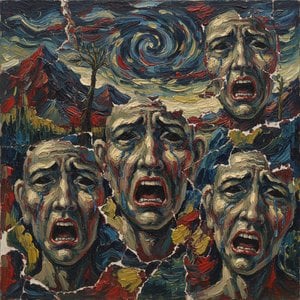
Explore the profound psychological depth of Expressionist art. From Munch to Van Gogh, discover how distorted forms and bold colors convey raw human emotion through our expert guide on this transformative movement.

Master the profound depths of Expressionism with our expert guide. Discover how pioneers like Munch and Kirchner used color and distortion to evoke raw emotion—essential knowledge for any discerning art collector seeking to curate intensity.

Explore the profound psychological depth of Expressionist portraiture. From Munch to Schiele, discover how distorted forms and visceral brushstrokes unmask raw human emotion in this definitive guide for art enthusiasts and collectors.

 Preview
 Send
Send Share
Share
 Details

 Download
 Similars
 X-Ray
X-Ray Diaporama
 Stats
Stats Read More







 Glass option is only available in size under 110 CM


