Preview AR preview Buy Hand Made Painting Switch to Digital Image Send
Details Guide Add to favorites Download Similars X-Ray Diaporama Stats

Dancing Trees

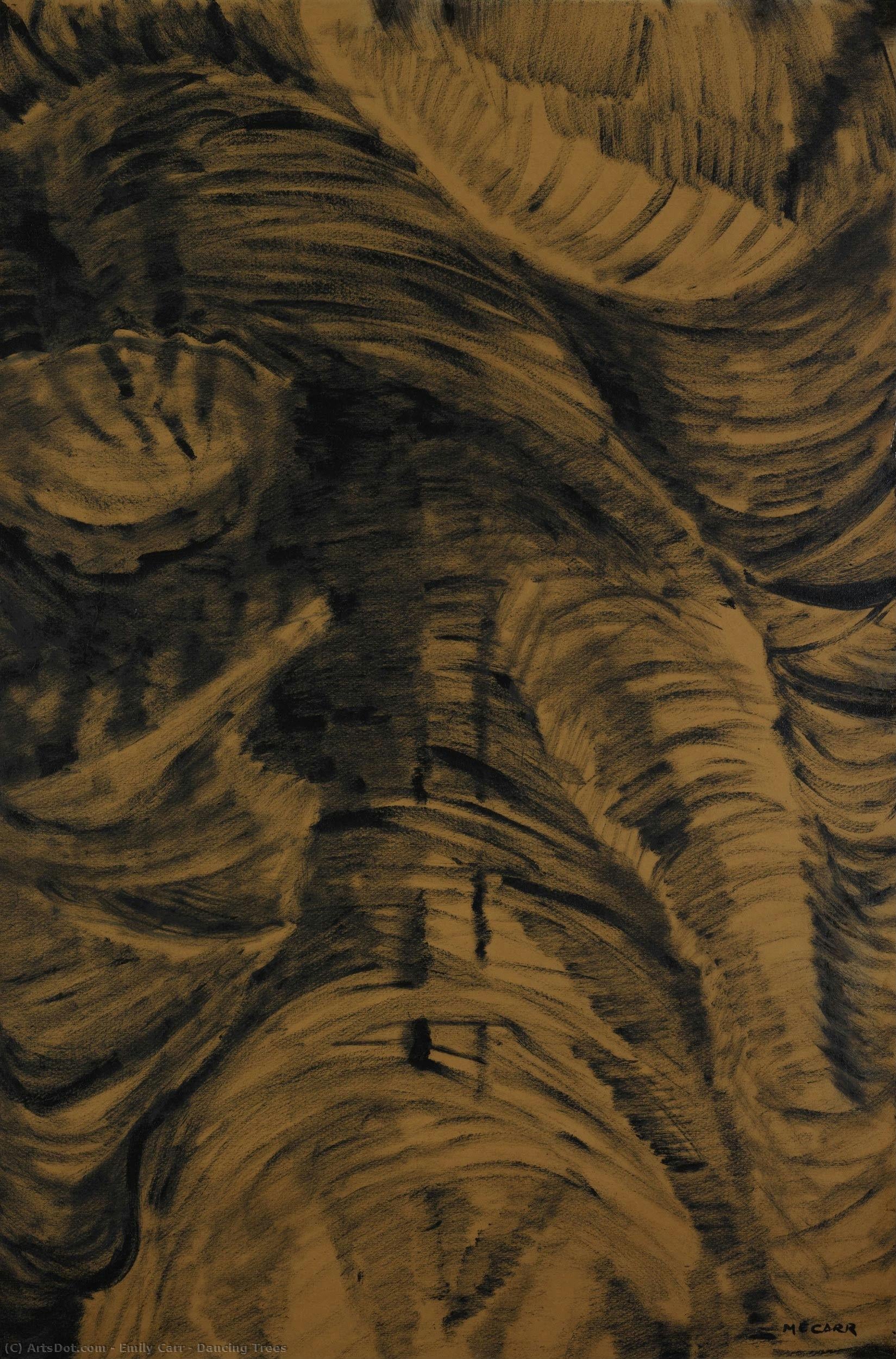
Emily Carr’s "Dancing Trees" (1937-40) captures the spirit of BC forests through swirling brushstrokes, symbolizing resilience and interconnectedness. Inspired by nature and Indigenous traditions, this masterpiece exemplifies Carr's distinctive style.

Discover Emily Carr (1871-1945), a Canadian Modernist pioneer. Explore her powerful paintings of BC landscapes & First Nations cultures, blending Post-Impressionism with a unique vision. A true Canadian icon!

Giclée / Art Print

Museum-quality giclée or canvas print with fast production and flexible finish options. ( Buy Hand Made Painting Switch to Digital Image)

Corner sample of the P118B picture frame: moulded polystyrene, 5 cm wide and 3 cm thick
P118B $10
Corner sample of the P118H picture frame: moulded polystyrene, 5 cm wide and 3 cm thick
P118H $10
Corner sample of the P118W picture frame: moulded polystyrene, 5 cm wide and 3 cm thick
P118W $10
Corner sample of the P438Z picture frame: moulded polystyrene, 5.5 cm wide and 3.5 cm thick
P438Z $10
Corner sample of the P508JH picture frame: moulded polystyrene, 7 cm wide and 3.5 cm thick
P508JH $12
Corner sample of the P508YH picture frame: moulded polystyrene, 7 cm wide and 3.5 cm thick
P508YH $12
Corner sample of the P805H picture frame: moulded polystyrene, 5 cm wide and 3.5 cm thick
P805H $10
Corner sample of the P805Z picture frame: moulded polystyrene, 5 cm wide and 3.5 cm thick
P805Z $10
Corner sample of the P919BZ picture frame: moulded polystyrene, 7 cm wide and 3.5 cm thick
P919BZ $10
Corner sample of the P919G picture frame: moulded polystyrene, 7 cm wide and 3.5 cm thick
P919G $10
Corner sample of the P919XJ picture frame: moulded polystyrene, 7 cm wide and 3.5 cm thick
P919XJ $10
Corner sample of the P959ZH picture frame: moulded polystyrene, 5 cm wide and 3 cm thick
P959ZH $10
Corner sample of the P968JZ picture frame: moulded polystyrene, 6 cm wide and 4 cm thick
P968JZ $12
Corner sample of the W106C picture frame: solid wood, 5 cm wide and 3 cm thick
W106C $8
Corner sample of the W218G picture frame: solid wood, 5 cm wide and 3 cm thick
W218G $10
Corner sample of the W218JH picture frame: solid wood, 5 cm wide and 3 cm thick
W218JH $8
Corner sample of the W218Y picture frame: solid wood, 5 cm wide and 3 cm thick
W218Y $10
Corner sample of the W307PJ picture frame: solid wood, 6 cm wide and 3 cm thick
W307PJ $10
Corner sample of the W316G picture frame: solid wood, 6 cm wide and 3 cm thick
W316G $10
Corner sample of the W316PJ picture frame: solid wood, 6 cm wide and 3 cm thick
W316PJ $8
Corner sample of the W316Y picture frame: solid wood, 6 cm wide and 3 cm thick
W316Y $10
Corner sample of the W398PJ picture frame: solid wood, 5 cm wide and 3 cm thick
W398PJ $8
Corner sample of the W4111J picture frame: solid wood, 6.5 cm wide and 3.5 cm thick
W4111J $10
Corner sample of the W500HY picture frame: solid wood, 7 cm wide and 5 cm thick
W500HY $15
Corner sample of the W500JH picture frame: solid wood, 7 cm wide and 5 cm thick
W500JH $15
Corner sample of the W692G picture frame: solid wood, 8 cm wide and 4 cm thick
W692G $12
Corner sample of the W849H picture frame: solid wood, 5 cm wide and 3 cm thick
W849H $8
Corner sample of the W940BG picture frame: solid wood, 7.5 cm wide and 4.5 cm thick
W940BG $15
Corner sample of the W953PJ picture frame: solid wood, 6 cm wide and 3.5 cm thick
W953PJ $8

Standard
custom
CM
INCH

Pick from our preset sizes that match the artwork's original proportions.

width
height

You may enter your own dimensions to fit a specific frame or space. If your selected size does not match the original image's proportions, we will either crop the artwork or extend the image with a mirrored or solid-fill edge. A digital mockup will be sent for your approval before production begins.
Please note that the on-screen preview does not reflect the actual cropping or extension. Only the mockup will accurately show the final composition.
While custom sizes are available, we recommend selecting a dimension from the predefined list to preserve the original proportions.

Worldwide Delivery () in 2 weeks instead of standard 4/5 weeks. (10 October)

Free Worldwide Express Shipping
High-Quality Linen Canvas
Full Shipping Insurance
Customs Tax Refund Guarantee
True Color Matching Guarantee
100-Day Return Policy (Defects Only)
100% Money-Back Guarantee
Bulk Discount Offer

Total Price

$ 69

Dancing Trees

Giclée / Art Print

Reproduction Size

-

Total Price

$ 69

Quick Facts

  • Movement: Group of Seven
  • Influences: Vincent Van Gogh
  • Medium: Oil
  • Title: Dancing Trees
  • Location: McMichael Canadian Art Collection (Vaughan, Canada)
  • Artist: Emily Carr
  • Notable elements or techniques: Spiral brushstrokes; Symbolic representation

Art Quiz

There is only one correct answer for each question.

Question 1:
What is the primary subject matter of "Dancing Trees"?
Question 2:
In what artistic movement is "Dancing Trees" primarily associated?
Question 3:
What color dominates the background of the painting?
Question 4:
Emily Carr created "Dancing Trees" in which decade?
Question 5:
What technique is most prominently used by Emily Carr in this artwork?

Dancing Trees - Emily Carr (1871 - 1945) — A Pioneer's Vision of British Columbia

Emily Carr’s *Dancing Trees*, painted in 1937-40, stands as a testament to her singular artistic vision—a fusion of Post-Impressionism and an unwavering connection to the landscape of British Columbia. More than just a depiction of trees; it embodies Carr's profound engagement with both the natural world and Indigenous culture, reflecting a period marked by significant social change in Canada. This artwork isn’t merely observed; it’s felt—a swirling symphony of colour and movement that captures the spirit of resilience and joy amidst the encroaching pressures of industrialization.
  • Subject Matter: The painting centres on a cluster of mature fir trees, positioned against a backdrop of pale yellow sky and shadowed gravel pits. Carr meticulously rendered these trees not as static objects but as dynamic entities imbued with life force—a deliberate departure from the prevailing artistic conventions of her time.
  • Style & Technique: Carr’s distinctive technique—characterized by bold brushstrokes and an expressive layering of pigment—is immediately recognizable. She eschewed traditional realism, opting instead for a style that prioritizes emotional resonance over precise representation. The swirling patterns of paint convey the energy of the wind, mirroring the movement of the trees themselves.
  • Historical Context: Created during Carr’s final years, *Dancing Trees* reflects her growing concern about deforestation and the displacement of First Nations communities in British Columbia. Her artistic explorations served as a conduit for conveying these anxieties—a subtle yet powerful critique of societal priorities. The painting's genesis coincided with the burgeoning interest in abstraction amongst European artists, influencing Carr’s stylistic choices.
  • Symbolism: Beyond its visual beauty, *Dancing Trees* is laden with symbolic significance. The upward-reaching trunks represent aspiration and perseverance—a defiance against adversity—while the dappled sunlight filtering through the foliage symbolizes hope and renewal. Carr's masterful use of colour contributes to this overarching theme, conveying both serenity and vibrancy simultaneously.
  • Emotional Impact: Viewing *Dancing Trees* evokes a feeling of awe—a recognition of the sublime grandeur of nature and its capacity to inspire contemplation. The painting’s energetic brushstrokes capture not only the physical appearance of the trees but also their inner vitality—a celebration of life's enduring beauty.

Provenance & Dimensions

The artwork is housed in McMichael Canadian Art Collection (Vaughan, Canada). It measures 90.2 x 59.7 cm and was gifted by Dr. and Mrs. Max Stern, Dominion Gallery, Montreal. The painting’s surface is laid down on canvas, a technique employed by Carr to ensure stability and longevity—a testament to her dedication to preserving her artistic legacy.

Artist Information: Emily Carr (1871 - 1945)

Emily Carr, born December 13, 1871, in Victoria, British Columbia, was more than just a painter; she was a chronicler of a changing world, a passionate observer of both the natural majesty of the Pacific Northwest and the rich cultural heritage of its First Nations peoples. Her life unfolded against the backdrop of a rapidly evolving Canada, a nation grappling with its identity and relationship to its Indigenous populations. The daughter of Richard and Emily Carr, English immigrants who sought opportunity in the burgeoning colony, she grew up in a household that valued both tradition and progress. This duality would profoundly shape her artistic vision. From an early age, encouraged by her father, Emily displayed a remarkable aptitude for art, a talent nurtured through formal instruction and a deep connection to the surrounding landscape. The imposing forests of Vancouver Island, the rugged coastline, and the vibrant life w

Further Research & Resources

For more information on *Dancing Trees* and Emily Carr’s broader artistic oeuvre, explore these valuable resources:

Additional Notes

This artwork is in the public domain.

Questions & Answers

What technique and style characterize "Dancing Trees" by Emily Carr?

"Dancing Trees" by Emily Carr combines the oil on canvas technique with the Group of Seven style. Technique and movement describe the making and the style of the work.

What are the date and style of "Dancing Trees" by Emily Carr?

"Dancing Trees" was made in 1940, within the Group of Seven movement.

What is the creation date of "Dancing Trees" by Emily Carr?

"Dancing Trees" by Emily Carr was created in 1940.

At what age did Emily Carr make "Dancing Trees"?

Emily Carr was 69 years old when creating "Dancing Trees" in 1940. The age is computed from the artist's birth year, 1871.

Who is the artist behind "Dancing Trees"?

"Dancing Trees" was created by Emily Carr. The information on this page describes Emily Carr's original work.

What orientation does "Dancing Trees" by Emily Carr have?

"Dancing Trees" by Emily Carr is a portrait composition. The proportions are worth checking before choosing a print size.

What mood would "Dancing Trees" bring to a space?

With its calm mood, "Dancing Trees" is suggested for a living room.


Artist Biography

A Life Rooted in the Landscape and Spirit of British Columbia

Emily Carr, born December 13, 1871, in Victoria, British Columbia, was more than just a painter; she was a chronicler of a changing world, a passionate observer of both the natural majesty of the Pacific Northwest and the rich cultural heritage of its First Nations peoples. Her life unfolded against the backdrop of a rapidly evolving Canada, a nation grappling with its identity and relationship to its Indigenous populations. The daughter of Richard and Emily Carr, English immigrants who sought opportunity in the burgeoning colony, she grew up in a household that valued both tradition and progress. This duality would profoundly shape her artistic vision. From an early age, encouraged by her father, Emily displayed a remarkable aptitude for art, a talent nurtured through formal instruction and a deep connection to the surrounding landscape. The imposing forests of Vancouver Island, the rugged coastline, and the vibrant life within them became enduring sources of inspiration. However, it was not merely the visual beauty that captivated Carr; she sought to capture the *spirit* of this land, its inherent power and mystery.

Forging a Unique Artistic Voice

Carr’s artistic journey was one of continuous exploration and refinement. She pursued formal training at the San Francisco Art Institute (1890-1892) and later at the Westminster School of Art in London (1899), immersing herself in European artistic currents. Yet, she found herself increasingly drawn back to her native British Columbia, recognizing that true artistic expression lay not in imitation but in authentic representation of her own experience. Initially influenced by Post-Impressionism, Carr gradually moved away from conventional techniques, developing a style characterized by bold colors, dynamic brushstrokes, and an almost visceral energy. A pivotal moment in her development came through her encounters with the First Nations communities along the British Columbia coast. She traveled extensively throughout these regions, documenting their villages, totem poles, and ceremonial objects with reverence and respect. These experiences profoundly impacted her work, infusing it with a spiritual depth and a commitment to preserving a culture facing immense pressure from colonial forces. Carr wasn’t simply painting *about* First Nations cultures; she was attempting to convey their worldview, their connection to the land, and the profound symbolism embedded in their art. Her paintings became powerful statements of cultural preservation and artistic innovation.

Modernism and the Expression of Inner Vision

Emily Carr stands as a pioneering figure in Canadian Modernism, embracing new forms of expression while remaining deeply rooted in her own unique perspective. She wasn’t content to merely replicate what she saw; instead, she sought to convey the emotional and spiritual essence of her subjects. This led her to experiment with increasingly abstract compositions, employing thick impasto techniques to create a sense of movement and texture. Her canvases often pulsate with energy, reflecting the raw power of the natural world and the vibrant life force of the First Nations communities she depicted. Kispiox Village, for example, is not simply a representation of a village scene; it’s an evocation of its atmosphere, its history, and its spiritual significance. Carr's work often features towering trees that seem to reach towards the heavens, symbolizing both the grandeur of nature and the enduring spirit of Indigenous cultures. She wasn’t afraid to challenge conventional artistic norms, pushing boundaries and forging her own path. This commitment to artistic independence would inspire generations of Canadian artists to come.

Legacy and Enduring Influence

Though recognition came relatively late in life, Emily Carr is now widely celebrated as “the Mother of Modern Canadian Art.” Her paintings are treasured for their beauty, their emotional depth, and their historical significance. Beyond her artistic achievements, Carr was also a gifted writer, chronicling her experiences and observations in the acclaimed autobiography Klee Wyck, which won the Governor General’s Literary Award for non-fiction in 1941. This work provides invaluable insights into her life, her artistic process, and her profound connection to British Columbia. Carr's legacy extends far beyond the art world; she has become a national icon, representing artistic independence, cultural exploration, and the enduring beauty of the Canadian landscape. Her influence can be seen in the work of numerous subsequent artists, including Pegi Nicol Macleod, who similarly sought to capture the spirit of the West Coast. Even today, her paintings continue to resonate with audiences around the world, reminding us of the importance of preserving cultural heritage and celebrating the power of artistic expression. A testament to her lasting impact is the naming of minor planet 5688 Kleewyck in her honor—a celestial tribute to a truly remarkable artist and visionary.

Major Works

  • Tanoo (watercolor): A delicate yet powerful depiction of First Nations life, showcasing Carr’s mastery of watercolor techniques.
  • A Haida Village (oil): A striking oil painting that captures the architectural grandeur and spiritual significance of a Haida village.
  • The Indian Church (oil): A poignant representation of the intersection between Indigenous culture and Christian missionary influence, reflecting Carr’s complex engagement with colonial history.
  • Kispiox Village (oil): An iconic painting that embodies Carr's unique style and her deep connection to the landscapes and communities of British Columbia.

Emily Carr

Emily Carr

1871 - 1945 , Canada

Quick Facts

  • Full Name: Emily Carr
  • Nationality: Canadian
  • Date Of Birth: 1871
  • Date Of Death: 1945
  • Place Of Birth: Victoria, Canada
  • Notable Artworks:
    • Tanoo
    • A Haida Village
    • The Indian Church
    • Kispiox Village
  • Artistic Movement Or Style: Modernism, Post-Impressionism
  • Artists Or Movements Influenced By This Artist: ['Pegi Nicol Macleod']
Explore artworks organized by themes, styles, and characteristics.