

 TextileSurrealist Innovation
 1937
1937 12.0 x 22.0 cm
 Metropolitan Museum of Art
The artwork displayed on this page is protected by copyright law, which means we cannot legally create or sell an identical reproduction. This protection is enforced under international agreements such as the Berne Convention and by national laws, including those outlined by the U.S. Copyright Law - Title 17.
This method fully complies with copyright regulations because it does not involve copying or duplicating the protected artwork. Instead, it is a creative reinterpretation - a new painting that is influenced by the original but not identical to it.
Museum-quality giclée or canvas print with fast production and flexible finish options. ( Buy Hand Made Painting Switch to Digital Image)
Pick from our preset sizes that match the artwork's original proportions.

Type the width and the height you need, to fit your frame or your wall. A print can only be cut, never made bigger than the picture, so a size with a different shape loses a part of the image. We send you a digital mockup to approve before we print anything. The picture shown on this page does not show the real cut — only the mockup does.
Worldwide Delivery () in 2 weeks instead of standard 4/5 weeks. (22 October)
Evening ensemble
Reproduction Size
The “Evening Ensemble,” crafted by Elsa Schiaparelli in 1937, stands as a testament to the designer’s unwavering commitment to challenging conventions and injecting fantastical elements into haute couture. This remarkable garment—a collaboration between Schiaparelli and André Perugia—captures the spirit of Surrealism at its zenith, embodying a daring fusion of opulent texture and subversive visual language.
At first glance, the dress itself is deceptively simple: a sleek sheath gown constructed from deep purple velvet. However, beneath this luxurious surface lies a masterful illusion. Schiaparelli employed a technique known as “trompe l’œil,” cleverly utilizing metallic threads woven throughout the fabric to create an ethereal shimmer that mimics the dappled light filtering through a dense forest canopy. This subtle textural manipulation elevates the garment beyond mere drapery, transforming it into an immersive sensory experience.
Complementing the gown is Perugia’s jacket—a bold declaration of color and ornamentation. Embroidered with intricate floral motifs in shades of gold and yellow satin, it defies traditional notions of elegance. The embroidery isn't merely decorative; it speaks to Schiaparelli’s fascination with botanical imagery and her exploration of natural forms within an artistic framework. These flowers are stylized, almost abstracted, mirroring the Surrealist preoccupation with dreamlike landscapes and distorted perspectives.
The ensemble’s significance extends beyond its aesthetic qualities. It reflects Schiaparelli's broader artistic vision—a rejection of academic formalism in favor of imaginative storytelling. Inspired by her upbringing amidst intellectual luminaries like her father, Celestino Schiaparelli, a scholar of Islamic studies and Sanskrit, Elsa embraced influences from diverse cultures and esoteric traditions.
Furthermore, the dress’s provenance adds to its allure. Millicent Rogers, a celebrated Southwestern Native American artist and philanthropist, gifted her entire wardrobe—including this iconic piece—to the Brooklyn Museum. This donation ensured that “Evening Ensemble” would be preserved for posterity, allowing future generations to appreciate Schiaparelli's groundbreaking contribution to fashion history.
Today, reproductions of “Evening Ensemble” continue to inspire designers and collectors alike. Its enduring appeal lies in its ability to transport the viewer into a realm of imaginative beauty—a celebration of color, texture, and artistic innovation that solidified Elsa Schiaparelli’s place as one of the most influential figures in 20th-century art.
Format (portrait) and recommended space (living room) are the two placement facts recorded for "Evening ensemble" by Elsa Schiaparelli.
The copyright status of "Evening ensemble" by Elsa Schiaparelli is clear: the work is still protected by copyright. Its presence at the Metropolitan Museum of Art does not change that status.
The colors of "Evening ensemble" by Elsa Schiaparelli show a muted saturation with a monochromatic intensity.


1890 - 1973 , Italy

Discover the unparalleled elegance of Art Deco through the lens of Erté. Explore a masterclass in linear precision, theatrical costume design, and high-fashion illustration that continues to define modern luxury and sophisticated interior aesthetics.

Master the nuances of Giclée printing with our expert guide. Discover how pigment-based inks and museum-grade substrates create fade-resistant, high-fidelity art reproductions designed for discerning collectors seeking unparalleled quality and longevity.
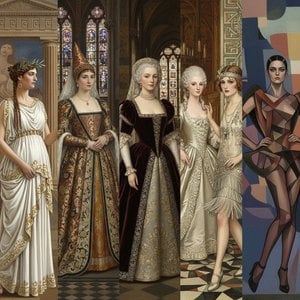
Explore the breathtaking intersection of fine art and high fashion. Discover how iconic masterpieces from Art Deco to Impressionism have shaped the world of luxury couture and timeless design in this curated visual journey.

Discover the breathtaking allure of Art Deco. Explore the era's iconic geometry, legendary designers like Erté, and timeless glamour. Perfect for discerning collectors seeking to infuse their spaces with sophisticated modernist elegance and historical prestige.
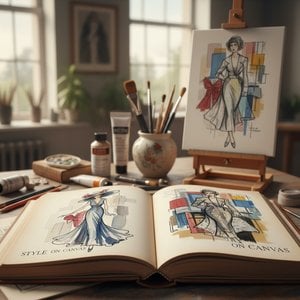
Discover the exquisite world of fashion illustration art. From Art Deco elegance to bespoke oil reproductions, explore how timeless sartorial beauty transforms luxury interiors through masterfully crafted canvas works and curated historical masterpieces.

 Send
Send Share
Share
 Details
 Guide
Guide

 Download
 Similars
 Diaporama
 Stats
Stats Read More






































 Glass option is only available in size under 110 CM


