

Museum-quality giclée or canvas print with fast production and flexible finish options. ( Buy Hand Made Painting Switch to Digital Image)
Pick from our preset sizes that match the artwork's original proportions.

You may enter your own dimensions to fit a specific frame or space. If your selected size does not match the original image's proportions, we will either crop the artwork or extend the image with a mirrored or solid-fill edge. A digital mockup will be sent for your approval before production begins.
Please note that the on-screen preview does not reflect the actual cropping or extension. Only the mockup will accurately show the final composition.
While custom sizes are available, we recommend selecting a dimension from the predefined list to preserve the original proportions.
Worldwide Delivery () in 2 weeks instead of standard 4/5 weeks. (9 September)


Flowers
Reproduction Size
Elina Brotherus’s “Flowers” is more than just a still life; it's an intimate observation of natural beauty captured with remarkable clarity. This photograph, created in 2015, presents a simple yet profoundly evocative arrangement of flowers in a glass vase, set against the backdrop of a domestic kitchen scene. The image resonates with a quiet elegance and invites contemplation on themes of transience, fragility, and the subtle poetry found within everyday life.
Brotherus is recognized as a key figure in the Helsinki School of photography, known for its focus on understated realism and often autobiographical subject matter. Her style eschews excessive manipulation; she famously avoids “photoshopping,” prioritizing authenticity and capturing the raw essence of her subjects. "Flowers" exemplifies this approach. The photograph’s technique emphasizes clarity and detail, showcasing the delicate textures of the petals and leaves with striking precision. The diffused natural lighting further enhances the sense of realism, creating soft shadows and highlights that bring the flowers to life.
The subject matter—a still life of flowers—is a classic genre in art history, traditionally used to explore themes of beauty, mortality, and domesticity. However, within Brotherus’s broader artistic practice, "Flowers" gains deeper resonance. Considering her work during this period (2011-2015) which documented her experiences with infertility and involuntary childlessness ("carpe fucking diem" and "annonciation" series), the flowers can be interpreted as symbols of fleeting beauty and the poignant passage of time – a reflection on life’s cycles and unfulfilled desires. The seemingly mundane setting—a kitchen appliance—grounds the image in reality, contrasting the ephemeral nature of the blooms with the solidity of domestic space.
“Flowers” evokes a sense of peace and tranquility through its soft color palette (dominated by pinks, whites, oranges, and greens) and simple composition. The photograph’s minimalist aesthetic encourages viewers to appreciate the subtle details – the curve of a stem, the texture of a petal, the play of light on glass. Brotherus's ability to transform an ordinary scene into something deeply moving is a testament to her skill as a photographer. This piece offers a moment of quiet contemplation and serves as a beautiful example of Brotherus’s unique artistic vision – one that finds profound beauty in the everyday and explores complex personal narratives with remarkable honesty.

Born in Chapelhall, North Lanarkshire, Scotland, in 1972, Robert Montgomery’s artistic journey is one of deliberate disruption and profound reflection. Initially drawn to painting, he quickly evolved into a multifaceted artist working across sculpture, installation, and poetry – disciplines that increasingly converge within his singular vision. His work isn't merely about creating objects; it’s about engaging with space, language, and the often-uncomfortable truths of human experience. Influenced by a “melancholic post-Situationist” tradition, Montgomery frequently utilizes public spaces as canvases, challenging conventional perceptions and inviting viewers to reconsider their surroundings.
Montgomery's early career was marked by experimentation with minimalist sculptures, often accompanied by elaborate poetic titles. This initial phase laid the groundwork for his later, more ambitious projects. A pivotal moment arrived in 1995 when he secured a grant from the Scottish Arts Council alongside fellow artist John Ayscough – a grant initially threatened due to its unconventional nature. Andrew Nairne, then Visual Director at the council, championed their project, “Aerial ‘94,” ensuring its completion and launching Montgomery’s career with significant momentum. This early experience instilled in him a willingness to push boundaries and challenge established norms.
His signature style—a potent blend of text and visual elements—emerged through his practice of writing poems on public surfaces, mirroring the techniques of graffiti artists. This approach wasn’t simply about adding ephemeral messages; it was an assertion of voice within the urban landscape, a deliberate attempt to inject poetry into the everyday. This commitment to public engagement is deeply rooted in his belief that art should be accessible and provoke dialogue. The 1999 move to London solidified this ethos, providing him with access to a vibrant artistic community and further fueling his exploration of themes like power, love, and human kindness.
Montgomery’s most recognizable work is undoubtedly his “fire poems.” These striking installations combine poetic messages with the dramatic spectacle of flames, transforming simple words into powerful visual statements. The technique itself—carefully crafted phrases projected onto a flame—demands precision and control, reflecting Montgomery's meticulous approach to all aspects of his art. The ephemeral nature of the flames adds another layer of complexity, emphasizing the transient beauty of language and the fleeting moments of connection it can create.
His installations frequently operate within industrial and urban environments, often without authorization. This deliberate act of intervention underscores a critical element of his practice: a challenge to established power structures and an assertion of artistic freedom. These pieces aren’t simply decorative; they are provocations—designed to disrupt the status quo and encourage viewers to question their assumptions about public space. The resulting encounters with authorities, such as the detention following a poem displayed on a London billboard for William Blake, highlight the inherent tension between art and authority.
Montgomery’s artistic toolkit is surprisingly diverse, encompassing a range of materials and techniques. He frequently employs recycled sunlight pieces—photographic images manipulated to capture the essence of light—as well as billboard pieces, woodcut panels, and watercolors. This eclectic approach reflects his desire to explore different modes of expression and to engage with various textures and surfaces. The use of watercolor, in particular, lends a delicate quality to some of his works, juxtaposing vulnerability with strength.
His work is deeply informed by the Situationist movement, a radical artistic and social theory that sought to challenge consumer culture and promote revolutionary change through art. Montgomery’s engagement with this tradition manifests in his use of public space as a site for critique and resistance, mirroring the Situationists' belief in the transformative potential of art.
Robert Montgomery’s work has garnered significant critical acclaim and continues to resonate with audiences worldwide. His ability to seamlessly blend poetry, sculpture, and installation creates immersive experiences that are both intellectually stimulating and emotionally evocative. His influence extends beyond his own practice, inspiring a new generation of artists who are exploring the intersection of art, language, and public space.
Montgomery’s commitment to challenging conventional perceptions and engaging with complex social issues has cemented his place as a significant figure in contemporary art. His work serves as a powerful reminder that art can be a catalyst for change—a means of questioning, reflecting, and ultimately, transforming the world around us.

1972 - , Finland
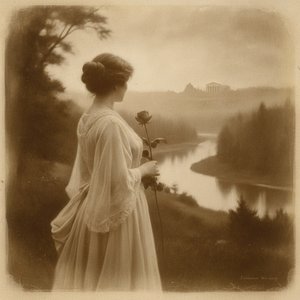
Explore the profound history of Pictorialism, the revolutionary movement that elevated photography to a fine art. Uncover how visionaries used painterly techniques and soft focus to transcend mere documentation, imbuing the lens with the emotional depth of classical masterpieces.

Explore the profound artistry of black and white photography. From historical mastery to the interplay of light and shadow, discover how monochrome captures timeless emotion and form through a sophisticated lens of art history.

Explore the profound evolution of contemporary photography through a connoisseur's lens. From monochrome mastery to digital innovation, discover how modern photographic works shape fine art collections and define our cultural legacy.

 Preview
 Send
Send Share
Share
 Details

 Download
 Similars
 X-Ray
X-Ray Diaporama
 Stats
Stats

 Read More




































 Glass option is only available in size under 110 CM


