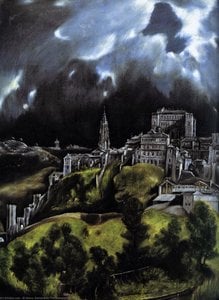
Oil On CanvasWallArtMannerism (Late Renaissance)
 1595Renaissance
 49.0 x 42.0 cm
 Museum of Fine Arts
Museum-quality giclée or canvas print with fast production and flexible finish options. ( Buy Hand Made Painting Switch to Digital Image)





























Pick from our preset sizes that match the artwork's original proportions.

You may enter your own dimensions to fit a specific frame or space. If your selected size does not match the original image's proportions, we will either crop the artwork or extend the image with a mirrored or solid-fill edge. A digital mockup will be sent for your approval before production begins.
Please note that the on-screen preview does not reflect the actual cropping or extension. Only the mockup will accurately show the final composition.
While custom sizes are available, we recommend selecting a dimension from the predefined list to preserve the original proportions.
Worldwide Delivery () in 2 weeks instead of standard 4/5 weeks. (26 September)


Study of a Man
Reproduction Size
Doménikos Theotokópoulos, universally known as El Greco—“the Greek”—stands apart from his contemporaries as an artist whose life and oeuvre defied easy categorization. Born in Crete in 1541, under Venetian rule, his artistic journey traversed Venice and Rome before finding its ultimate expression in the spiritual landscape of Spain: Toledo. He wasn’t merely a product of these places; he synthesized their influences into something wholly unique—a style that anticipated the emotional intensity of Expressionism and the fragmented forms of Cubism centuries later.
“Study of a Man,” painted in 1595, resides within the Museo de El Greco in Budapest, Hungary. This oil on canvas measuring 49 x 42 cm encapsulates El Greco’s distinctive approach to portraiture and embodies his signature stylistic elements. The painting's provenance speaks volumes about its significance—originally owned by Aureliano Beruete y Moret, it now graces the Museo Nacional de Pintura y Esculturas in Madrid.
El Greco’s artistic style is characterized by elongated figures, vibrant colors—often juxtaposed against muted backgrounds—and a profound fusion of Byzantine and Western artistic traditions. In “Study of a Man,” he skillfully employs these techniques to generate a palpable sense of dynamism and emotional resonance. The medium of oil on canvas allows for exceptional textural detail and subtle color gradations, enhancing the artwork’s visual impact considerably. Notice the meticulous rendering of facial features—a hallmark of El Greco's dedication to capturing psychological nuance.
Beyond its formal qualities, “Study of a Man” resonates with symbolic layers that invite contemplation. The inclusion of two additional figures in the background—one on the left and another further back—adds depth to the scene and suggests an unspoken narrative. These individuals represent not merely incidental companions but contribute to the overall atmosphere of introspection and spiritual inquiry. Consider how El Greco’s use of color—particularly the emerald green shirt worn by the subject—might convey ideas of vitality, faith, or perhaps even melancholy.
“Study of a Man” isn't simply a beautifully executed portrait; it’s a testament to El Greco’s artistic genius and his ability to transcend stylistic conventions. It exemplifies the Mannerist movement’s preoccupation with expressive distortion—a technique that foreshadowed developments in later art movements. Like Saint Andrew, St. John the Baptist, and St. John the Evangelist, this painting stands as an enduring symbol of Renaissance spirituality and artistic innovation. Its meticulous detail and emotive portrayal continue to inspire admiration and discussion among scholars and collectors alike.


1541 - 1614 , Greece
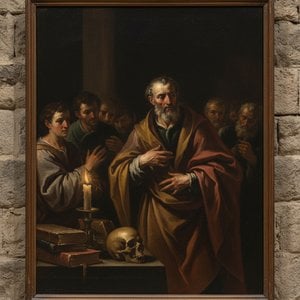
Explore the profound drama of Spanish Baroque art. Delve into the mastery of light, shadow, and realism through the legendary works of Diego Velázquez and the Spanish Golden Age.

Unveil the captivating world of Mannerism. Our expert analysis explores the transition from Renaissance harmony to the profound, elegant distortions of masters like El Greco, offering deep insights into one of art history's most influential and enigmatic eras.

Embark on a sophisticated exploration of Spanish art history, from the chiaroscuro mastery of Velázquez to the profound shadows of Goya. Discover how the dramatic light and emotional depth of Spain's greatest masters continue to inspire collectors and connoisseurs today.

 Preview
 Send
Send Share
Share
 Details
 Guide
Guide

 Download
 Similars
 X-Ray
X-Ray Diaporama
 Stats
Stats Read More







 Glass option is only available in size under 110 CM