Preview AR preview Buy Hand Made Painting Switch to Digital Image Send
Details Guide Add to favorites Download Similars X-Ray Diaporama Q&A Stats

untitled (5194)

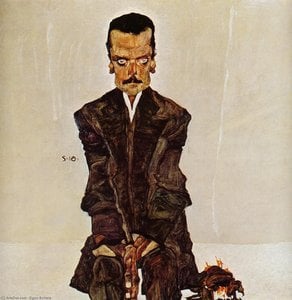
Witness Egon Schiele's haunting 'Untitled (5194)' – a visceral depiction of birth and mortality. Explore the raw emotion & psychological depth of this iconic Expressionist masterpiece, now available as a hand-painted reproduction.

Explore the emotionally charged Expressionist art of Egon Schiele (1890-1918): bold portraits, psychological themes & unique lines. Discover reproductions now!

Giclée / Art Print

Museum-quality giclée or canvas print with fast production and flexible finish options. ( Buy Hand Made Painting Switch to Digital Image)

Corner sample of the P118B picture frame: moulded polystyrene, 5 cm wide and 3 cm thick
P118B $10
Corner sample of the P118H picture frame: moulded polystyrene, 5 cm wide and 3 cm thick
P118H $10
Corner sample of the P118W picture frame: moulded polystyrene, 5 cm wide and 3 cm thick
P118W $10
Corner sample of the P438Z picture frame: moulded polystyrene, 5.5 cm wide and 3.5 cm thick
P438Z $10
Corner sample of the P508JH picture frame: moulded polystyrene, 7 cm wide and 3.5 cm thick
P508JH $12
Corner sample of the P508YH picture frame: moulded polystyrene, 7 cm wide and 3.5 cm thick
P508YH $12
Corner sample of the P805H picture frame: moulded polystyrene, 5 cm wide and 3.5 cm thick
P805H $10
Corner sample of the P805Z picture frame: moulded polystyrene, 5 cm wide and 3.5 cm thick
P805Z $10
Corner sample of the P919BZ picture frame: moulded polystyrene, 7 cm wide and 3.5 cm thick
P919BZ $10
Corner sample of the P919G picture frame: moulded polystyrene, 7 cm wide and 3.5 cm thick
P919G $10
Corner sample of the P919XJ picture frame: moulded polystyrene, 7 cm wide and 3.5 cm thick
P919XJ $10
Corner sample of the P959ZH picture frame: moulded polystyrene, 5 cm wide and 3 cm thick
P959ZH $10
Corner sample of the P968JZ picture frame: moulded polystyrene, 6 cm wide and 4 cm thick
P968JZ $12
Corner sample of the W106C picture frame: solid wood, 5 cm wide and 3 cm thick
W106C $8
Corner sample of the W218G picture frame: solid wood, 5 cm wide and 3 cm thick
W218G $10
Corner sample of the W218JH picture frame: solid wood, 5 cm wide and 3 cm thick
W218JH $8
Corner sample of the W218Y picture frame: solid wood, 5 cm wide and 3 cm thick
W218Y $10
Corner sample of the W307PJ picture frame: solid wood, 6 cm wide and 3 cm thick
W307PJ $10
Corner sample of the W316G picture frame: solid wood, 6 cm wide and 3 cm thick
W316G $10
Corner sample of the W316PJ picture frame: solid wood, 6 cm wide and 3 cm thick
W316PJ $8
Corner sample of the W316Y picture frame: solid wood, 6 cm wide and 3 cm thick
W316Y $10
Corner sample of the W398PJ picture frame: solid wood, 5 cm wide and 3 cm thick
W398PJ $8
Corner sample of the W4111J picture frame: solid wood, 6.5 cm wide and 3.5 cm thick
W4111J $10
Corner sample of the W500HY picture frame: solid wood, 7 cm wide and 5 cm thick
W500HY $15
Corner sample of the W500JH picture frame: solid wood, 7 cm wide and 5 cm thick
W500JH $15
Corner sample of the W692G picture frame: solid wood, 8 cm wide and 4 cm thick
W692G $12
Corner sample of the W849H picture frame: solid wood, 5 cm wide and 3 cm thick
W849H $8
Corner sample of the W940BG picture frame: solid wood, 7.5 cm wide and 4.5 cm thick
W940BG $15
Corner sample of the W953PJ picture frame: solid wood, 6 cm wide and 3.5 cm thick
W953PJ $8

Standard
custom
CM
INCH

Pick from our preset sizes that match the artwork's original proportions.

width
height

Type the width and the height you need, to fit your frame or your wall. A print can only be cut, never made bigger than the picture, so a size with a different shape loses a part of the image. We send you a digital mockup to approve before we print anything. The picture shown on this page does not show the real cut — only the mockup does.

Worldwide Delivery () in 2 weeks instead of standard 4/5 weeks. (29 October)

Free Worldwide Express Shipping
High-Quality Linen Canvas
Full Shipping Insurance
Customs Tax Refund Guarantee
True Color Matching Guarantee
100-Day Return Policy (Defects Only)
100% Money-Back Guarantee
Bulk Discount Offer

Total Price

$ 69

untitled (5194)

Giclée / Art Print

Reproduction Size

-

Total Price

$ 69

Quick Facts

  • Artistic style: Erotic, Intense
  • Notable elements: Birth scene, figures
  • Artist: Egon Schiele
  • Subject or theme: Birth, Mortality

Art Quiz

There is only one correct answer for each question.

Question 1:
What is the primary subject depicted in Egon Schiele’s ‘untitled (5194)’?
Question 2:
Based on the image description, what is the emotional state conveyed by the woman in the painting?
Question 3:
Egon Schiele is primarily associated with which artistic movement?
Question 4:
The bottle present in the image likely symbolizes what aspect of the scene?
Question 5:
Considering Egon Schiele’s biography, what recurring theme is most evident in his work?

A Portrait of Pain and Vulnerability: Unveiling Egon Schiele's "Untitled (5194)"

Egon Schiele’s “Untitled (5194),” a profoundly unsettling yet undeniably captivating work, plunges the viewer directly into the heart of human suffering. Painted in 1918, just months before his untimely death at the young age of 28, this image transcends mere representation; it's an embodiment of existential angst and the raw vulnerability inherent within the female form. The painting depicts a woman in the throes of childbirth, her body contorted in a desperate plea for release, her face obscured by shadow – a deliberate choice that amplifies the scene’s intensity and forces us to confront the primal nature of birth without sentimentality.

Schiele's signature style is powerfully evident here. The elongated figures, the sharp, angular lines, and the almost brutal honesty with which he renders the human body are hallmarks of his Expressionist approach. He wasn’t interested in idealized beauty; instead, he sought to expose the underlying anxieties and psychological turmoil that simmered beneath the surface. Notice how the woman's limbs are stretched taut, her posture a testament to the immense physical strain she endures. The stark contrast between light and shadow further emphasizes this sense of struggle – a visual representation of the battle raging within her.

The Shadow of Loss and Mortality

To fully appreciate “Untitled (5194),” it’s crucial to understand the context of Schiele's life. Born in Vienna in 1890, he was profoundly shaped by a series of devastating losses – the early deaths of his father from syphilis and his sister Elvira from illness. These experiences instilled within him an enduring preoccupation with mortality, disease, and the fragility of human existence. His art became a vehicle for exploring these themes, often depicted through distorted figures and unsettling imagery. The bottle at the bottom left corner is a subtle yet significant detail; it could represent nourishment, sustenance, or perhaps even a fleeting moment of comfort amidst the overwhelming pain.

The two observers flanking the central figure are equally compelling. Their presence suggests a witness to an intensely private and agonizing event – perhaps a husband, a partner, or a close friend. They stand as silent observers, mirroring our own sense of helplessness in the face of such profound suffering. Their averted gazes hint at their inability to fully comprehend or alleviate the woman’s ordeal, reinforcing the painting's overall theme of isolation and vulnerability.

Symbolism and Emotional Resonance

Schiele’s use of line is particularly noteworthy. The lines are not smooth or graceful; they are jagged, restless, and imbued with a palpable sense of urgency. This reflects the emotional turmoil depicted in the scene – the woman's pain, her struggle for survival, and perhaps even a hint of despair. The lack of detail in the woman’s face allows the viewer to project their own emotions onto the image, making it deeply personal and universally relatable. It is not simply a depiction of childbirth; it’s an exploration of the human condition – our capacity for both immense suffering and profound resilience.

“Untitled (5194)” remains a powerfully evocative work, offering a glimpse into the tormented psyche of one of art history's most enigmatic figures. Its raw honesty and unflinching portrayal of pain continue to resonate with viewers today, serving as a poignant reminder of the enduring power of art to confront difficult truths and explore the depths of human emotion. WahooArt offers meticulously crafted hand-painted reproductions that faithfully capture the intensity and emotional depth of this extraordinary masterpiece.

Questions & Answers

Is "untitled (5194)" by Egon Schiele among the sought-after Expressionism artworks?

"untitled (5194)" is recorded as iconic among the Expressionism works in the catalog.

What is the perceived brightness of "untitled (5194)" by Egon Schiele?

Overall, "untitled (5194)" is recorded as brilliant. Perceived brightness describes how light or dark the work appears.

Can I order an oil reproduction of "untitled (5194)"?

Hand-painted copies of "untitled (5194)" by Egon Schiele are sold on this website: a hand-painted oil reproduction on linen canvas, ordered from its Hand-Painted Reproduction page.


Artist Biography

A Life Forged in Expression

Born in 1890 in the Austrian town of Tulln an der Donau, Egon Schiele’s life was a tempestuous journey marked by both extraordinary artistic vision and profound personal hardship. His early years were shadowed by illness and loss; his father succumbed to syphilis when Egon was just fourteen, a tragedy that would deeply resonate within his work, fueling an obsession with mortality and the fragility of existence. Raised initially by his mother and then under the somewhat controlling guardianship of his uncle Leopold Czihaczek, Schiele’s childhood lacked conventional stability but fostered a fiercely independent spirit. Even as a boy, he displayed an intense fascination with trains—a motif that subtly reappeared in later paintings—and a burgeoning talent for drawing, though this was initially met with disapproval from his father who saw it as a distraction from more practical pursuits. The early death of his sister Elvira also cast a long shadow over the young artist’s psyche. These formative experiences instilled within him a sensitivity and an emotional rawness that would become hallmarks of his artistic expression, a constant grappling with themes of life, death, and the human condition.

The Crucible of Vienna: Artistic Development

Schiele's formal artistic training began at the Kunstgewerbeschule (School of Arts and Crafts) in Vienna, but he quickly found himself stifled by its conservative approach. He transferred to the Akademie der bildenden Künste (Academy of Fine Arts), only to become further disillusioned with its rigid academic traditions. This dissatisfaction led him to abandon formal training altogether, choosing instead to forge his own path, a testament to his unwavering artistic conviction. The influence of Gustav Klimt was pivotal during these early years; Schiele admired Klimt’s decorative style and exploration of symbolism, even receiving mentorship from the established artist. However, Schiele soon diverged from Klimt's aesthetic, developing a distinctly individual voice characterized by its stark honesty and psychological intensity. He co-founded the Neues Wiener Kunstgruppe (New Viennese Art Group) in 1909, aligning himself with other progressive artists who challenged the prevailing artistic norms. His early works, often unsettling portraits and self-portraits, began to emerge as powerful statements of emotional turmoil, featuring distorted figures and a palpable sense of vulnerability. These paintings were not merely representations of physical form but explorations of the inner landscape—the anxieties, desires, and fears that haunted the human psyche. He sought to depict not what he *saw*, but what he *felt*.

Raw Emotion and Unflinching Truth

Egon Schiele’s art is immediately recognizable for its raw honesty and psychological depth. He fearlessly confronted themes often considered taboo – sexuality, death, anxiety, isolation – with an unflinching gaze. His distinctive style features elongated figures, contorted poses, and expressive lines that convey a sense of unease and emotional intensity. The human form, particularly the nude, became his primary subject, not as an object of idealized beauty but as a vessel for exploring the complexities of human experience. Self-portraits constitute a significant portion of his oeuvre, offering intimate glimpses into his inner world—a world often marked by loneliness and self-doubt. He didn’t shy away from depicting himself in unflattering or vulnerable poses, revealing a profound level of self-awareness and introspection. Beyond self-portraiture, Schiele created numerous portraits of others, capturing their likenesses with an unsettling realism that seemed to penetrate beneath the surface. His landscapes, while less central to his work than his figurative paintings, demonstrate his mastery of form and color, often reflecting the same emotional intensity as his portraits. The use of line is particularly striking in Schiele’s work; it's not merely a tool for defining shape but an expressive force that conveys emotion and psychological tension. Recurring motifs like the *Physalis* plant – symbolizing death and transience with its delicate, papery husk – further underscore this preoccupation with mortality.

A Legacy Cut Short: Achievements & Significance

Despite facing censorship and legal challenges – including a brief imprisonment for allegedly corrupting minors with his art – Schiele gained recognition within Vienna’s avant-garde circles. His work challenged the conventions of the time, provoking both admiration and outrage. By the time of his untimely death during the Spanish flu pandemic in 1918 at the age of twenty-eight, he had established himself as a leading figure in Austrian Expressionism. Significant works such as Self-Portrait with Physalis, Couple Embracing, and Field Landscape (Kreuzberg near Krumau) stand as testaments to his artistic genius. His influence on subsequent generations of artists is undeniable, particularly those interested in exploring psychological themes and challenging conventional artistic norms. Schiele’s bold approach to form and subject matter continues to resonate with audiences today, making him one of the most important and influential figures in early 20th-century art. His paintings are now held in major museum collections worldwide, including the Leopold Museum in Vienna and the Egon Schiele Art Centrum in Český Krumlov, ensuring his artistic legacy endures. He left behind a body of work that is not merely aesthetically compelling but profoundly human—a testament to the power of art to confront the complexities of existence with honesty, courage, and unwavering vision.

  • Key Themes: Mortality, sexuality, isolation, psychological turmoil.
  • Influences: Gustav Klimt, Viennese Secession, personal trauma.
  • Style Characteristics: Elongated figures, contorted poses, expressive lines, raw emotion.

Egon Schiele

Egon Schiele

1890 - 1918 , Croatia

Quick Facts

  • Artistic Movement Or Style: Expressionism
  • Artists Or Movements Influenced By This Artist: ['Austrian Expressionism']
  • Artists Who Influenced This Artist: ['Gustav Klimt']
  • Full Name: Egon Leo Adolf Ludwig Schiele
  • Nationality: Austrian
  • Notable Artworks:
    • Self-Portrait with Physalis
    • Couple Embracing
    • Field Landscape (Kreuzberg near Krumau)
    • Death and the Maiden
  • Place Of Birth: Vienna, Croatia
  • Date Of Birth: 1890
  • Date Of Death: 1918
Explore artworks organized by themes, styles, and characteristics.