Museum-quality giclée or canvas print with fast production and flexible finish options. ( Buy Hand Made Painting Switch to Digital Image)
Pick from our preset sizes that match the artwork's original proportions.

You may enter your own dimensions to fit a specific frame or space. If your selected size does not match the original image's proportions, we will either crop the artwork or extend the image with a mirrored or solid-fill edge. A digital mockup will be sent for your approval before production begins.
Please note that the on-screen preview does not reflect the actual cropping or extension. Only the mockup will accurately show the final composition.
While custom sizes are available, we recommend selecting a dimension from the predefined list to preserve the original proportions.
Worldwide Delivery () in 2 weeks instead of standard 4/5 weeks. (8 September)


Railroad Crossing
Reproduction Size
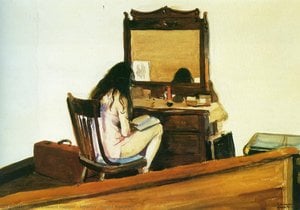
In the quietude of 1926, Edward Hopper captured a moment that would become a cornerstone of American modernism. Railroad Crossing is far more than a mere depiction of a rural Pennsylvania landscape; it is a profound meditation on the architecture of solitude. Through his masterful use of light and shadow, Hopper invites us into a world where time seems to suspend itself, leaving the viewer to wander through a scene of stark, breathtaking beauty. The composition presents an empty road, a silent intersection of paths that suggests both a beginning and an end, wrapped in the nostalgic embrace of a bygone era. For the discerning collector or interior designer, this piece offers a sophisticated focal point, bringing a sense of contemplative calm and intellectual depth to any curated space.
The technical brilliance of the work lies in Hopper’s ability to manipulate chiaroscuro—the dramatic interplay between light and dark. Even within the monochromatic palette of this scene, there is a palpable texture that breathes life into the inanimate. One can almost feel the weathered grain of the wooden structures and the rough, sun-bleached surface of the road. A single traffic light serves as a luminous protagonist, casting an intense, localized glow that pierches the surrounding gloom, emphasizing the emptiness of the landscape. This meticulous attention to detail grounds the painting in a tangible reality, yet the way the light sculpts the forms elevates the scene into something much more ethereal and symbolic.
To understand Railroad Crossing, one must look toward the shifting tides of the Jazz Age. As America underwent rapid urbanization and social upheaval, a sense of disillusionment began to permeate the cultural consciousness. Hopper, a poet of the psychological state, captured this burgeoning anxiety not through chaos, but through stillness. Unlike his contemporaries who sought to celebrate the frenetic energy of modern life, Hopper focused on the quiet tension found in the pauses between moments. The painting reflects the loneliness of an increasingly impersonal world, where even a familiar landscape can feel alien and vast.
For those looking to integrate this masterpiece into a home or gallery, the emotional impact is unparalleled. It does not demand attention with loud colors or aggressive movements; instead, it commands respect through its quiet strength. The sense of tranquility it provides is balanced by a subtle, underlying melancholy—a "quiet desperation" that resonates deeply with the human experience. Whether placed in a minimalist modern study or a classic, traditional library, a high-quality reproduction of this work serves as a window into the soul of American Realism, offering an enduring sense of peace and a timeless invitation to reflect.


1931 - 1967 , United States of America

Explore the profound beauty of American Realism. From Winslow Homer’s rural landscapes to the dignity of everyday life, discover how master artists captured the soul of a nation through evocative oil paintings and timeless fine art techniques.

 Send
Send Share
Share
 Details

 Download
 Similars
 Diaporama
 Stats
Stats

 Read More




































 Glass option is only available in size under 110 CM