The artwork displayed on this page is protected by copyright law, which means we cannot legally create or sell an identical reproduction. This protection is enforced under international agreements such as the Berne Convention and by national laws, including those outlined by the U.S. Copyright Law - Title 17.
As a respectful and legal alternative, we offer custom, hand-painted artworks inspired by the original. Our skilled and professional artists carefully study the original's style, mood, and artistic essence to create a new, unique piece that evokes the same feeling - while remaining an original creation in its own right.
This method fully complies with copyright regulations because it does not involve copying or duplicating the protected artwork. Instead, it is a creative reinterpretation - a new painting that is influenced by the original but not identical to it.
Hand-painted oil on canvas in your size and frame, made to order by our artists. ( Switch to Print Switch to Digital Image)





























Pick from our preset sizes that match the artwork's original proportions.

Type the width and the height you need, to fit your frame or your wall. This is hand-painted, so for a size with a different shape the artist can paint a bit more around the picture, or cut a bit — you choose. We send you a digital mockup to approve before the painting starts. The picture shown on this page does not show the real result — only the mockup does.
Worldwide Delivery () in 3/4 weeks instead of standard 5 weeks. (23 October). No compromise on quality.
notre dame
Reproduction Size
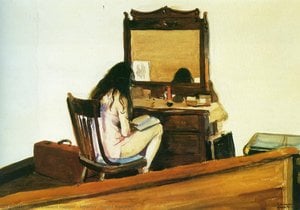
In the quietude of Edward Hopper’s 1931 masterpiece, Notre Dame, we find more than just a depiction of a Parisian landmark; we encounter a profound meditation on the human condition. The painting presents the iconic cathedral not as a bustling center of pilgrimage, but as a monumental silhouette etched against the deepening hues of a twilight sky. Through Hopper’s lens, the architectural grandeur of the Gothic structure becomes a vessel for urban loneliness. The composition captures the cathedral's imposing presence, where its massive clock tower and intricate spires command the viewer's attention, yet there is an unmistakable sense of detachment. As the light fades, the cathedral stands as a silent sentinel over a world that feels increasingly fragmented and solitary.
The technical brilliance of this work lies in Hopper’s mastery of tonal gradation and his ability to sculpt form through light and shadow. Executed in oil on canvas, the painting avoids the frantic energy of more expressive movements, opting instead for a disciplined, stark realism. Hopper employs thin, deliberate layers of paint that allow the underlying textures to breathe, creating an atmospheric depth that pulls the viewer into the cooling evening air. His palette is intentionally muted, utilizing subtle shifts in tone to evoke the melancholy of dusk. This restrained approach ensures that every shadow carries weight and every highlight serves to emphasize the profound stillness that permeates the scene.
To understand Notre Dame, one must look toward the historical landscape from which it emerged. Created during the early years of the Great Depression, the painting reflects the pervasive anxieties of an era defined by economic instability and rapid social transformation. While the subject matter is European, the emotional core is deeply rooted in the American experience of the time—a period marked by a growing sense of alienation within the modernizing cityscape. Hopper utilizes the cathedral as a powerful symbol of enduring tradition and spiritual permanence, standing in stark contrast to the transient, anonymous figures scattered at its base. These sparsely populated figures, caught in moments of quiet contemplation or movement, underscore the difficulty of finding true connection in an increasingly impersonal world.
For the discerning collector or interior designer, this artwork offers a sophisticated emotional anchor for any space. It is a piece that invites introspection rather than mere observation. The painting’s ability to balance monumental scale with intimate emotion makes it a versatile choice for creating atmospheres of serenity, strength, and thoughtful elegance. Whether placed in a contemporary gallery setting or a classic study, Hopper’s vision of Notre Dame serves as a timeless reminder of the beauty found in silence and the enduring majesty of history amidst the fleeting nature of modern life.
The color harmony of "notre dame" is recorded as softly mixed palette.
Overall, "notre dame" is recorded as brilliant. Perceived brightness describes how light or dark the work appears.
To preview a reproduction of "notre dame" by Edward Hopper, open the artwork's Preview page.


1931 - 1967 , United States of America

Explore the profound beauty of American art history. From the Hudson River School to iconic landscapes, discover a curated journey through the masterpieces that defined a nation's spirit and the enduring legacy of American Romanticism.

Explore the profound beauty of American Regionalism. Delve into the art history of Grant Wood and John Steuart Curry, uncovering how these masters captured the soul of the American Heartland through iconic landscapes and rural identity.

Embark on a visual journey through the American wilderness. Discover the sublime beauty of Hudson River School landscapes, from Thomas Cole to Homer Dodge Martin, and learn how to bring this timeless, untamed spirit into your home with museum-quality art reproductions.

 Preview
 Send
Send Share
Share
 Details
 Guide
Guide

 Download
 Similars
 X-Ray
X-Ray Diaporama
 Stats
Stats

 Read More









 Glass option is only available in size under 110 CM