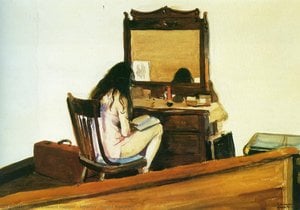
Acrylic On CanvasWallArtContemporary Realism
 1904
1904 61.0 x 24.0 cm
Hand-painted oil on canvas in your size and frame, made to order by our artists. ( Switch to Print Switch to Digital Image)





























Pick from our preset sizes that match the artwork's original proportions.

You may enter your own dimensions to fit a specific frame or space. If your selected size does not match the original image's proportions, we will either crop the artwork or extend the painting with additional hand-painted elements. A digital mockup will be sent for your approval before production begins.
Please note that the on-screen preview does not reflect the actual cropping or extension. Only the mockup will accurately show the final composition.
While custom sizes are available, we recommend selecting a dimension from the predefined list to preserve the original proportions.
Worldwide Delivery () in 3/4 weeks instead of standard 5 weeks. (25 September). No compromise on quality.


Male Nude
Reproduction Size
Edward Hopper, a name inextricably linked to the quietude and subtle melancholy that permeated 20th-century American life, wasn’t simply a painter of scenes; he was a poet of light and shadow, a chronicler of modern isolation. Born in Nyack, New York, in 1882, to middle-class parents of Dutch ancestry, Hopper's early years provided a stable upbringing that nurtured his artistic inclinations. From childhood sketches meticulously dated and signed, it became evident that keen observation and an innate talent for drawing were central to his being.
Though initially encouraged towards commercial illustration – a pragmatic suggestion from his parents – Hopper’s ambitions leaned toward fine art, leading him to the New York School of Art where he studied under William Merritt Chase and Robert Henri. These formative years instilled not only technical skill but also an appreciation for realism and a commitment to depicting the world as he saw it. He absorbed influences from Impressionism and Post-Impressionism, particularly Cézanne’s geometric simplification and Monet’s atmospheric effects, shaping his distinctive visual vocabulary.
Hopper's artistic style is instantly recognizable for its austere compositions, muted color palettes dominated by earthy tones—browns, grays, ochres—and a masterful manipulation of light and shadow. He eschewed dramatic narratives or flamboyant gestures, instead focusing on capturing fleeting moments of everyday life with remarkable precision. His paintings often depict solitary figures inhabiting sparsely furnished interiors, conveying a profound sense of loneliness and introspection. This deliberate restraint wasn’t merely stylistic; it reflected Hopper's deep engagement with psychological themes—the anxieties of modern existence, the complexities of human relationships, and the yearning for connection.
Among Hopper’s most celebrated paintings are “Nighthawks” (1942), a depiction of a late-night diner scene bathed in artificial light, and “Moonrise Over Saint Louis” (1927), which captures the stillness of twilight over a Midwestern cityscape. Recurring motifs—empty rooms, solitary figures gazing out windows, urban landscapes devoid of human presence—underscore Hopper’s preoccupation with themes of alienation and psychological isolation. These images resonate powerfully with viewers because they tap into universal anxieties about solitude and the challenges of navigating modern life.
Edward Hopper's work continues to inspire artists and designers alike, cementing his place as one of America’s most influential painters. His uncompromising realism combined with poetic sensitivity—a careful balance between observation and emotion—established a new standard for depicting the human condition in art. He remains a cornerstone of American Realism, demonstrating that profound artistic expression can emerge from seemingly unremarkable subjects.


1931 - 1967 , United States of America

Explore the powerful social commentary & artistic representation of American Realism. Discover key artists like Bellows & Sloan, and understand the movement's lasting impact on 20th-century art history.

Explore the profound beauty of American Realism. From the Ashcan School's urban grit to intimate portraits, discover how artists captured the authentic soul of a nation through unvarnished truth and masterful observation.

Explore 10 defining masterpieces of Contemporary Realism! Discover Lucian Freud, Chuck Close & more. Uncover stories behind iconic paintings and find museum-quality art reproductions to elevate your home decor on .

Explore 25 iconic Edward Hopper paintings & their stories. Discover American realism, urban loneliness, and timeless beauty through his masterpieces. Find museum-quality art reproductions & curated decor ideas at WahooArt.com.

Explore 10 defining American Realism masterpieces – Hopper, Homer & more. Discover the stories behind these iconic paintings and bring timeless art to your home with WahooArt's museum-quality reproductions. Explore the full collection online.

 Preview
 Send
Send Share
Share
 Details
 Guide
Guide

 Download
 Similars
 X-Ray
X-Ray Diaporama
 Stats
Stats Read More







 Glass option is only available in size under 110 CM