The artwork displayed on this page is protected by copyright law, which means we cannot legally create or sell an identical reproduction. This protection is enforced under international agreements such as the Berne Convention and by national laws, including those outlined by the U.S. Copyright Law - Title 17.
This method fully complies with copyright regulations because it does not involve copying or duplicating the protected artwork. Instead, it is a creative reinterpretation - a new painting that is influenced by the original but not identical to it.
Museum-quality giclée or canvas print with fast production and flexible finish options. ( Buy Hand Made Painting Switch to Digital Image)





























Pick from our preset sizes that match the artwork's original proportions.

Type the width and the height you need, to fit your frame or your wall. A print can only be cut, never made bigger than the picture, so a size with a different shape loses a part of the image. We send you a digital mockup to approve before we print anything. The picture shown on this page does not show the real cut — only the mockup does.
Worldwide Delivery () in 2 weeks instead of standard 4/5 weeks. (28 October)
Approaching the City
Reproduction Size
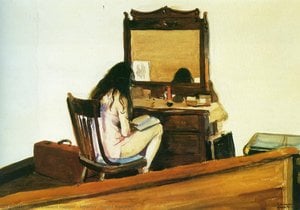
Edward Hopper’s “Approaching the City” is more than just a depiction of a New York street; it’s a distilled essence of 20th-century American experience – a poignant meditation on solitude, urban alienation, and the fleeting moments of connection within a vast, impersonal landscape. Painted in 1931, this work exemplifies Hopper's signature style: meticulously rendered realism imbued with an undercurrent of melancholy that continues to resonate deeply with viewers today. The scene unfolds with a quiet drama – a train emerging from a tunnel beneath a bustling city street, its arrival momentarily disrupting the stillness of the surrounding figures. It’s a tableau frozen in time, capturing a specific moment of transition and hinting at the countless untold stories contained within the urban sprawl.
“Approaching the City” is rich in symbolic meaning, reflecting Hopper’s broader concerns about the changing nature of American life during this period. The train itself represents progress, movement, and perhaps even hope – yet it also isolates the passengers within its confines. The figures on the street, seemingly oblivious to each other, embody a sense of detachment and anonymity characteristic of modern urban existence. The fire hydrant, a mundane object, adds another layer of complexity, suggesting both vulnerability and the potential for disruption. Hopper’s choice of subject matter – a busy city street – is particularly significant given the rapid urbanization sweeping across America in the early 20th century.
Created during the interwar years, “Approaching the City” reflects the anxieties and uncertainties of a nation grappling with economic depression and social change. Hopper’s work aligns with the broader artistic movement of Realism, but he transcends mere representation, imbuing his paintings with a profound psychological depth. His influence extends far beyond the realm of painting; he has become synonymous with American modernism and continues to inspire artists and designers today. The painting's enduring appeal lies in its ability to tap into universal themes of loneliness, displacement, and the search for meaning – emotions that remain powerfully relevant in our own time.
The copyright answer for "Approaching the City" by Edward Hopper: the work is still protected by copyright. This determines whether reproductions of the image may be freely made.
"Approaching the City" by Edward Hopper can be downloaded from the artwork's Download page, as a high-resolution digital image download.
The copyright status of "Approaching the City" - still protected by copyright - follows from the artist's death in 1967.

1931 - 1967 , United States of America
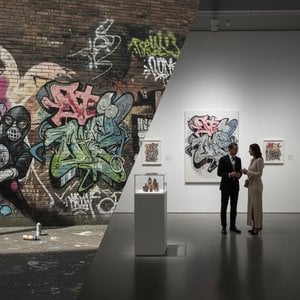
Explore the captivating journey of street art from urban walls to prestigious galleries. Discover how contemporary graffiti has evolved into a high-end collectible movement, redefining modern interior design and global art culture.

 Preview
 Send
Send Share
Share
 Details
 Guide
Guide

 Download
 Similars
 X-Ray
X-Ray Diaporama
 Stats
Stats

 Read More









 Glass option is only available in size under 110 CM