Preview AR preview Switch to Print Switch to Digital Image Send
Details Guide Add to favorites Download Similars X-Ray Diaporama Stats

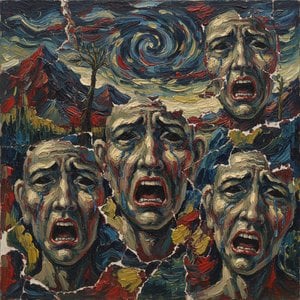
untitled (6418)

A visceral exploration of anxiety unfolds through Edvard Munch's Expressionist masterpiece featuring women in yellow dresses, inviting you to experience the profound emotional depth of this iconic Norwegian work.

Expressionist pioneer Edvard Munch created the iconic The Scream. Discover his haunting masterpieces of anxiety and emotion today.

Hand Made Oil Reproduction

Hand-painted oil on canvas in your size and frame, made to order by our artists. ( Switch to Print Switch to Digital Image)

Corner sample of the P118B picture frame: moulded polystyrene, 5 cm wide and 3 cm thick
P118B $10
Corner sample of the P118H picture frame: moulded polystyrene, 5 cm wide and 3 cm thick
P118H $10
Corner sample of the P118W picture frame: moulded polystyrene, 5 cm wide and 3 cm thick
P118W $10
Corner sample of the P438Z picture frame: moulded polystyrene, 5.5 cm wide and 3.5 cm thick
P438Z $10
Corner sample of the P508JH picture frame: moulded polystyrene, 7 cm wide and 3.5 cm thick
P508JH $12
Corner sample of the P508YH picture frame: moulded polystyrene, 7 cm wide and 3.5 cm thick
P508YH $12
Corner sample of the P805H picture frame: moulded polystyrene, 5 cm wide and 3.5 cm thick
P805H $10
Corner sample of the P805Z picture frame: moulded polystyrene, 5 cm wide and 3.5 cm thick
P805Z $10
Corner sample of the P919BZ picture frame: moulded polystyrene, 7 cm wide and 3.5 cm thick
P919BZ $10
Corner sample of the P919G picture frame: moulded polystyrene, 7 cm wide and 3.5 cm thick
P919G $10
Corner sample of the P919XJ picture frame: moulded polystyrene, 7 cm wide and 3.5 cm thick
P919XJ $10
Corner sample of the P959ZH picture frame: moulded polystyrene, 5 cm wide and 3 cm thick
P959ZH $10
Corner sample of the P968JZ picture frame: moulded polystyrene, 6 cm wide and 4 cm thick
P968JZ $12
Corner sample of the W106C picture frame: solid wood, 5 cm wide and 3 cm thick
W106C $8
Corner sample of the W218G picture frame: solid wood, 5 cm wide and 3 cm thick
W218G $10
Corner sample of the W218JH picture frame: solid wood, 5 cm wide and 3 cm thick
W218JH $8
Corner sample of the W218Y picture frame: solid wood, 5 cm wide and 3 cm thick
W218Y $10
Corner sample of the W307PJ picture frame: solid wood, 6 cm wide and 3 cm thick
W307PJ $10
Corner sample of the W316G picture frame: solid wood, 6 cm wide and 3 cm thick
W316G $10
Corner sample of the W316PJ picture frame: solid wood, 6 cm wide and 3 cm thick
W316PJ $8
Corner sample of the W316Y picture frame: solid wood, 6 cm wide and 3 cm thick
W316Y $10
Corner sample of the W398PJ picture frame: solid wood, 5 cm wide and 3 cm thick
W398PJ $8
Corner sample of the W4111J picture frame: solid wood, 6.5 cm wide and 3.5 cm thick
W4111J $10
Corner sample of the W500HY picture frame: solid wood, 7 cm wide and 5 cm thick
W500HY $15
Corner sample of the W500JH picture frame: solid wood, 7 cm wide and 5 cm thick
W500JH $15
Corner sample of the W692G picture frame: solid wood, 8 cm wide and 4 cm thick
W692G $12
Corner sample of the W849H picture frame: solid wood, 5 cm wide and 3 cm thick
W849H $8
Corner sample of the W940BG picture frame: solid wood, 7.5 cm wide and 4.5 cm thick
W940BG $15
Corner sample of the W953PJ picture frame: solid wood, 6 cm wide and 3.5 cm thick
W953PJ $8

Standard
custom
CM
INCH

Pick from our preset sizes that match the artwork's original proportions.

width
height

Type the width and the height you need, to fit your frame or your wall. This is hand-painted, so for a size with a different shape the artist can paint a bit more around the picture, or cut a bit — you choose. We send you a digital mockup to approve before the painting starts. The picture shown on this page does not show the real result — only the mockup does.

Examples of what can be changed: Replace face with customer photo; Add pet (e.g., replace cat with dog); Include hidden message in background; Change background landscape or elements.
After order, WahooArt.com team will email client for instructions and provide a mockup preview

Worldwide Delivery () in 3/4 weeks instead of standard 5 weeks. (18 October). No compromise on quality.

Free Worldwide Express Shipping
High-Quality Linen Canvas
Full Shipping Insurance
Customs Tax Refund Guarantee
True Color Matching Guarantee
100-Day Return Policy (Defects Only)
100% Money-Back Guarantee
Bulk Discount Offer

Total Price

$ 272

untitled (6418)

Reproduction Medium

Reproduction Size

-

Total Price

$ 272

Quick Facts

  • Artistic style: Psychological Expressionism
  • Notable elements or techniques: Yellow hats & dresses; Horse figure
  • Medium: Painting
  • Movement: Expressionism

Art Quiz

There is only one correct answer for each question.

Question 1:
What is the primary subject matter depicted in ‘untitled (6418)’?
Question 2:
The painting prominently features a horse. What role does this animal serve in enhancing the scene?
Question 3:
What artistic style is ‘untitled (6418)’ associated with?
Question 4:
Edvard Munch’s personal experiences profoundly influenced his art. Which of the following best describes a key theme explored in ‘untitled (6418)’?
Question 5:
The painting utilizes vibrant yellow hues. What is the likely purpose of this color choice?

A Symphony of Yellows: Decoding Munch’s “Untitled (6418)”

Edvard Munch's "Untitled (6418)" isn’t merely a depiction of women strolling through a tranquil Norwegian town; it’s a visceral exploration of human emotion rendered in the distinctive language of Expressionism. Painted around 1903, this artwork embodies Munch’s preoccupation with psychological states—specifically fear and anxiety—a theme that would become central to his artistic legacy. The photograph captures a scene bathed in muted sunlight, highlighting four figures draped in yellow dresses and hats, engaged in conversation as they navigate the cobblestone street. A solitary horse stands on the periphery, adding an element of quiet unease to the composition.
  • Style: Expressionism – Munch’s approach rejects academic realism, prioritizing subjective experience over objective representation. He sought to convey inner turmoil rather than external appearances.
  • Technique: The painting utilizes tempera on canvas, a medium favored by Munch for its ability to achieve luminous colors and textural depth. Notice the deliberate brushstrokes—bold, swirling lines that contribute to the overall feeling of restlessness and instability.
  • Historical Context: Created during Munch’s formative years as an artist, “Untitled (6418)” reflects the anxieties prevalent in Europe at the turn of the century – a period marked by rapid industrialization, social upheaval, and burgeoning philosophical debates about consciousness and emotion. It aligns perfectly with the broader Expressionist movement's reaction against Impressionism’s focus on capturing fleeting moments of beauty.

Symbolism: The Language of Emotion
  • The dominant color—yellow—holds significant symbolic weight. Traditionally associated with optimism and joy, Munch subverts this expectation here, portraying it as a sickly hue, mirroring the pervasive sense of dread within the scene. Yellow represents not happiness but rather an unsettling vulnerability, hinting at hidden anxieties beneath the surface of social interaction.
  • The horse’s presence is deliberately ambiguous. Often interpreted as representing death and decay—a recurring motif in Munch's oeuvre—it underscores the inescapable awareness of mortality that permeates the artwork. Its stillness contrasts sharply with the movement of the women, emphasizing their isolation amidst a larger existential concern.
  • Emotional Impact: Capturing Inner Turmoil
  • "Untitled (6418)" succeeds in conveying a profound emotional resonance—a palpable feeling of unease and apprehension. Munch’s masterful use of color and brushwork creates an atmosphere that compels the viewer to confront uncomfortable truths about human psychology. The painting isn't simply depicting a visual scene; it’s channeling a deeply felt psychological state, mirroring the artist’s own struggles with mental illness.
  • Consider how Munch captures the subtle nuances of facial expressions and body language—details that communicate unspoken anxieties and vulnerabilities. This meticulous observation elevates “Untitled (6418)” beyond mere visual representation, transforming it into a powerful meditation on the human condition.
  • A Legacy of Anxiety
  • Munch’s exploration of psychological themes continues to captivate audiences today. "Untitled (6418)" stands as a testament to his ability to translate inner turmoil into visual art—a feat achieved through masterful technique and profound symbolic depth. Its enduring appeal resides in its unflinching portrayal of human vulnerability and its recognition that beauty can coexist with fear.
  • A reproduction of “Untitled (6418)” offers an opportunity to experience Munch’s artistic vision firsthand, bringing the unsettling elegance of Expressionism into your home. Explore our high-quality prints at WahooArt for a captivating glimpse into the heart of Norwegian art history.

    Questions & Answers

    What aliases or alternate names does Edvard Munch have?

    Edvard Munch is also known as Munch.

    Is "untitled (6418)" by Edvard Munch a painting, a drawing or a print?

    In the catalog, "untitled (6418)" by Edvard Munch is filed as wall art. The category helps find similar works.

    What atmosphere does "untitled (6418)" have?

    "untitled (6418)" has a dramatic atmosphere.


    Artist Biography

    A Life Shaped by Loss

    Edvard Munch arrived in the world in 1863, born into the stark landscapes of Norway. His early years were defined by a heavy presence of grief that would later find its way onto his canvases. The deaths of his mother and his sister, Sophie, both taken by tuberculosis, left a deep mark on his young mind. These losses created a preoccupation with mortality and the fragility of life that stayed with him forever. He grew up in a household where the shadows of sickness were never far away.

    His father, Christian, was a physician who struggled with intense religious devotion and mental instability. This atmosphere of dread and the vivid ghost stories told in his childhood helped shape his later visions. Munch did not merely paint what he saw; he sought to externalize his internal state. He called this approach soul painting. It was a way to translate psychological distress into visual form, using the colors and shapes of his own experience.

    The Path to Expressionism

    Munch began his formal studies at the Royal School of Art and Design in Kristiania, which is now known as Oslo. During this time, he moved within bohemian circles that challenged the strict rules of academic art. A significant influence was Hans Jæger, a nihilist who encouraged Munch to abandon conventional styles and instead focus on his own subjective emotions. This shift led him toward the development of Expressionism.

    Travels through Europe brought new perspectives to his work. In Paris, he encountered the techniques of artists like Paul Gauguin and Vincent van Gogh, particularly their use of color. In Berlin, his connections with figures such as August Strindberg further pushed his investigations into psychological themes. He began to move away from naturalistic representation, opting instead for distorted forms and rhythmic lines that could communicate the tremors of human existence.

    Themes and Lasting Impact

    Much of his work belongs to a series he called The Frieze of Life, where he explored the recurring cycles of love, fear, death, and anxiety. Some of his most recognized paintings include:

    • The Scream: A work from 1893 that uses swirling, fiery landscapes to represent existential dread.
    • Madonna: A piece that explores themes of sexuality and mortality.
    • The Sick Child: A poignant reminder of the loss of his sister.
    • Puberty: An exploration of the physical and psychological changes of youth.

    Munch was a highly active printmaker, using techniques like etching, lithography, and woodcut to expand his reach. He possessed over one thousand paintings at the time of his death in 1944. His ability to confront the darker aspects of the human condition helped pave the way for later movements like German Expressionism. Today, much of his legacy is preserved in the Munch Museum in Oslo, where his work continues to speak to the complexities of the human psyche.

    Edvard Munch

    Edvard Munch

    1863 - 1944 , Sweden

    Quick Facts

    • Artistic Movement Or Style:
      • Expressionism
      • Symbolism
      • Post-Impressionism
    • Artists Or Movements Influenced By This Artist: ['German Expressionism']
    • Artists Who Influenced This Artist:
      • Paul Gauguin
      • Vincent van Gogh
      • Toulouse-Lautrec
    • Full Name: Edvard Munch
    • Nationality: Norwegian
    • Notable Artworks:
      • The Scream
      • Madonna
      • The Sick Child
      • Puberty
    • Place Of Birth: Adelsbruk, Sweden
    • Date Of Birth: 1863
    • Date Of Death: 1944
    Explore artworks organized by themes, styles, and characteristics.