

Museum-quality giclée or canvas print with fast production and flexible finish options. ( Buy Hand Made Painting Switch to Digital Image)





























Pick from our preset sizes that match the artwork's original proportions.

Type the width and the height you need, to fit your frame or your wall. A print can only be cut, never made bigger than the picture, so a size with a different shape loses a part of the image. We send you a digital mockup to approve before we print anything. The picture shown on this page does not show the real cut — only the mockup does.
Worldwide Delivery () in 2 weeks instead of standard 4/5 weeks. (21 October)
Moon Light
Reproduction Size
Edvard Munch’s “Moon Light,” painted in 1895, isn't merely a depiction of a coastal scene; it’s an immersive experience—a carefully constructed meditation on light, emotion, and the human condition. This oil-on-canvas masterpiece, firmly rooted within the Symbolist movement, invites us into a realm where tranquility dances with underlying currents of melancholy and introspection. More than just a pretty picture, “Moon Light” is a profound exploration of the psychological landscape, rendered with Munch’s signature blend of raw emotion and meticulous technique.
The painting immediately establishes a sense of quietude—a serene beach bathed in the ethereal glow of the moon. The composition unfolds gently: a dark foreground dominated by silhouetted trees anchors the eye while receding into the distance, where a body of water reflects the luminous disc overhead. Two figures, subtly placed near the left and center of the scene, introduce a poignant element of human connection to this otherwise solitary vista. They aren’t dramatic or imposing; rather, they seem absorbed in their own thoughts, adding a layer of quiet contemplation to the overall atmosphere. The strategic placement of these figures suggests a shared experience of the moon's calming influence, a silent acknowledgment of beauty and perhaps even a touch of wistful longing.
At the heart of “Moon Light” lies Munch’s masterful manipulation of light. It’s not simply illumination; it's a potent symbol, imbued with layers of meaning. The moon itself—a dominant presence in the composition—represents serenity, peace, and perhaps even a veiled melancholy. Its gentle radiance washes over the scene, creating an almost dreamlike ambiance, as if time has slowed to a standstill. Munch deliberately employs subdued colors – predominantly blues and greens – which further enhance this sense of tranquility, evoking the cool stillness of a night sea. However, the vertical pillar of moonlight piercing through the darkness introduces a subtle element of mystery and perhaps even foreboding, hinting at the complexities beneath the surface of apparent serenity.
Examining Munch's technique reveals his profound understanding of capturing fleeting moments and conveying raw emotion through visual means. The painting is characterized by a delicate balance between realism and abstraction. While the landscape is recognizable, it’s rendered with an expressive brushstroke—a deliberate departure from photographic accuracy. Notice how he uses short, broken strokes to depict the trees, creating a sense of movement and suggesting the rustling of leaves in the night breeze. The subtle gradations of color – particularly in the water reflecting the moonlight – demonstrate his mastery of blending hues to create depth and atmosphere. The careful positioning of the figures, coupled with the strategic use of shadow, draws the viewer’s eye through the scene, guiding them on a journey of contemplation.
“Moon Light” is part of a larger body of work by Munch that grapples with universal themes—mortality, anxiety, love, and loss. His exploration of these subjects often involved a deep engagement with Symbolism, which sought to express profound truths through symbolic imagery rather than literal representation. Works like “Despair,” also exploring the depths of human emotion, demonstrate this thematic continuity. Munch’s work was profoundly influenced by the Modernist movement, emphasizing subjective experience and experimentation—a shift away from traditional artistic conventions. The painting's evocative power stems not just from its aesthetic qualities but also from its reflection of Munch’s own personal struggles and his profound understanding of the human psyche. It stands as a testament to his ability to translate inner turmoil into a visually arresting and emotionally resonant work of art.
For those seeking a high-quality reproduction of this iconic painting, WahooArt offers meticulously hand-painted reproductions that capture the essence of Munch’s vision with stunning accuracy and detail. Explore our collection today and bring the serenity and symbolism of “Moon Light” into your home or office.
The suggested use for "Moon Light" by Edvard Munch is statement. It can serve other purposes as well.
The recommended space for "Moon Light" by Edvard Munch is a living room. The suggestion can of course be adapted to your interior.
"Moon Light" by Edvard Munch is classified as wall art. The category describes the kind of artwork the original is.

Edvard Munch arrived in the world in 1863, born into the stark landscapes of Norway. His early years were defined by a heavy presence of grief that would later find its way onto his canvases. The deaths of his mother and his sister, Sophie, both taken by tuberculosis, left a deep mark on his young mind. These losses created a preoccupation with mortality and the fragility of life that stayed with him forever. He grew up in a household where the shadows of sickness were never far away.
His father, Christian, was a physician who struggled with intense religious devotion and mental instability. This atmosphere of dread and the vivid ghost stories told in his childhood helped shape his later visions. Munch did not merely paint what he saw; he sought to externalize his internal state. He called this approach soul painting. It was a way to translate psychological distress into visual form, using the colors and shapes of his own experience.
Munch began his formal studies at the Royal School of Art and Design in Kristiania, which is now known as Oslo. During this time, he moved within bohemian circles that challenged the strict rules of academic art. A significant influence was Hans Jæger, a nihilist who encouraged Munch to abandon conventional styles and instead focus on his own subjective emotions. This shift led him toward the development of Expressionism.
Travels through Europe brought new perspectives to his work. In Paris, he encountered the techniques of artists like Paul Gauguin and Vincent van Gogh, particularly their use of color. In Berlin, his connections with figures such as August Strindberg further pushed his investigations into psychological themes. He began to move away from naturalistic representation, opting instead for distorted forms and rhythmic lines that could communicate the tremors of human existence.
Much of his work belongs to a series he called The Frieze of Life, where he explored the recurring cycles of love, fear, death, and anxiety. Some of his most recognized paintings include:
Munch was a highly active printmaker, using techniques like etching, lithography, and woodcut to expand his reach. He possessed over one thousand paintings at the time of his death in 1944. His ability to confront the darker aspects of the human condition helped pave the way for later movements like German Expressionism. Today, much of his legacy is preserved in the Munch Museum in Oslo, where his work continues to speak to the complexities of the human psyche.

1863 - 1944 , Sweden
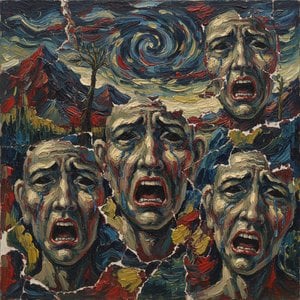
Explore the profound psychological depth of Expressionist art. From Munch to Van Gogh, discover how distorted forms and bold colors convey raw human emotion through our expert guide on this transformative movement.

Explore the profound psychological depths of Symbolic Expressionism. From Edvard Munch’s visceral landscapes to the emotive power of color, discover how art unveils hidden human emotions through a sophisticated lens of art history and mastery.

 Preview
 Send
Send Share
Share
 Details
 Guide
Guide

 Download
 Similars
 X-Ray
X-Ray Diaporama
 Stats
Stats

 Read More









 Glass option is only available in size under 110 CM


