FREE ART CONSULTATION

x
Buy print Buy printBuy Image Buy Image SendSend
DetailsDetails Add to favorites Add to favorites DownloadDownload SimilarsSimilars X-RayX-Ray DiaporamaDiaporama

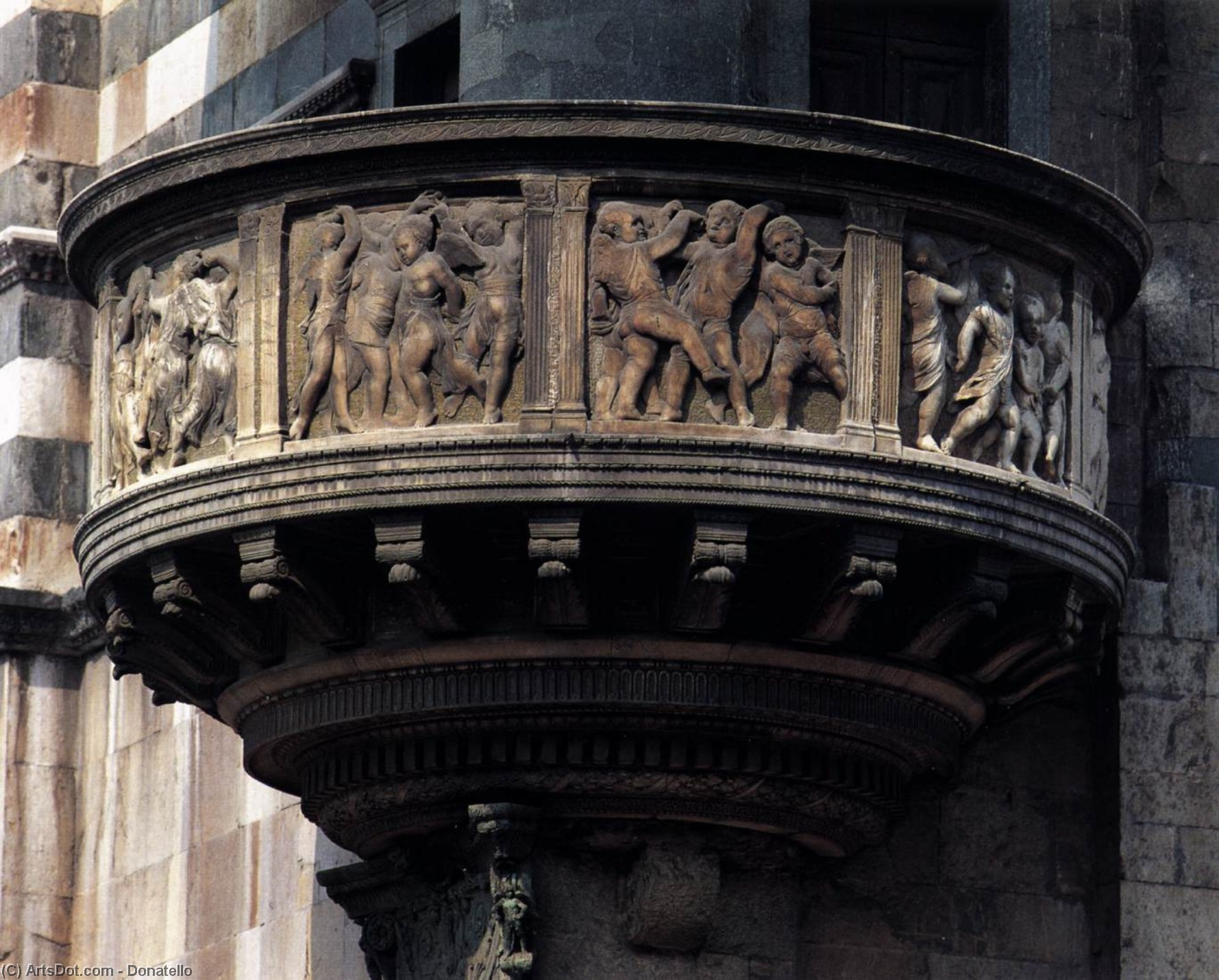
Pulpit

Marvel at Donatello's intricate marble Pulpit, a masterpiece of Early Renaissance sculpture. Explore its detailed relief panels depicting human and animal figures—a testament to artistic mastery.

Donatello (1386-1466): Florentine sculptor of the Early Renaissance. Pioneer of freestanding nude sculpture like 'David,' known for expressive realism, classical influence & innovative techniques. Explore his masterpieces and legacy.

Hand Made Oil Reproduction

Hand-painted oil on canvas in your size and frame, made to order by our artists.

Standard
custom
CM
INCH

Pick from our preset sizes that match the artwork's original proportions.

width
height

You may enter your own dimensions to fit a specific frame or space. If your selected size does not match the original image's proportions, we will either crop the artwork or extend the painting with additional hand-painted elements. A digital mockup will be sent for your approval before production begins.
Please note that the on-screen preview does not reflect the actual cropping or extension. Only the mockup will accurately show the final composition.
While custom sizes are available, we recommend selecting a dimension from the predefined list to preserve the original proportions.

Examples of what can be changed: Replace face with customer photo; Add pet (e.g., replace cat with dog); Include hidden message in background; Change background landscape or elements.
After order, WahooArt.com team will email client for instructions and provide a mockup preview

Worldwide Delivery () in 3/4 weeks instead of standard 5 weeks. (2 July). No compromise on quality.

why_choose_icon
Free Worldwide Express Shipping
why_choose_icon
High-Quality Linen Canvas
why_choose_icon
Full Shipping Insurance
why_choose_icon
Customs Tax Refund Guarantee
why_choose_icon
True Color Matching Guarantee
why_choose_icon
60-Day Return Policy (Defects Only)
why_choose_icon
100% Money-Back Guarantee
why_choose_icon
Bulk Discount Offer

Total Price

-

reproduction

Pulpit

Reproduction Medium

Reproduction Size

-

Total Price

-

Quick Facts

  • Year: 1438
  • Subject or theme: Human and animal figures
  • Influences: Nicola Pisano
  • Medium: Marble
  • Artistic style: Renaissance sculpture
  • Dimensions: 73 x 79 cm
  • Notable elements or techniques:
    • Relief carvings
    • Linear perspective

Art Quiz

There is only one correct answer for each question.

Question 1:
What is the primary material used to create Donatello’s Pulpit?
Question 2:
Approximately when was Donatello's Pulpit created?
Question 3:
The photograph emphasizes the height and grandeur of the pulpit. Which photographic technique contributes most to this effect?
Question 4:
What artistic style is Donatello’s Pulpit primarily associated with?

Artwork Description

A Masterpiece of Renaissance Sculpture: Donatello's Marble Pulpit

Donatello’s marble pulpit, created in 1438 for the Church of San Lorenzo in Florence, stands as a pivotal work within the Early Renaissance. This remarkable structure transcends its functional purpose—to provide a raised platform for delivering sermons—becoming a breathtaking display of artistic innovation and technical skill. The photograph captures a detailed close-up of this architectural marvel, revealing the intricate relief panels that adorn its exterior. The image allows us to appreciate the sheer artistry involved in transforming marble into a vibrant narrative tapestry. While the original pulpit has undergone significant alterations over time, this photographic study offers a glimpse into its initial splendor and Donatello’s vision.

Style & Technique: Bridging Gothic Tradition with Renaissance Humanism

Donatello's work on the pulpit represents a fascinating transition from late Gothic aesthetics to the burgeoning humanism of the Early Renaissance. While influenced by earlier decorative traditions, particularly those seen in the works of Nicola Pisano, Donatello infused his carvings with a newfound realism and dynamism. The style is characterized by an attention to detail that brings the figures—both human and animal—to life. The use of *rilievo schiacciato* (flattened relief) – a technique where shallow carving creates depth and perspective - demonstrates Donatello’s mastery of manipulating light and shadow to enhance the three-dimensional effect. The photograph highlights this skill, showcasing how subtle variations in the marble's surface create an illusion of movement and volume. The composition skillfully balances the curved form of the pulpit with strong architectural lines, creating a harmonious visual experience.

Symbolism & Narrative: A Tapestry of Biblical Stories

Though the precise narrative depicted within the relief panels remains partially obscured in this close-up view, it is understood that they illustrate scenes from the Old and New Testaments, likely chosen to reinforce the sermons delivered from the pulpit. The figures engaged in various activities suggest a rich tapestry of biblical stories—a visual sermon for those who could not read. The inclusion of animals alongside human figures adds another layer of complexity, potentially symbolizing virtues or vices associated with specific narratives. Beyond the literal depiction of religious scenes, the pulpit itself embodies a sense of reverence and devotion. The meticulous craftsmanship speaks to the importance placed on artistic excellence during the Renaissance, reflecting a renewed appreciation for classical ideals and human potential.

Emotional Impact & Legacy: A Timeless Expression of Artistic Mastery

Viewing this photograph evokes a profound sense of historical significance and artistic mastery. Donatello’s pulpit is not merely a decorative element; it's a testament to the power of art to inspire, educate, and uplift. The quiet grandeur and timeless beauty captured in the image resonate with viewers across centuries. Donatello’s innovations—his realistic portrayal of human figures, his pioneering use of *rilievo schiacciato*, and his integration of classical elements—profoundly influenced subsequent generations of artists, including Michelangelo. Owning a reproduction of this iconic work allows you to bring a piece of Renaissance history into your home or office, creating an atmosphere of sophistication and intellectual curiosity. It serves as a constant reminder of the enduring power of human creativity and the pursuit of artistic excellence.

Artist Biography

early life and career

donato di niccolò di betto bardi, known as donatello, was born in florence, italy around 1386. he studied classical sculpture, which heavily influenced his development of an early renaissance style. this new approach to art and culture would eventually become the hallmark of the florentine renaissance.

key works and innovations

donatello's most famous work, david, was the first freestanding nude male sculpture since antiquity. commissioned by the medici family, it showcased his innovative style and technical expertise. other notable works include:
  • st. louis of toulouse (now in the museum of the basilica di santa croce), which featured a classical frame designed by donatello.
  • the sacrifice of isaac, created for the campanile of santa maria del fiore in florence, characterized by strong portrait details.
  • crucifix (1425) for santa croce, which portrayed christ in a moment of agony.

artistic style and legacy

donatello's style can be divided into broad phases, beginning with the development of expressiveness and classical monumentality. his work was not immediately accepted by the community but eventually became the most popular, influencing other italian courts and european artists. key art movements:

personal life and working style

donatello was known for being amiable and well-liked, but poor at the business side of his career. he tended to accept more commissions than he could handle, often completing works late or handing them over to other sculptors. notable artworks and artists:

museums and art collections:

Donatello

Donatello

1386 - 1466 , Italy

Quick Facts

  • Artistic Movement Or Style: Early Renaissance
  • Artists Or Movements Influenced By This Artist:
    • Italian Renaissance
    • Early Renaissance
    • Florentine Renaissance
  • Artists Who Influenced This Artist: ['Classical sculpture']
  • Date Of Birth: c. 1386
  • Date Of Death: 1466
  • Full Name: Donatello di Niccolò
  • Nationality: Italian
  • Notable Artworks:
    • David
    • St. Louis of Toulouse
    • Sacrifice of Isaac
    • Crucifix
  • Place Of Birth: Florence, Italy
Explore artworks organized by themes, styles, and characteristics.