x
PreviewPreview AR previewAR preview Buy Hand Made Painting Buy Hand Made PaintingBuy Image Buy Image SendSend
DetailsDetails Add to favorites Add to favorites DownloadDownload SimilarsSimilars X-RayX-Ray DiaporamaDiaporama

On high seas

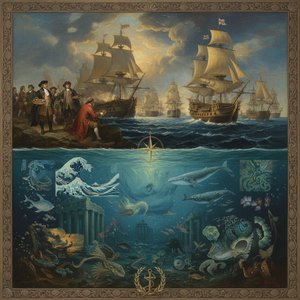
Experience the drama of Dimitris Mytaras' 'On High Seas.' This powerful painting captures a ship battling stormy waters, showcasing his blend of naturalism and expressionism. A stunning addition to any art collection.

Discover Dimitris Mytaras, a 20th-century Greek painter known for his expressive figures & naturalistic works. Explore his themes of human life & social commentary.

Giclée / Art Print

Museum-quality giclée or canvas print with fast production and flexible finish options. (Buy Hand Made Painting Buy Hand Made PaintingBuy Image Buy Image)

P118B $10
P118H $10
P118W $10
P438Z $10
P508JH $12
P508YH $12
P805H $10
P805Z $10
P919BZ $10
P919G $10
P919XJ $10
P959ZH $10
P968JZ $12
W106C $8
W218G $10
W218JH $8
W218Y $10
W307PJ $10
W316G $10
W316PJ $8
W316Y $10
W398PJ $8
W4111J $10
W500HY $15
W500JH $15
W692G $12
W849H $8
W940BG $15
W953PJ $8

Standard
custom
CM
INCH

Pick from our preset sizes that match the artwork's original proportions.

width
height

You may enter your own dimensions to fit a specific frame or space. If your selected size does not match the original image's proportions, we will either crop the artwork or extend the image with a mirrored or solid-fill edge. A digital mockup will be sent for your approval before production begins.
Please note that the on-screen preview does not reflect the actual cropping or extension. Only the mockup will accurately show the final composition.
While custom sizes are available, we recommend selecting a dimension from the predefined list to preserve the original proportions.

Worldwide Delivery () in 2 weeks instead of standard 4/5 weeks. (5 September)

why_choose_icon
Free Worldwide Express Shipping
why_choose_icon
High-Quality Linen Canvas
why_choose_icon
Full Shipping Insurance
why_choose_icon
Customs Tax Refund Guarantee
why_choose_icon
True Color Matching Guarantee
why_choose_icon
60-Day Return Policy (Defects Only)
why_choose_icon
100% Money-Back Guarantee
why_choose_icon
Bulk Discount Offer

Total Price

$ 69

reproduction

On high seas

Giclée / Art Print

Reproduction Size

-

Total Price

$ 69

Quick Facts

  • Notable elements or techniques: Dramatic stormy sky, chaotic scene
  • Influences: Yiannis Moralis
  • Artist: Dimitris Mytaras
  • Title: On high seas
  • Artistic style: Expressionism, Naturalism

Art Quiz

There is only one correct answer for each question.

Question 1:
What is the primary subject depicted in Dimitris Mytaras’s painting, "On High Seas?"
Question 2:
Based on the provided biography, what artistic styles are most prominent in Dimitris Mytaras's work?
Question 3:
What details suggest a sense of danger or chaos in the painting?
Question 4:
Dimitris Mytaras studied at which prestigious art institutions?

A Dramatic Encounter with the Elements: "On High Seas" by Dimitris Mytaras

This striking painting, “On High Seas,” captures a moment of intense drama and vulnerability against the raw power of nature. Dimitris Mytaras, a significant figure in 20th-century Greek art, presents us with a large sailing ship battling turbulent waters under a menacing, stormy sky. The scene is not merely representational; it’s an exploration of human resilience in the face of overwhelming forces. Two smaller vessels are also present, hinting at a wider maritime narrative and perhaps suggesting themes of rescue or isolation. The composition immediately draws the viewer into the heart of the storm, evoking a visceral sense of movement and peril.

Style & Technique: Bridging Naturalism and Expressionism

Mytaras’s artistic journey is characterized by a fascinating evolution between naturalism and expressionism. This work exemplifies that transition. While the depiction of the ship and its surroundings demonstrates a keen observational skill – a hallmark of his earlier, more naturalistic period – the dramatic sky and the agitated waves reveal an emerging expressive quality. The brushwork appears dynamic, with visible strokes contributing to the feeling of chaos and urgency. The color palette is dominated by cool tones—grays, blues, and greens—accentuated by darker shadows that amplify the sense of foreboding. It’s a masterful blend where realistic detail serves to heighten the emotional impact rather than simply documenting reality.

Historical Context & Influences

Dimitris Mytaras (1934-2017) was deeply rooted in Greek artistic tradition, studying under Yiannis Moralis at the Athens School of Fine Arts. His later studies in stage design at the École Nationale Supérieure des Arts Décoratifs in Paris broadened his perspective and likely influenced his compositional choices. The 1970s, the period during which this work was likely created, saw a rise in artists exploring themes of social commentary and existential anxieties – elements that resonate within “On High Seas.” The painting can be seen as reflecting broader concerns about humanity's relationship with nature and its vulnerability to unpredictable forces. Mytaras’ participation in the 1972 Venice Biennale further cemented his place within the international art scene.

Symbolism & Emotional Impact

Beyond a straightforward depiction of a maritime event, “On High Seas” carries symbolic weight. The ship itself can be interpreted as representing humanity's journey through life – fraught with challenges and uncertainties. The stormy sea embodies the unpredictable nature of existence, while the birds circling above might symbolize hope or perhaps impending doom. The smaller boats introduce an element of potential salvation or further isolation. Ultimately, the painting evokes a powerful emotional response: a sense of awe at the power of nature, coupled with empathy for those struggling against it. It’s a work that invites contemplation on themes of resilience, vulnerability, and the enduring human spirit.

Artist Biography

Early Life and Influences – A Caribbean Foundation

Frank Bowling’s artistic journey began far from the bustling galleries of London, rooted in the vibrant landscape of colonial British Guiana. Born in 1934 in Bartica, a small town nestled on the Essequibo River, he was the eldest son of Agatha and Richard Bowling, immigrants who had established a tailoring business there. This early environment—a blend of Caribbean culture and the practicalities of a family trade—laid the groundwork for his distinctive approach to art. His mother’s skill as a seamstress and dressmaker, combined with the rhythms of daily life in New Amsterdam, instilled in him an appreciation for pattern, texture, and the transformative power of materials – elements that would later become central to his work. Crucially, Bowling's education at the Catholic Boys School and Barbice High School provided him with a foundation in formal learning, while his mentor, Joseph C. Fitzpatrick, the director of art for Pittsburgh’s public schools, recognized his talent and secured him a scholarship to the Pennsylvania Academy of Fine Arts in Philadelphia. This early exposure to established artistic traditions, coupled with the influence of the Barnes Foundation's collections, shaped his understanding of painting and set him on a path toward exploring abstraction and challenging conventional notions of representation. The move to London in 1953 marked a significant shift, exposing him to a new cultural landscape and fostering connections that would prove vital to his artistic development.
  • Key Influences:** Caribbean culture, family trade (tailoring), Joseph C. Fitzpatrick’s mentorship, Pennsylvania Academy of Fine Arts, Barnes Foundation collections.

The Royal College of Art and Early Experimentation

Bowling's time at the Royal College of Art in London proved to be a pivotal period of artistic exploration and experimentation. Surrounded by fellow emerging artists like David Hockney and Derek Boshier, he was exposed to a diverse range of ideas and techniques. The influence of Francis Bacon, a prominent figure at the RCA during that era, profoundly impacted Bowling’s approach to painting—particularly his willingness to embrace expressive brushwork and explore the emotional resonance of color. However, Bowling's artistic trajectory wasn't solely defined by imitation; he quickly developed his own distinctive style, characterized by layered applications of paint, fragmented imagery, and a deliberate blurring of boundaries between representation and abstraction. This period saw him grappling with questions of identity, memory, and the relationship between personal experience and formal structure. His early works often incorporated elements of collage and assemblage, reflecting a desire to integrate disparate visual sources into a cohesive whole. The suspension from the RCA due to his relationship with registrar Paddy Kitchen highlighted the restrictive social norms of the time, but ultimately fueled his determination to forge his own artistic path.
  • Key Developments:** Exposure to Francis Bacon’s expressive style, experimentation with collage and assemblage, exploration of identity and memory.

Abstraction and the Exploration of Memory

Bowling's artistic practice evolved dramatically in the mid-1960s, marked by a shift towards abstraction and an increasingly personal engagement with memory and experience. Inspired by the work of Wassily Kandinsky and Paul Klee, he began to develop a system of layered painting—a technique that involved applying multiple layers of paint, often in contrasting colors, to create complex visual textures and rhythms. These works, such as *Mirror* (1964-6), are characterized by their fragmented imagery, ambiguous forms, and subtle shifts in color and tone. They represent a departure from traditional representation, inviting viewers to engage with the work on an emotional and intuitive level. Simultaneously, Bowling drew heavily upon his own memories of growing up in British Guiana—the sights, sounds, and smells of his childhood home, the rhythms of Caribbean life, and the legacy of his family’s tailoring business. These personal associations were interwoven into his abstract compositions, creating a rich tapestry of meaning that defies easy interpretation. The influence of popular culture, particularly advertising imagery and consumer products, also began to surface in his work, reflecting the increasingly mediated nature of modern experience.
  • Key Characteristics:** Layered painting technique, fragmented imagery, exploration of memory and personal associations, incorporation of pop-cultural references.

Later Work and Legacy – A Pioneer of Color

Throughout the 1970s and beyond, Bowling continued to push the boundaries of abstract painting, developing a distinctive visual language that combined elements of color field painting, geometric abstraction, and gestural expression. His later works often featured bold color combinations, dynamic brushwork, and a sense of controlled chaos—a reflection of his ongoing engagement with the complexities of modern life. Bowling’s work has been recognized for its pioneering contributions to color theory and its exploration of the relationship between perception and representation. He was particularly interested in how color could evoke emotion, create spatial illusions, and disrupt traditional notions of visual hierarchy. His influence can be seen in the work of numerous contemporary artists who have embraced abstraction as a means of exploring personal experience and challenging conventional artistic practices. Frank Bowling’s legacy extends beyond his individual artworks; he is remembered as a key figure in the development of post-war British art, a courageous innovator who consistently defied expectations and pushed the boundaries of creative expression.
  • Significant Achievements:** Development of layered painting technique, exploration of color theory, influence on contemporary artists.

A Complex Figure – Identity and Representation

Bowling’s artistic identity was often shaped by complex social and political forces. His early life as a mixed-race child in colonial British Guiana exposed him to issues of race, class, and cultural difference—themes that would continue to inform his work throughout his career. His 1967 pamphlet *Black Is a Color*, a direct response to Ishmael Reed’s controversial article on the Black Arts Movement, stands as a powerful statement against reductive notions of identity and artistic representation. In this text, Bowling argued forcefully that art should not be defined by race alone but rather by its capacity for expression and innovation. Despite his significant contributions to the art world, Bowling remained a relatively private individual, often shunning publicity and resisting easy categorization. His work continues to challenge viewers to engage with complex questions of identity, representation, and the nature of artistic experience—a testament to his enduring legacy as one of Britain’s most important abstract painters.
  • Key Themes:** Identity, race, cultural difference, social commentary, challenging artistic conventions.
dimitris mytaras

dimitris mytaras

1934 - 2017 , Greece

Quick Facts

  • Artistic Movement Or Style:
    • Dada
    • Surrealism
  • Artists Or Movements Influenced By This Artist:
    • Lee Miller
    • David Low
  • Artists Who Influenced This Artist: ['Francis Bacon']
  • Date Of Birth: August 27, 1890
  • Date Of Death: November 18, 1976
  • Full Name: Emmanuel Radnitzky
  • Nationality: American
  • Notable Artworks:
    • The Autobiography of an Embryo
    • Mirror
  • Place Of Birth: Philadelphia, USA
Explore artworks organized by themes, styles, and characteristics.