OilWallArtBaroque Rococo
 1670
1670 28.0 x 35.0 cm
 Koninklijk Museum voor Schone Kunsten
Museum-quality giclée or canvas print with fast production and flexible finish options. ( Buy Hand Made Painting Switch to Digital Image)





























Pick from our preset sizes that match the artwork's original proportions.

You may enter your own dimensions to fit a specific frame or space. If your selected size does not match the original image's proportions, we will either crop the artwork or extend the image with a mirrored or solid-fill edge. A digital mockup will be sent for your approval before production begins.
Please note that the on-screen preview does not reflect the actual cropping or extension. Only the mockup will accurately show the final composition.
While custom sizes are available, we recommend selecting a dimension from the predefined list to preserve the original proportions.
Worldwide Delivery () in 2 weeks instead of standard 4/5 weeks. (24 September)


Return from the Hunt
Reproduction Size
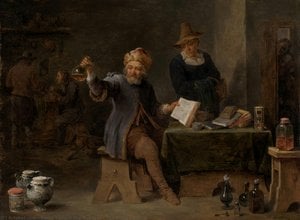
David Teniers the Younger's "Return from the Hunt," painted in 1670, isn’t merely a depiction of a sporting scene; it’s a carefully constructed tableau brimming with narrative depth and an exquisite sense of late 17th-century Flemish life. This oil on panel captures a fleeting moment after a successful hunt, radiating a quiet dignity and hinting at the social rituals and leisure activities that defined aristocratic existence in the Low Countries. The painting immediately draws the eye to the central figure – a man returning from his pursuit, clad in the rich fabrics of a gentleman, his posture suggesting both accomplishment and a subtle weariness. He’s not a heroic warrior, but rather an observer, a participant in a tradition deeply intertwined with status and land ownership.
The composition is masterfully balanced, drawing the viewer into a scene teeming with detail. The manor house, rendered with meticulous precision, anchors the painting, establishing a sense of place and hinting at the wealth and privilege associated with the hunt. Surrounding it are the elements of the pursuit: two dogs – one large and imposing, the other smaller and more agile – alongside a scattering of horses, each reflecting the skill and care invested in these animals. The foreground is populated by figures engaged in various tasks – preparing refreshments, tending to the hounds, or simply observing the return. These individuals aren’t idealized; they possess a grounded realism that imbues the scene with authenticity.
Teniers' skill lies not just in his ability to render figures accurately but also in his masterful manipulation of light and texture. He employs a technique known as ‘chiaroscuro,’ skillfully contrasting areas of bright illumination with deep shadows, creating a dramatic depth and emphasizing the three-dimensionality of the scene. Notice how the sunlight catches the folds of the man’s clothing, highlighting the richness of the fabric and casting subtle shadows across his face – conveying both strength and a hint of contemplation. The brushstrokes are loose yet controlled, lending a sense of immediacy to the action while simultaneously creating a rich tapestry of textures: the rough bark of the trees, the smooth sheen of the horses’ coats, and the delicate folds of the fabrics worn by the figures.
The artist's attention to detail is remarkable. The individual strands of hair, the wrinkles on the faces of the servants, the intricate patterns on the hunting attire – all are rendered with painstaking accuracy. This meticulousness speaks to Teniers’ dedication and his desire to capture not just a scene but an entire world.
Beyond its surface beauty, “Return from the Hunt” offers subtle glimpses into the social dynamics of the time. The hunt itself was more than just a pastime; it represented power, status, and control over nature – all highly valued attributes in 17th-century society. The man returning from the hunt is not simply enjoying leisure; he’s asserting his dominance within a hierarchical system. Furthermore, the inclusion of servants highlights the dependence of the aristocracy on those who provided for their needs, subtly commenting on the social inequalities of the era.
The dogs, particularly the larger one, are symbolic of loyalty and companionship – essential qualities in both hunting and aristocratic life. The horses represent wealth and status, while the carefully arranged setting speaks to the importance of presentation and maintaining appearances. Even the quiet dignity of the returning hunter suggests a certain restraint and self-awareness, reflecting the values of the upper classes.
"Return from the Hunt" is more than just a beautiful painting; it’s a window into a vanished world – a glimpse into the lives of the wealthy elite who shaped the cultural landscape of Flanders in the 17th century. David Teniers the Younger's masterful composition, his skillful use of light and texture, and his subtle social commentary combine to create an artwork that is both visually stunning and intellectually stimulating. Reproductions of this piece offer a chance to bring this evocative scene into any space, inviting viewers to contemplate the complexities of human relationships, the allure of nature, and the enduring legacy of Flemish art.


1610 - 1690 , Belgium

Discover the profound allure of oil on canvas. Explore the mastery of impasto textures, the science of pigment longevity, and expert guides to selecting museum-quality reproductions that elevate your collection with timeless elegance and tactile depth.

Explore the exquisite precision of Flemish painting. From Jan van Eyck to Robert Campin, discover the revolutionary oil techniques and rich symbolism that defined the Northern Renaissance and continue to inspire fine art collectors today.

Discover the enduring allure of oil on canvas. Explore how master techniques like impasto and glazing create the depth, texture, and emotional resonance found in the world's greatest masterpieces. An essential guide for fine art enthusiasts and discerning collectors.

Embark on a journey through the exquisite precision of Flemish Art. Discover the pioneering oil techniques, profound symbolism, and luminous realism that define the Northern Renaissance masters in this expert guide for art enthusiasts.

 Preview
 Send
Send Share
Share
 Details
 Guide
Guide

 Download
 Similars
 X-Ray
X-Ray Diaporama
 Stats
Stats Read More







 Glass option is only available in size under 110 CM