FREE ART CONSULTATION

x
Buy Painting Buy PaintingBuy Image Buy Image SendSend
DetailsDetails Add to favorites Add to favorites DownloadDownload SimilarsSimilars X-RayX-Ray DiaporamaDiaporama

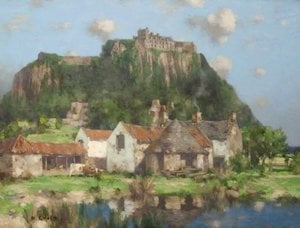
Two Calves

David Gauld Explore David Gauld’s serene depiction of two cows in a barn, reflecting Japanese influences and Pre-Raphaelite ideals. Admire the meticulous detail and rustic charm of this Glasgow Boy masterpiece.

Discover David Gauld (1865-1936), a pivotal Glasgow Boys artist known for oil paintings & stained glass. Influenced by Japanese art & Pre-Raphaelites, his work foreshadowed Art Nouveau. Explore cows, mills, and portraits in Scottish galleries.

Giclée / Art Print

Museum-quality giclée or canvas print with fast production and flexible finish options.

P118B $10
P118H $10
P118W $10
P438Z $10
P508JH $12
P508YH $12
P805H $10
P805Z $10
P919BZ $10
P919G $10
P919XJ $10
P959ZH $10
P968JZ $12
W106C $8
W218G $10
W218JH $8
W218Y $10
W307PJ $10
W316G $10
W316PJ $8
W316Y $10
W398PJ $8
W4111J $10
W500HY $15
W500JH $15
W692G $12
W849H $8
W940BG $15
W953PJ $8

Standard
custom
CM
INCH

Pick from our preset sizes that match the artwork's original proportions.

width
height

You may enter your own dimensions to fit a specific frame or space. If your selected size does not match the original image's proportions, we will either crop the artwork or extend the image with a mirrored or solid-fill edge. A digital mockup will be sent for your approval before production begins.
Please note that the on-screen preview does not reflect the actual cropping or extension. Only the mockup will accurately show the final composition.
While custom sizes are available, we recommend selecting a dimension from the predefined list to preserve the original proportions.

Worldwide Delivery () in 2 weeks instead of standard 4/5 weeks. (5 July)

why_choose_icon
Free Worldwide Express Shipping
why_choose_icon
High-Quality Linen Canvas
why_choose_icon
Full Shipping Insurance
why_choose_icon
Customs Tax Refund Guarantee
why_choose_icon
True Color Matching Guarantee
why_choose_icon
60-Day Return Policy (Defects Only)
why_choose_icon
100% Money-Back Guarantee
why_choose_icon
Bulk Discount Offer

Total Price

-

reproduction

Two Calves

Giclée / Art Print

Reproduction Size

-

Total Price

-

Quick Facts

  • Title: Two Calves
  • Notable elements or techniques: Detailed depiction of bovine anatomy; Atmospheric lighting
  • Artist: David Gauld
  • Location: Private Collection
  • Subject or theme: Rural Landscape
  • Influences:
    • Japanese Prints
    • Pre-Raphaelitism

Art Quiz

There is only one correct answer for each question.

Question 1:
David Gauld is primarily known for his contributions to which artistic movement?
Question 2:
What stylistic influences can be observed in Gauld's artwork, particularly evident in *Two Calves*?
Question 3:
The depiction of the barn in *Two Calves* aims to convey which mood or atmosphere?
Question 4:
Gauld's apprenticeship under Stephen Adam honed his skills in what craft?
Question 5:
Which artwork is considered a precursor of the Art Nouveau movement?

Collectible Description

David Gauld’s “Two Calves”: A Fusion of Japanese Influence and Pre-Raphaelite Vision

David Gauld (1865-1936) represents a pivotal moment in Scottish artistic evolution, specifically within the Glasgow Boys movement—a collective that championed bold experimentation and challenged academic conventions. His enduring legacy rests not merely on his prolific output but on his singular ability to synthesize disparate aesthetic inspirations into a cohesive visual language. Gauld’s artistic journey began with meticulous apprenticeship as a lithographer, grounding him in traditional craftsmanship before he embraced the transformative energy of Glasgow School of Art in 1882. This formative period instilled within him a deep appreciation for both Eastern and Western artistic traditions—a duality that would become central to his distinctive style.
  • Subject Matter: The painting depicts two cows situated within a rustic barn setting, capturing a quintessential scene of rural Scotland. Gauld’s careful observation of the natural world is evident in the depiction of the animals and their environment.
  • Style: “Two Calves” embodies elements characteristic of both Japanese prints and Pre-Raphaelite ideals. The flattened perspective reminiscent of Ukiyo-e woodblock prints contributes to a sense of serenity and stillness, while simultaneously reflecting the luminous color palettes and idealized forms favored by artists like Dante Gabriel Rossetti and William Holman Hunt.
  • Technique: Gauld skillfully employed oil paint on canvas—a technique that allowed for nuanced tonal gradations and textural richness—resulting in an image imbued with palpable warmth and depth. The artist’s meticulous brushwork captures the subtle nuances of light and shadow, enhancing the realism of the bovine subjects.

Historical Context: The Glasgow Boys and Artistic Innovation

Gauld's artistic endeavors coincided with a period of significant intellectual ferment in Scotland. The Glasgow Boys—including Gauld himself—challenged the prevailing stylistic norms of the Royal Academy, advocating for bolder compositions and expressive color palettes. They drew inspiration from Japanese prints, specifically *hokuyo-ga*, which emphasized atmospheric perspective and simplified forms—a deliberate rejection of academic realism. Simultaneously, they absorbed the spiritual fervor of Pre-Raphaelitism, prioritizing beauty and moral allegory over mere imitation of classical art. This dual influence propelled Gauld to forge a path toward artistic innovation that would resonate throughout the late Victorian era.

Symbolism: Tranquility and Pastoral Ideal

Beyond its formal stylistic considerations, “Two Calves” carries symbolic weight. Cows represent fertility, nurturing, and pastoral contentment—themes frequently explored in Pre-Raphaelite art. The barn itself symbolizes domesticity and connection to the land, reinforcing the painting’s overarching mood of peaceful contemplation. Furthermore, the gaze of the cows—directed outwards—suggests a yearning for something beyond the immediate surroundings, hinting at an underlying spiritual dimension.

Emotional Impact: A Momentary Escape into Beauty

Ultimately, Gauld's “Two Calves” succeeds in transporting viewers to a tranquil rural landscape. The painting’s luminous colors and masterful brushwork evoke feelings of serenity and nostalgia—a testament to the artist’s ability to capture not just visual likeness but also emotional resonance. It serves as an enduring reminder of the transformative power of art to elevate our perception of the natural world and to inspire contemplation on themes of beauty, simplicity, and spiritual harmony.

Artist Biography

David Gauld: Pioneer of Glasgow Style and Stained Glass Innovation

David Gauld (1865-1936) stands as a significant figure in Scottish art history, particularly recognized for his contributions to the Glasgow Boys movement and his distinctive approach to stained glass artistry. Born in Glasgow, he embarked on an artistic journey marked by meticulous craftsmanship and a profound engagement with diverse aesthetic traditions—Japanese prints and Pre-Raphaelite ideals—which profoundly shaped his oeuvre. Gauld’s formative years were spent honing his skills as a lithographer before enrolling at Glasgow School of Art in 1882, where he absorbed the burgeoning artistic currents of the era. His debut into public consciousness arrived in the late 1880s when he captivated audiences with a series of Japanese-influenced pen and ink drawings commissioned for *The Glasgow Weekly Citizen*, demonstrating an early fascination with Eastern visual culture. This collaboration cemented his association with William Stewart Macgeorge and Harrington Mann, establishing studios that fostered collaborative experimentation and artistic dialogue. During the period between 1891 and 1894, Gauld’s studio was situated in Kirkcudbright, where he undertook a pivotal project: designing stained glass windows for Guthrie and Wells. This undertaking showcased his mastery of color and texture, aligning with the stylistic ambitions of Art Nouveau—a movement characterized by organic forms and flowing lines—and foreshadowing its impact on subsequent artistic endeavors. The dissolution of his friendship with Mann in 1895 marked a turning point, prompting Gauld to relocate to new premises at 138 West George Street in Glasgow and continuing to reside in Kirkcudbright and North Berwick. Returning to Glasgow School of Art in 1889, Gauld pursued further artistic refinement alongside fellow artists from the Glasgow School, including William Shirreffs, who sculpted his portrait in 1896. He also spent time at Grez-sur-Loing, France—a renowned artist’s colony—immersing himself in the vibrant atmosphere of Impressionism and fostering connections with influential contemporaries. Gauld was elected an associate member of the Royal Scottish Academy in 1918 and ascended to full membership in 1924, solidifying his position within Scotland's artistic elite. Gauld’s artistic output spanned a diverse range of subjects—cattle, mills, and portraits—reflecting both his observational acuity and his willingness to explore stylistic experimentation. His works are prominently displayed in the Hunterian Art Gallery in Glasgow, offering visitors an opportunity to appreciate the enduring legacy of his artistic vision. Notably, pieces like *St Agnes* and *Music* exemplify his pioneering spirit, anticipating the aesthetic sensibilities of Art Nouveau and cementing his place as a cornerstone of Scottish art history.
David Gauld

David Gauld

1865 - 1936 , United Kingdom

Quick Facts

  • Artistic Movement Or Style: Glasgow Boys; Art Nouveau; Pre-Raphaelites; Japanese influence
  • Artists Or Movements Influenced By This Artist: ['Japanese art']
  • Artists Who Influenced This Artist: ['William Stewart Macgeorge']
  • Date Of Birth: Glasgow, United Kingdom (1865)
  • Date Of Death: 1936
  • Full Name: David Gauld
  • Nationality: Scottish
  • Notable Artworks:
    • St Agnes
    • Music
  • Place Of Birth: Glasgow
Explore artworks organized by themes, styles, and characteristics.