FREE ART CONSULTATION

x
Buy Painting Buy PaintingBuy Image Buy Image SendSend
DetailsDetails Add to favorites Add to favorites DownloadDownload SimilarsSimilars X-RayX-Ray DiaporamaDiaporama

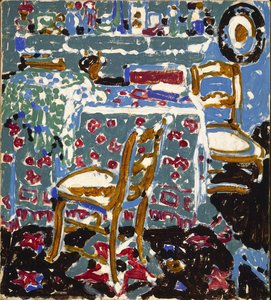
Station, Elevator and Cloud

Capture the nostalgic charm of rural life with David Brown Milne's 1932 painting, Station, Elevator and Cloud; discover this beautiful piece of Canadian art today.

Discover David B. Milne (1882-1953), a pivotal Canadian modernist painter celebrated for his evocative landscapes, watercolours & drypoint prints. Known as the 'Master of Absence,' he uniquely captured Canada's essence with stark beauty and quiet contemplation.

Giclée / Art Print

Museum-quality giclée or canvas print with fast production and flexible finish options.

P118B $10
P118H $10
P118W $10
P438Z $10
P508JH $12
P508YH $12
P805H $10
P805Z $10
P919BZ $10
P919G $10
P919XJ $10
P959ZH $10
P968JZ $12
W106C $8
W218G $10
W218JH $8
W218Y $10
W307PJ $10
W316G $10
W316PJ $8
W316Y $10
W398PJ $8
W4111J $10
W500HY $15
W500JH $15
W692G $12
W849H $8
W940BG $15
W953PJ $8

Standard
custom
CM
INCH

Pick from our preset sizes that match the artwork's original proportions.

width
height

You may enter your own dimensions to fit a specific frame or space. If your selected size does not match the original image's proportions, we will either crop the artwork or extend the image with a mirrored or solid-fill edge. A digital mockup will be sent for your approval before production begins.
Please note that the on-screen preview does not reflect the actual cropping or extension. Only the mockup will accurately show the final composition.
While custom sizes are available, we recommend selecting a dimension from the predefined list to preserve the original proportions.

Worldwide Delivery () in 2 weeks instead of standard 4/5 weeks. (3 July)

why_choose_icon
Free Worldwide Express Shipping
why_choose_icon
High-Quality Linen Canvas
why_choose_icon
Full Shipping Insurance
why_choose_icon
Customs Tax Refund Guarantee
why_choose_icon
True Color Matching Guarantee
why_choose_icon
60-Day Return Policy (Defects Only)
why_choose_icon
100% Money-Back Guarantee
why_choose_icon
Bulk Discount Offer

Total Price

-

reproduction

Station, Elevator and Cloud

Giclée / Art Print

Reproduction Size

-

Total Price

-

Quick Facts

  • Artist: David Brown Milne
  • Dimensions: 30 x 41 cm
  • Subject or theme: Rural life, landscape
  • Title: Station, Elevator and Cloud
  • Year: 1932

Collectible Description

A Pastoral Dream Under a Canopy of Clouds

David Brown Milne’s "Station, Elevator and Cloud" transports the viewer to a moment suspended between memory and idyllic repose. This painting is more than just a depiction of a rural scene; it is an embrace of nostalgia, rendered with a masterful touch that speaks directly to the soul's yearning for simpler times. The composition centers around a quaint house, its red roof providing a warm, grounding anchor against the vast expanse of the sky. Situated seemingly in the heart of a verdant field, the setting evokes the timeless rhythm of country life, a quiet counterpoint to the hurried pace of modern existence.

The Allure of Place and Time

What lends this piece such profound resonance is its careful curation of elements suggesting passage—the old-fashioned car parked nearby whispers tales of journeys taken and lives lived. These tangible markers of history mingle with the ethereal quality of the sky, which dominates the upper register. The presence of two figures near the dwelling suggests shared moments, perhaps a pause for contemplation or conversation against the backdrop of nature's grandeur. Milne captures not just what is seen, but what is felt: the gentle weight of time settling over a perfect afternoon.

Milne’s Brushwork and Modern Sensibility

David Brown Milne, whose artistic journey was deeply rooted in the Canadian landscape, imbues this work with a distinctly modernist sensibility while retaining an accessible, lyrical quality. His technique allows the natural elements—the rolling fields, the textured roofline, and especially the voluminous clouds—to breathe. The handling of light is particularly noteworthy; it seems to emanate from within the scene itself, illuminating the figures and lending a soft glow to the entire tableau. It is a celebration of form and atmosphere, executed with an intuitive grace that belies any rigid academic training.

Symbolism of Sky and Structure

The interplay between the solid architecture of the house and the boundless expanse of the cloud-filled sky creates a beautiful symbolic tension. The house represents human endeavor, shelter, and rootedness, while the clouds embody the infinite, the mutable, and the sublime mystery of nature. This duality invites introspection; are we defined by our structures, or by the ever-changing heavens above us? The inclusion of the "Station" element hints at connection and transition, suggesting that life itself is a journey between fixed points.

Bringing the Pastoral Home

For collectors and designers alike, this reproduction offers an unparalleled opportunity to infuse a space with quiet contemplation. Imagine this scene rendered in your living area; it acts as a visual balm, softening sharp modern edges with its pastoral poetry. It is a piece that does not shout for attention but rather invites the viewer into a hushed, beautiful dialogue with memory and the enduring beauty of the Canadian countryside.

Related Artworks


Artist Biography

A Life Immersed in the Canadian Landscape

David Brown Milne, born in the rural village of Burgoyne, Ontario in 1882, stands as a uniquely compelling figure within the narrative of Canadian art. He wasn’t a product of established artistic circles or formal academies in the traditional sense; rather, his journey was one of self-discovery and relentless exploration, fueled by an innate sensitivity to the natural world and a burgeoning modernist sensibility. The youngest of ten children born to Scottish immigrant parents, William and Mary Milne, he inherited a practical upbringing alongside a subtle appreciation for artistry – particularly from his mother, who crafted beautiful objects from found materials in nature. This early exposure instilled within him a lifelong fascination with the inherent beauty of simple forms and textures. His initial education unfolded in Paisley and Walkerton, Ontario, followed by a brief period as a rural teacher—a formative experience that undoubtedly deepened his connection to the Canadian landscape. It was this profound relationship with the land that would become the cornerstone of his artistic vision.

From New York’s Vanguard to Canada’s Quietude

Driven by an ambition to refine his skills, Milne ventured to New York City in 1903, enrolling at the Art Students League. This immersion into the vibrant art scene proved pivotal. He and a partner established a commercial art studio, navigating the demands of client work while simultaneously engaging with the burgeoning modernist movement. The city exposed him to groundbreaking ideas and artistic experimentation, and he actively participated in key exhibitions like the Armory Show in 1913 and the Panama-Pacific International Exposition in 1915. These experiences were transformative, introducing him to the radical innovations of European artists such as Cézanne, Matisse, and the Fauves – influences that would subtly but profoundly shape his aesthetic trajectory. However, despite this initial success within the American art world, Milne felt an undeniable pull back towards Canada, a yearning for the quiet solitude and untamed beauty of his homeland.

The Development of a Distinctive Modernist Voice

Upon his return to Canada, Milne embarked on a path of artistic independence, forging a style that diverged significantly from the prevailing trends of the time, including those championed by the Group of Seven. While his contemporaries often focused on dramatic representations of the Canadian wilderness, Milne’s work was characterized by an almost austere simplicity and a deliberate reduction of form. He wasn't interested in grand narratives or sweeping vistas; instead, he sought to capture the essence of a place – its stillness, its atmosphere, its subtle nuances – through a highly personal and introspective lens. A defining characteristic of his art is his masterful use of black and white, not merely as colors but as expressive elements capable of creating tension, depth, and a profound sense of quiet contemplation. He employed these tones to highlight the inherent structure within landscapes, imbuing ordinary subjects – still lifes, rural scenes, even simple animal forms – with dignity and significance. His technique often involved layering washes of color and employing drypoint etching techniques, resulting in textured surfaces that further enhanced the emotional resonance of his work.

Recognition and Lasting Legacy

Milne’s artistic journey wasn't without its challenges. For many years, he remained largely overlooked by the Canadian art establishment, overshadowed by the more commercially successful Group of Seven. However, his talent eventually garnered recognition, culminating in a retrospective at the National Gallery of Canada in 1955-56 and further exhibitions that showcased the depth and originality of his oeuvre. Notably, American art critic Clement Greenberg hailed Milne as one of the three greatest North American artists of his generation – a testament to the enduring power and influence of his work. His painting “Red Nasturtiums” was even honored on a Canada Post stamp in 1992, solidifying his place within the nation’s cultural heritage. David Brown Milne passed away in 1953, leaving behind a body of work that continues to captivate and inspire. He remains a pivotal figure in Canadian art history, celebrated for his innovative techniques, profound sensitivity to the natural world, and unwavering commitment to artistic integrity – a true ‘Master of Absence’ who revealed beauty in the most unexpected places.
David Brown Milne

David Brown Milne

1882 - 1953 , Canada

Quick Facts

  • Artistic Movement Or Style: Modernism
  • Artists Who Influenced This Artist:
    • Cézanne
    • Matisse
  • Date Of Birth: 1882
  • Date Of Death: 1953
  • Full Name: David Brown Milne
  • Nationality: Canadian
  • Notable Artworks:
    • Main Street
    • Taconic Hills
    • Red Nasturtiums
  • Place Of Birth: Burgoyne, Canada
Explore artworks organized by themes, styles, and characteristics.