Hand-painted oil on canvas in your size and frame, made to order by our artists. ( Switch to Print Switch to Digital Image)





























Pick from our preset sizes that match the artwork's original proportions.

You may enter your own dimensions to fit a specific frame or space. If your selected size does not match the original image's proportions, we will either crop the artwork or extend the painting with additional hand-painted elements. A digital mockup will be sent for your approval before production begins.
Please note that the on-screen preview does not reflect the actual cropping or extension. Only the mockup will accurately show the final composition.
While custom sizes are available, we recommend selecting a dimension from the predefined list to preserve the original proportions.
Worldwide Delivery () in 3/4 weeks instead of standard 5 weeks. (16 September). No compromise on quality.


Benchers Hall, Inner Temple
Reproduction Size
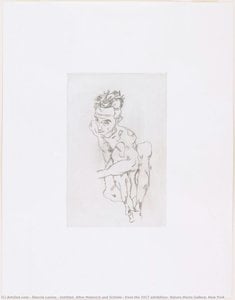
To stand before this charcoal rendering of Benchers Hall within the Inner Temple is not merely to observe an architectural facade; it is to step into a moment suspended between rigorous structure and profound introspection. David Bomberg, in this evocative work from 1947, has achieved something far more elusive than mere documentation. He has captured the very atmosphere—the weighty, scholarly breath—of these ancient halls. The subject matter, undeniably architectural, serves as a vessel for his deeply personal vision. One can almost hear the hushed tones of debate and the rustle of centuries-old parchment echoing off the stone walls depicted.
Technically, this piece is a breathtaking study executed in charcoal on paper. Bomberg’s handling of the medium is nothing short of masterful. The monochromatic palette—a rich interplay of blacks, grays, and whites—allows the texture of the charcoal itself to become a primary artistic element. Observe how he uses hatching and cross-hatching; these are not just shading techniques but dynamic lines that build form from suggestion rather than solid outline. While the underlying geometry of the arches and windows suggests classical order, Bomberg’s line quality refuses to be purely academic. It possesses a restless energy, a loose sketchiness juxtaposed against firm structural definitions, giving the entire composition a vibrant, almost vibrating life force.
The way Bomberg structures the scene is particularly compelling. The strong horizontal sweep of the hall anchors the piece, yet this stability is countered by diagonal recession suggested by the pathway leading into the depth. He manipulates perspective with an intuitive grace; it is not a photographically perfect view, but rather an emotionally calibrated one. This deliberate fragmentation—the way elements seem slightly abstracted or viewed from an unusual angle—is key to its power. It forces the viewer’s eye to wander, searching for coherence within the expressive chaos, mirroring the intellectual process of deep study itself.
Given the date, 1947, this work carries an undeniable resonance with the post-war spirit. The somewhat melancholic, diffused lighting and the fragmented nature of the depiction can be read as a reflection on disruption—the sense that even the most enduring institutions must pass through periods of questioning or change. Bomberg transcends the role of chronicler; he becomes interpreter. The Inner Temple, usually symbols of immutable law and tradition, are rendered with an underlying current of introspection, suggesting that true permanence lies not in stone, but in the ideas nurtured within those walls.
For collectors or designers seeking art that speaks to history, intellect, or quiet contemplation, this reproduction offers unparalleled depth. It is a piece that rewards close looking; one might spend hours tracing the interplay of shadow and line, discovering new textures in the charcoal as the light shifts. Owning this work means curating not just an object for a space, but an enduring mood—a sophisticated echo of academic grandeur tempered by the raw, passionate energy of modern expressionism.

Born to Polish-Jewish immigrant parents, Abraham and Rebecca Bomberg, initially studied at the City and Guilds Technical Art School before training as a lithographer in Birmingham.
Studied under Walter Sickert at Westminster School of Art (1908-1910), influenced by Sickert's focus on form and urban life. Significant exposure to Paul Cézanne through the 1910 Roger Fry exhibition "Manet and the Post-Impressionists." Attended the Slade School of Art (1911), winning the Tonks Prize for his drawing of fellow student Isaac Rosenberg.
Experiences as a private soldier during World War I profoundly impacted his artistic vision, leading to a move away from abstraction.
The 1920s saw Bomberg adopt a more figurative style, focusing on portraits and landscapes drawn directly from nature. Developed an increasingly expressionist technique, marked by textured impasto and emotional intensity.
Extensive travels through the Middle East (particularly Palestine) and Europe significantly influenced his later work. His depictions of Jerusalem are particularly notable.

1890 - 1957 , United Kingdom

Discover the profound power of Expressionist art. From the raw intensity of Edvard Munch to the visceral textures of Neo-Expressionism, explore how subjective emotion and distorted reality define this movement. An expert guide for discerning collectors seeking depth and soul in fine art.

Elevate your artistry with this definitive expert guide to mastering charcoal. Designed for art students, learn professional techniques for capturing profound depth, intricate textures, and dramatic shadows through advanced blending and chiaroscuro methods.

Explore the profound artistry of graphite drawing. Discover professional techniques for mastering depth, texture, and detail through a lens of art history, from classical sketches to modern masterpieces. Elevate your understanding of the pencil medium with our expert guide.

Elevate your artistic practice with this expert guide to mastering the line. Discover advanced techniques in graphite, charcoal, and contour drawing designed for art students seeking technical precision and expressive depth in their fine art studies.

Discover the sophisticated mastery of graphite drawing. Explore expert techniques for achieving profound depth, intricate texture, and hyper-realistic detail through the alchemy of carbon, curated for the discerning art enthusiast and professional collector.

 Preview
 Send
Send Share
Share
 Details

 Download
 Similars
 X-Ray
X-Ray Diaporama
 Stats
Stats


 Read More







 Glass option is only available in size under 110 CM