


Museum-quality giclée or canvas print with fast production and flexible finish options. ( Buy Hand Made Painting Switch to Digital Image)





























Pick from our preset sizes that match the artwork's original proportions.

Type the width and the height you need, to fit your frame or your wall. A print can only be cut, never made bigger than the picture, so a size with a different shape loses a part of the image. We send you a digital mockup to approve before we print anything. The picture shown on this page does not show the real cut — only the mockup does.
Worldwide Delivery () in 2 weeks instead of standard 4/5 weeks. (1 November)
David and Goliath (Recto)
Reproduction Size
Daniele da Volterra’s “David Killing Goliath” stands as a testament to the turbulent spirit of Renaissance Italy—specifically, the late Mannerist period. Completed around 1555, this double-sided oil painting on slate transcends mere depiction; it embodies a profound engagement with artistic debate and Michelangelo's influence, capturing a pivotal biblical narrative with unparalleled dynamism.
Daniele’s choice of slate as a support was not merely practical; it represented a conscious decision rooted in artistic philosophy. Michelangelo championed slate for its flatness and stability, believing it allowed for greater clarity of form and minimized distortion—a stance that mirrored Daniele's own commitment to achieving visual precision.
The painting’s genesis is inextricably linked to Michelangelo’s artistic vision. Daniele meticulously studied Michelangelo’s sketches for *The Last Judgment*, adopting his compositional strategies and prioritizing monumental scale—a testament to the enduring impact of Michelangelo's genius on subsequent artists.
“David Killing Goliath” embodies a crucial debate within Renaissance art circles: sculpture versus painting. Daniele’s masterful rendering captures the spirit of this discussion, demonstrating Michelangelo’s influence and elevating the artistic endeavor to new heights of expressive power.
Daniele da Volterra's “David Killing Goliath” remains a powerful visual representation of biblical heroism. Its dramatic chiaroscuro, meticulous detail, and symbolic richness continue to inspire admiration for its artistic brilliance and enduring emotional resonance—a masterpiece that secures Daniele’s place as one of the foremost Mannerist painters of his time.
The X-Ray view of "David and Goliath (Recto)" by Daniele da Volterra is on the artwork's X-Ray page: an interactive examination of the image through eleven optical layers.
"David and Goliath (Recto)", created in 1550, belongs to the High Renaissance of Daniele da Volterra's career.
"David and Goliath (Recto)" belongs to the High Renaissance of Daniele da Volterra's career. This classification relates the work to the artist's development.

Daniele Ricciarelli, born in the ancient Etruscan town of Volterra around 1509, ultimately became known as Daniele da Volterra – a name inextricably linked to both artistic brilliance and controversy. His life unfolded against the backdrop of Renaissance Italy, a period of fervent creativity and shifting religious sensibilities. Initially apprenticed to Sienese masters like Il Sodoma and Baldassare Peruzzi, Daniele’s trajectory shifted dramatically when he journeyed to Rome, where he found himself drawn into the orbit of Michelangelo – a relationship that would profoundly shape his artistic development and ultimately define his legacy. More than just a painter or sculptor, Daniele was a master of adaptation, a skilled craftsman who skillfully navigated the demands of powerful patrons while simultaneously challenging established norms within the art world.
Daniele’s early years were marked by a restless pursuit of knowledge and experience. He honed his skills under Perino del Vaga, contributing to lavish frescoes in prestigious Roman palaces. However, it was his association with Michelangelo that proved transformative. The sheer force of Michelangelo's genius ignited within Daniele a desire to emulate and surpass his mentor. This ambition manifested itself not only through diligent study but also through a willingness to engage directly with Michelangelo’s designs – a practice that would later generate considerable debate and ultimately earn him the unflattering moniker “Il Braghettone,” or “the breeches maker.”
Daniele's most infamous contribution to art history lies within the Sistine Chapel’s *Last Judgment*. Commissioned by Pope Paul III in 1565, shortly after the Council of Trent condemned nudity in religious art, Daniele was tasked with concealing the exposed bodies of Christ and his disciples. Rather than simply covering them with drapery – a common practice at the time – Daniele employed a remarkably audacious strategy: he meticulously draped voluminous garments and leafy fig-leaves over the genitals and backsides of the figures. This intervention, while intended to appease the conservative sensibilities of the Church, ultimately resulted in a deeply unsettling effect, transforming the fresco into a bizarre and disconcerting spectacle.
The controversy surrounding Daniele’s work extended beyond mere aesthetic concerns. He was accused of deliberately altering Michelangelo's original designs, a charge that fueled accusations of heresy and sacrilege. The incident cemented his reputation as a controversial figure – an artist willing to bend the rules in pursuit of patronage and recognition. It is believed that Daniele’s actions were not entirely motivated by artistic considerations; he may have been attempting to subtly critique the rigid moral constraints imposed by the Council of Trent, albeit through a highly unconventional means.
While his work on *The Last Judgment* remains Daniele’s most widely discussed contribution, it represents only a fraction of his artistic output. He was equally adept as a sculptor, producing works that showcased both technical skill and a keen understanding of human anatomy. His sculpture of Cleopatra, housed in the Belvedere at Vienna, is a testament to his ability to capture elegance and power – a remarkable feat considering its relatively late creation (circa 1540-1545). The piece demonstrates a masterful command of marble, capturing the queen’s regal bearing with subtle details and a sense of restrained sensuality.
Daniele's sculptural endeavors extended beyond single figures. He was commissioned to create a monumental bronze equestrian statue for Henry II of France, a project that ultimately fell short of completion. Despite his meticulous work on the horse itself – which later served as the basis for Louis XIII’s statue at Place Royale – the entire commission was dismantled during the French Revolution, erasing much of Daniele's ambition from history.
Daniele da Volterra’s career is a complex tapestry woven with threads of artistic brilliance, political maneuvering, and profound controversy. He was a product of his time – an artist operating within the constraints of religious dogma while simultaneously striving to assert his own creative vision. His willingness to challenge established norms, coupled with his technical skill and sensitivity to human form, cemented his place as a significant figure in the Mannerist movement. Despite the controversies that surrounded him, Daniele’s work continues to fascinate and provoke debate, offering a unique window into the artistic and religious landscape of 16th-century Italy.
His pupils included painter Michele Alberti. Sybil (c. 1540–1545); Hermitage Museum, Saint petersburgdescent from the cross (c. 1545), before its 2004 restoration; trinità dei monti, romedescent from the cross (detail, before restoration)descent from the cross (detail, after restoration)

1509 - 1566 , Italy
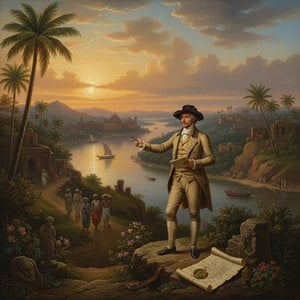
Explore the captivating landscapes of Thomas Daniell, a pioneering artist who documented India's beauty in the 19th century. Discover his 'Oriental Scenery,' aquatint technique & lasting legacy. Hand-painted reproductions available at WahooArt.

Explore 25 legendary Renaissance masterpieces by Leonardo da Vinci. Discover the stories behind each icon on WahooArt.com.

Explore 25 iconic Louvre masterpieces, from Da Vinci to ancient relics. Discover museum-quality art on WahooArt.com.

Explore 10 Renaissance Humanism masterpieces by Leonardo da Vinci, Michelangelo & Raphael. Discover the stories behind these iconic paintings & sculptures and bring timeless art into your home with museum-quality reproductions from WahooArt.com. Explore the full collection online!

Explore Leonardo da Vinci’s timeless masterpieces with WahooArt. Discover insights into his art, science, and legacy – trusted expertise for discerning collectors seeking authentic reproductions & investment opportunities.
 Preview
 Send
Send Share
Share
 Details
 Guide
Guide

 Download
 Similars
 X-Ray
X-Ray Diaporama
 Q&A
Q&A Stats
Stats


 Read More









 Glass option is only available in size under 110 CM


