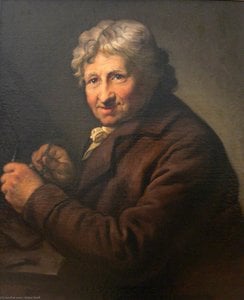
OilWallArtZopfstil Period
 1759
1759 30.0 x 24.0 cm
 Staatliche Museen
Museum-quality giclée or canvas print with fast production and flexible finish options. ( Buy Hand Made Painting Switch to Digital Image)





























Pick from our preset sizes that match the artwork's original proportions.

You may enter your own dimensions to fit a specific frame or space. If your selected size does not match the original image's proportions, we will either crop the artwork or extend the image with a mirrored or solid-fill edge. A digital mockup will be sent for your approval before production begins.
Please note that the on-screen preview does not reflect the actual cropping or extension. Only the mockup will accurately show the final composition.
While custom sizes are available, we recommend selecting a dimension from the predefined list to preserve the original proportions.
Worldwide Delivery () in 2 weeks instead of standard 4/5 weeks. (23 September)


The Lying-in Room
Reproduction Size
Daniel Nikolaus Chodowiecki's "The Lying-in Room," painted in 1759, isn’t merely a depiction of a scene; it’s a meticulously rendered window into the quiet intimacy and profound realities of 18th-century life. Housed within the Staatliche Museen in Berlin, this oil on canvas offers a remarkably intimate portrait of domesticity—a world often overlooked by grand historical narratives. Chodowiecki, a master of capturing the nuances of bourgeois society through his prints and paintings, here eschews dramatic gesture for a subtle realism that speaks volumes about the roles and experiences of women during that era.
The painting immediately draws the eye to the central figure – a woman seated on a bed, her posture suggesting both diligence and weariness. She’s engaged in sewing, a task ubiquitous in households across Europe at the time, yet Chodowiecki elevates this commonplace activity into something imbued with quiet dignity. The details are astonishing: the precise arrangement of the cushions, the delicate stitching visible on the fabric, even the slight furrow of her brow—all contribute to a sense of palpable presence. The surrounding furniture – a simple chair with a green cushion and a small table holding a bowl – further anchors the scene in a believable, lived-in space. The muted color palette, dominated by creams, greens, and browns, creates a warm, almost comforting atmosphere, despite the inherent vulnerability suggested by the subject’s position.
The very title, “The Lying-in Room,” is crucial to understanding the painting's context. This wasn’t simply a room; it was a space deeply intertwined with the rhythms of childbirth and the anxieties surrounding motherhood. In 18th-century Europe, particularly in Prussia (where Chodowiecki spent much of his career), women often spent weeks—sometimes months—in this dedicated chamber following delivery, recovering from labor and caring for their newborns. It was a space of both physical healing and emotional vulnerability, a sanctuary where the mother’s well-being took precedence. Chodowiecki's choice to depict this scene – a woman quietly attending to her duties within this intimate setting – offers a rare glimpse into the often-invisible labor and resilience of women during that period.
Chodowiecki’s skill as an artist is evident in every brushstroke. He employs a technique known as “Zopfstil,” characterized by its meticulous detail and realistic rendering of textures – the fabric, the wood grain, even the subtle shadows on the woman's face. The painting isn’t overly dramatic; rather, it relies on a quiet observation of light and shadow to create depth and form. Notice how he uses highlights to draw attention to the woman’s hands as she works, emphasizing her agency within this domestic scene. The composition is carefully balanced, with the bed dominating the background while the woman remains firmly in the foreground, ensuring that she is both a participant and the focal point of the image.
Beyond its realistic depiction of daily life, “The Lying-in Room” carries significant symbolic weight. The room itself represents not just physical recovery but also the transition from womanhood to motherhood—a pivotal moment in a woman’s life. The quiet solitude of the scene speaks to the private nature of this experience, while the simple act of sewing symbolizes both creation and care. There's an underlying sense of dignity and resilience conveyed by the subject – she is not presented as a passive figure but as someone actively engaged in her role within the household. The painting invites us to contemplate the quiet strength and enduring spirit of women who shaped the lives of their families and communities.
For those seeking to experience this remarkable artwork firsthand, or to bring its evocative atmosphere into their own homes, high-quality oil painting reproductions are available through platforms like WahooArt.com. These meticulously crafted copies capture the essence of Chodowiecki’s original while offering a more accessible and affordable option. Preserving works like “The Lying-in Room” is vital not only for art historians but also for future generations, ensuring that we continue to appreciate the rich tapestry of human experience depicted within its frame.

Daniel Nikolaus Chodowiecki remains a fascinating figure at the crossroads of Polish heritage and German artistic life. Born in Danzig (Gdańsk) in 1726, his early years were steeped in a culture that would forever inform his sensitive gaze. Though his roots trace back through generations of tradesmen and Huguenot ancestry, it was Berlin that ultimately became the crucible for his genius. His journey to this Prussian capital is recounted with a wry self-awareness—a detail noted even in letters suggesting a 'genuine Pole' transplanted into German soil.
His artistic education began after moving to Berlin at the age of sixteen, where he was taken under the wing of an uncle who provided him with crucial tutelage. This early grounding allowed his talent to blossom, leading him eventually to become a recognized member and later vice-director of the prestigious Berlin Academy of Art. His life was one of steady professional ascent, marked by dedication to craft and an unwavering commitment to the artistic community.
While Chodowiecki’s output spanned paintings and drawings, it is his etchings that secure his place in art history. He was not merely a painter; he was perhaps the most celebrated German graphic artist of his era. His thousands of delicate prints serve as an unparalleled visual diary of the late eighteenth century. These works possess an extraordinary intimacy, allowing us to peer into the daily rhythms and quiet dramas of the burgeoning bourgeoisie during the period known as Zopfstil—a transitional aesthetic caught between the flourish of Rococo and the emerging structure of Classicism.
His book illustrations are particularly noteworthy, encompassing nearly all the great literary classics. Through these detailed renderings, Chodowiecki achieved a remarkable ability to capture not just scenes, but entire sensibilities. His art speaks eloquently of the sensibility cult that permeated the age, blending meticulous observation with deep emotional resonance.
Chodowiecki’s significance extends beyond mere technical skill; he is a chronicler of an era undergoing profound transformation. His prints offer invaluable glimpses into the life of the middle class—the very backbone of the society depicted. They are records of manners, fashion, and domestic life that might otherwise be lost to time.
By becoming the director of the Berlin Academy of Arts in 1797, he cemented his role as an institutional pillar. His work thus embodies a confluence of personal history—the echoes of Polish identity within German artistic patronage—and a profound engagement with the cultural currents sweeping through Europe. To study Chodowiecki is to study the delicate balance between private life and public art, rendered with the precision of an etcher's needle.

1726 - 1801 , Poland

Elevate your home with museum-quality, hand-painted oil reproductions of iconic masterpieces. Discover bespoke art commissions, professional consultations, and timeless elegance designed to transform your living space into a curated gallery of history and luxury.

Elevate your interior design projects with our expert guide on matching masterpiece reproductions to luxury styles. Discover professional techniques for selecting hand-painted oils, multi-panel layouts, and custom commissions that transform spaces into curated galleries.
Discover the unparalleled elegance of WahooArt’s premium hand-painted oil reproductions. From bespoke portraits to museum-quality masterpieces, our expert artists transform visions into timeless legacies with 100% satisfaction guaranteed. Elevate your collection with true artistry.

Discover the profound allure of oil on canvas. Explore the mastery of impasto textures, the science of pigment longevity, and expert guides to selecting museum-quality reproductions that elevate your collection with timeless elegance and tactile depth.

 Preview
 Send
Send Share
Share
 Details
 Guide
Guide

 Download
 Similars
 X-Ray
X-Ray Diaporama
 Stats
Stats Read More







 Glass option is only available in size under 110 CM