x


Hand-painted oil on canvas in your size and frame, made to order by our artists. ( Buy Print Buy Image)
Pick from our preset sizes that match the artwork's original proportions.

You may enter your own dimensions to fit a specific frame or space. If your selected size does not match the original image's proportions, we will either crop the artwork or extend the painting with additional hand-painted elements. A digital mockup will be sent for your approval before production begins.
Please note that the on-screen preview does not reflect the actual cropping or extension. Only the mockup will accurately show the final composition.
While custom sizes are available, we recommend selecting a dimension from the predefined list to preserve the original proportions.
Worldwide Delivery () in 3/4 weeks instead of standard 5 weeks. (29 August). No compromise on quality.


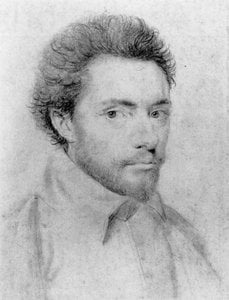
Portrait de Concino Concini
Reproduction Size

In the grand, sun-drenched tapestry of seventeenth-century French art, certain names shine with an eternal brilliance, while others linger in the soft, velvety shadows of history. Daniel Dumontier (1574–1646) belongs to that evocative second group—a figure whose fame once rivaled the greats of his era but who has since retreated into a quiet, scholarly obscurity. Born in Paris, Dumontier was a child of a profound artistic lineage, emerging from a family where the brush and the charcoal were as essential as bread. His father, Cosme Dumonstier, and his uncle, Pierre Dumonstier I, were pillars of the French tradition, creating a domestic environment that served as a veritable crucible for his burgeoning talent. Though born illegitimate, a circumstance that might have relegated a lesser soul to the fringes of society, Dumontier was later legitimized by royal decree, a pivotal moment that granted him entry into the prestigious and influential circles of the French court.
This early access to the heart of power during the reign of Louis XIII profoundly shaped his artistic trajectory. Surrounded by the splendor of the monarchy and the intellectual vigor of the era's nobility, Dumontier found himself uniquely positioned to observe the faces of an age. His work was not merely a recording of features but an exploration of character, fueled by the stylistic currents of Mannerism and the burgeoning realism seen in the works of Titian and Rubens. He moved through a world where art was a language of status, and his ability to translate the dignity of the aristocracy onto paper became his defining legacy.
While historians continue to debate whether Dumontier’s repertoire extended into the realm of oil painting, his undisputed immortality resides in his mastery of crayon drawing. During his lifetime, he was whispered to be the finest practitioner of this medium in all of Europe. To witness a Dumontier crayon portrait is to experience a unique tactile sensation; he utilized a technique involving the layering of graphite and colored powders to achieve a smoothness that felt almost like skin. This method allowed for an unparalleled control over tonal subtlety and anatomical precision, far surpassing the starker lines of etching or engraving.
His technical prowess was characterized by:
Through these methods, he achieved a level of sfumato that brought a breathing, living quality to his portraits. His subjects—ranging from Queen Henrietta Maria to Elisabeth of France—were not merely static icons but individuals caught in moments of profound reflection or quiet command.
Despite the immense skill that earned him his reputation, the passage of time threatened to erase Dumontier from the collective memory of art history. As the centuries progressed, the focus shifted toward the monumental canvases of the Baroque masters, leaving the delicate, intimate works of the crayon master to gather dust in private collections and royal archives. However, the true essence of his contribution was brought back into the light through dedicated scholarship and significant exhibitions, such as the landmark showcase at the Musée Condé in Chantilly. This revival highlighted that his work was not merely a precursor to larger movements but a pinnacle of a specific, highly refined medium.
Today, the fragments of Dumontier’s oeuvre held within the Louvre and the Bibliothèque nationale de France serve as vital windows into the soul of seventeenth-century France. He remains a testament to the power of the intimate medium—a reminder that even in an age of grand spectacles, the most profound truths are often found in the soft, layered shadows of a single piece of paper. His life and work stand as a bridge between the structured elegance of the Renaissance and the emotive depth of the Baroque, ensuring that while he may be a forgotten master, his influence remains etched in the very fabric of French portraiture.

1574 - 1646 , France


Stay updated with the latest art news, exclusive offers, and decoration ideas.
Tell us about your project and our art experts will provide you with 3 personalized art suggestions.
Let Us Curate 3 Options Just for You - Free!

 Preview
 Send
Send Share
Share
 Details

 Download
 Similars
 X-Ray
X-Ray Diaporama
 Read More




































 Glass option is only available in size under 110 CM