
x


 StoneSculptureBaroque
 1620Early Modern
 93.0 x 89.0 cm
 Liechtenstein Museum
Museum-quality giclée or canvas print with fast production and flexible finish options. ( Buy Hand Made Painting Buy Image)
Pick from our preset sizes that match the artwork's original proportions.

You may enter your own dimensions to fit a specific frame or space. If your selected size does not match the original image's proportions, we will either crop the artwork or extend the image with a mirrored or solid-fill edge. A digital mockup will be sent for your approval before production begins.
Please note that the on-screen preview does not reflect the actual cropping or extension. Only the mockup will accurately show the final composition.
While custom sizes are available, we recommend selecting a dimension from the predefined list to preserve the original proportions.
Worldwide Delivery () in 2 weeks instead of standard 4/5 weeks. (30 August)


Tabletop
Reproduction Size
In the hallowed halls of the Liechtenstein Museum in Vienna, there exists a treasure that defies the traditional boundaries of painting. Tabletop, a masterpiece birthed in 1620 by the skilled hands of Cosimo Castrucci, is not merely an object to be viewed, but a tactile experience to be felt. While many artists of the Baroque era sought to capture light on canvas, Castrucci utilized the profound, enduring medium of stone to create a work of unparalleled texture and depth. This piece stands as a breathtaking testament to the 17th-century mastery of pietre dure, where the very earth is transformed into a delicate, ornamental tapestry of color and form.
The visual journey begins with a mesmerizing central motif: a diamond-shaped geometry that anchors the composition. Within this focal point, the artist has woven a complex narrative of shapes—circles, rectangles, and ovals—each acting as a miniature window into a world of intricate detail. To gaze upon the Tabletop is to lose oneself in a labyrinth of patterns that suggest the presence of flora, fauna, and perhaps even abstract musical motifs. The color palette is a rich, regal affair, dominated by deep, passionate shades of red that pulse with life, beautifully contrasted by sudden, brilliant accents of azure blue, sun-drenched yellow, and verdant green. This interplay of hues creates a rhythmic vitality, ensuring that the eye never rests, but continues to wander through the artist's meticulously crafted landscape.
To understand the emotional resonance of this work, one must consider the era from which it emerged. The Baroque period was defined by a desire for grandeur, drama, and an almost overwhelming level of detail. Castrucci captures this spirit perfectly through his use of intricate ornamentation. Unlike the sweeping landscapes that would later define his lineage, this particular work focuses on the beauty of the micro-cosmos. The technique required to manipulate stone into such delicate, fabric-like patterns is nothing short of miraculous, suggesting a level of patience and precision that borders on the divine. The texture of the stone provides a physical weight to the art, making the vibrant colors feel as though they are embedded within the very soul of the medium.
For the discerning collector or interior designer, a reproduction of this masterpiece offers more than just decoration; it offers a conversation piece of profound historical significance. The Tabletop possesses an inherent ability to anchor a room, providing a sense of timeless luxury and intellectual depth. Whether placed in a contemporary setting to provide a striking contrast or integrated into a classical study to enhance its period elegance, the work radiates an aura of sophistication. It is a piece that invites close inspection, rewarding the viewer with new discoveries of pattern and light upon every encounter, much like a rediscovered secret from the heart of the 17th century.

To gaze upon a work by Cosimo Castrucci is to witness a profound alchemy, where the cold, unyielding surfaces of semiprecious stones are transformed into breathing landscapes of light and shadow. While history often remembers the painters who captured the ephemeral world on canvas, Castrucci belonged to a rarer breed of virtuosos—those who sought permanence through the pietre dure technique. His life was a journey between the refined workshops of Florence and the imperial splendor of Prague, a movement that allowed him to bridge the gap between Italian craftsmanship and the mystical allure of the Bohemian landscape.
Born into a lineage of Florentine goldsmiths, Castrucci’s early years were steeped in the disciplined traditions of the Italian Renaissance. The art of commesso di pietre dure—the meticulous inlaying of thin slices of hardstone such as jasper, agate, and lapis lazuli—was a craft that demanded not only immense technical precision but also an artist's eye for natural color and texture. His mastery was so profound that by the late sixteenth century, his reputation had reached the ears of the most powerful figures in Europe. The legendary Emperor Rudolf II, a fervent patron of the arts and a lover of the occult and the beautiful, recognized Castrucci’s singular talent. In 1592, the Emperor orchestrated the transfer of Castrucci and his family from Florence to Prague, effectively transplanting a piece of Italian excellence into the heart of the Holy Roman Empire.
In the imperial workshops of Prague, Castru and his descendants reached the zenith of their creative powers. The artist’s work became a dialogue between the geological and the pictorial. Unlike traditional painting, where color is applied via pigment, Castrucci utilized the inherent, vibrant hues found within the earth itself. He would carefully select slices of alabaster for soft clouds, deep green malachite for lush foliage, and rich onyx for the shadows of architectural ruins. This method allowed him to create tabletop scenes that possessed a luminous, almost supernatural quality, as if the landscapes were illuminated from within by the very minerals they were composed of.
His compositions often focused on the serene and the sublime, capturing the architectural grandeur of Prague and the rolling hills of Bohemia. These were not merely decorative objects; they were miniature worlds designed for intimate contemplation. The technical difficulty of his process cannot be overstated: each piece of stone had to be shaped with microscopic accuracy to fit perfectly against its neighbor, leaving no visible seams. This painstaking labor resulted in a seamless tapestry of stone that could depict the delicate curve of a bridge or the rugged silhouette of a mountain range with startling realism.
The historical importance of Cosimo Castrucci lies in his role as a cultural conduit. Through his migration, he helped establish Prague as a premier center for the pietre dure technique, influencing generations of stone carvers who followed him. His workshop became a cornerstone of the Rudolfine era, contributing to an aesthetic that blended scientific curiosity with artistic fantasy. The works produced under his influence were more than just luxury goods; they were symbols of political power and intellectual sophistication, often gifted between monarchs to cement diplomatic ties.
Today, the legacy of Castrucci survives in the hallowed halls of museums such as the Liechtenstein Museum in Vienna and the Metropolitan Museum of Art. His ability to marry the permanence of stone with the fleeting beauty of a landscape remains an unparalleled achievement in the history of decorative arts. To study his work is to appreciate a moment in time when art, nature, and geology converged to create something truly eternal.

Italy

Immerse yourself in the captivating world of slate blue! Explore 10 iconic paintings by Monet, Van Gogh & Renoir. Discover their stories, techniques & find museum-quality art reproductions for your home at .
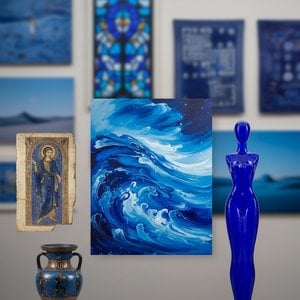
Explore the rich history of blue in art! Discover its symbolism, from ancient pigments to modern masterpieces by Kandinsky & Seurat. Uncover the psychological impact and cultural meanings behind this captivating hue.

Explore the rich symbolism of the red dress in art history! From ancient power displays to iconic portraits like Cézanne’s 'Madame Cezanne', discover the cultural and artistic significance behind this captivating color. Expert analysis & insights.

Explore the opulent world of Baroque interior design! Discover key elements, modern applications & how to bring dramatic elegance into your home with 's authentic reproductions.

Explore the dramatic world of Baroque art! Discover iconic artists like Caravaggio & Rubens, defining techniques, and its lasting impact on art history. Expert insights for collectors & enthusiasts at WahooArt.


Stay updated with the latest art news, exclusive offers, and decoration ideas.
Tell us about your project and our art experts will provide you with 3 personalized art suggestions.
Let Us Curate 3 Options Just for You - Free!


 Send
Send Share
Share
 Details

 Download
 Similars
 Diaporama
 Read More




































 Glass option is only available in size under 110 CM


