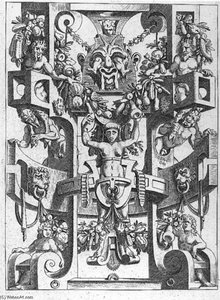
Mannerism
 1546
1546 243.0 x 179.0 cm
 Rijksmuseum
Hand-painted oil on canvas in your size and frame, made to order by our artists. ( Switch to Print Switch to Digital Image)





























Pick from our preset sizes that match the artwork's original proportions.

You may enter your own dimensions to fit a specific frame or space. If your selected size does not match the original image's proportions, we will either crop the artwork or extend the painting with additional hand-painted elements. A digital mockup will be sent for your approval before production begins.
Please note that the on-screen preview does not reflect the actual cropping or extension. Only the mockup will accurately show the final composition.
While custom sizes are available, we recommend selecting a dimension from the predefined list to preserve the original proportions.
Worldwide Delivery () in 3/4 weeks instead of standard 5 weeks. (17 September). No compromise on quality.


Female herm
Reproduction Size

In the vibrant, bustling landscape of the sixteenth-century Low Countries, few names evoke the meticulous precision and allegorical depth of Cornelis Bos. Born around 1506 in Den Bosch, an artist whose very name carries the weight of his origins, Bos emerged as a pivotal figure within the Dutch Renaissance. While history often casts a spotlight on giants like Pieter Bruegel the Elder, Bos carved out a unique niche through his mastery of the print medium and an unparalleled ability to weave complex mythological narratives into the fine lines of his engravings. His work serves as a window into an era where art was not merely decorative but a profound language of symbols, intellect, and moral instruction.
The formative years of Bos’s career were deeply rooted in the stylistic currents of Flemish Mannerism. Having apprenticed under the esteemed Hendrick van Balen I in Antwerp, he absorbed a visual vocabulary defined by elongated, graceful figures and dramatic, emotive compositions. This period of training was transformative, instilling in him a disciplined approach to draughtsmanship that would become his hallmark. As he navigated the artistic circles of Antwerp, Bos cultivated relationships with some of the most influential patrons of the age, including Maximilian Henry Gonzaga, Duke of Mantua, and Alessandro Farnese, Cardinal-Duke of Parma. These high-profile connections provided him with the creative freedom to explore ambitious projects that mirrored the intellectual fervor of the Renaissance, blending classical antiquity with contemporary Northern sensibilities.
As Bos’s career progressed, his artistic identity underwent a fascinating evolution. His relocation to Haarlem around 1530 marked a period of significant flourishing, where he established himself not only as a creator but as a respected teacher. It was during this time that his distinctive style—a seamless marriage of exceptional realism and subtle symbolism—truly took flight. He became particularly celebrated for his depictions of female herms, sculptural forms representing goddesses that functioned as visual metaphors for virtue and moral ideals. Through the delicate use of hatching and stippling, Bos was able to breathe life into stone-like figures, creating a sense of texture and presence that captivated both the eye and the mind.
His technical prowess extended far beyond simple portraiture. Bos was a master of the monochrome, utilizing the stark contrast of black and white to evoke atmosphere and depth. His celebrated works, such as the Leda and the Swan, demonstrate a profound command over the drypoint technique, capturing the serene beauty of classical mythology with an almost tactile intimacy. This ability to translate the grandeur of Italian-inspired themes into the precise medium of engraving allowed his influence to spread across Europe, making him a vital link in the dissemination of Renaissance ideals.
The historical significance of Cornelis Bos lies in his role as a bridge between traditions. He took the burgeoning energy of the Northern Renaissance and infused it with the structural elegance and mythological richness of the South. His oeuvre, though sometimes overshadowed by the more expansive paintings of his contemporaries, remains an essential study in the power of the graphic arts. Whether through his monumental designs for tapestries or his intricate individual prints, Bos’s work continues to resonate with a sense of wonder and intellectual rigor.
Reflecting on his life and contributions, several key elements define his enduring importance:

1506 - 1555 , Netherlands

Explore the profound mastery of engraving and intaglio printmaking. Delve into the rich history, technical precision of the burin, and the enduring legacy of fine art techniques that shaped the world's most iconic masterpieces.

Master the nuances of Giclée printing with our expert guide. Discover how pigment-based inks and museum-grade substrates create fade-resistant, high-fidelity art reproductions designed for discerning collectors seeking unparalleled quality and longevity.

 Preview
 Send
Send Share
Share
 Details

 Download
 Similars
 X-Ray
X-Ray Diaporama
 Stats
Stats Read More







 Glass option is only available in size under 110 CM