The Pioneering Luster of Clément Massier
Clément Massier, born in Vallauris, France, in 1844 and passing away in Golfe-Juan in 1917, stands as a pivotal figure in the transition from traditional French pottery to the innovative spirit of Art Nouveau. He wasn’t merely a potter; he was an alchemist of clay, transforming humble earth into objects of shimmering beauty that captured the burgeoning aesthetic sensibilities of his time. Coming from a long lineage of potters—his family had been working with ceramics in Vallauris for generations—Massier initially followed in their footsteps, producing utilitarian wares. However, he possessed a restless artistic drive that pushed him beyond functionality and towards pure creative expression. This ambition led him to establish his own factory in Golfe-Juan in 1883, a move that would prove instrumental in shaping the future of French ceramics.
A Family Legacy & The Rise of Artistic Innovation
The Massier family’s history was deeply intertwined with the clay of Vallauris. Jacques Massier, Clément's father, had established a respected pottery workshop, but it was Clément who truly revolutionized their approach. He recognized the potential for ceramics to be more than just vessels; they could be canvases for artistic exploration, imbued with color, texture, and symbolic meaning. Early influences included Italian master ceramist Gaetano Gandolfi, hired by Jacques Massier, who introduced techniques like glazed earthenware that would become foundational to the family’s success. However, Clément quickly surpassed these initial methods, driven by a desire to create something entirely new. He wasn't content with simply replicating existing styles; he sought to forge his own path, experimenting relentlessly with glazes and forms.
The Allure of Luster & The Paris Exposition Universelle
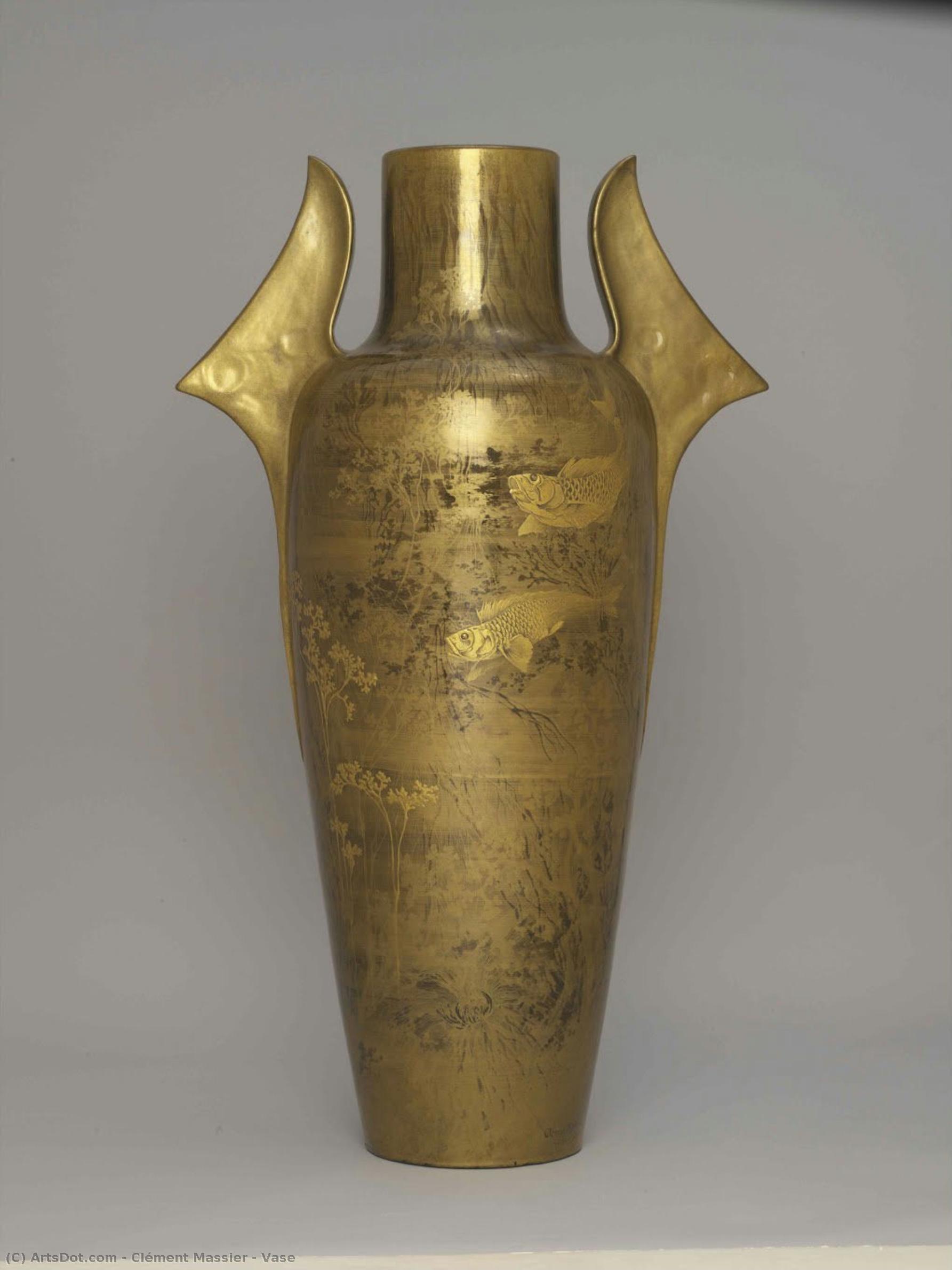
Massier’s most significant contribution—and the element that cemented his reputation—was his mastery of luster glazes. These weren't simply surface coatings; they were iridescent, metallic sheens that seemed to capture and reflect light from within the ceramic itself. He achieved this effect through a complex process involving multiple firings and the careful application of metallic oxides, creating surfaces that shimmered with an ethereal quality. The breakthrough came in 1887 when he hired Lucien Lévy-Dhurmer as his artistic director. This collaboration proved transformative. In 1900, Massier’s iridescent pottery was awarded a gold medal at the Paris Exposition Universelle, catapulting him to international fame. The exhibition showcased not only the technical brilliance of his glazes but also the Art Nouveau designs that adorned his pieces—flowing floral motifs, sinuous curves, and organic forms that embodied the movement's embrace of nature.
Beyond Decoration: Symbolism & Artistic Collaboration
While celebrated for their decorative appeal, Massier’s ceramics were often imbued with subtle symbolism. The naturalistic designs weren’t merely aesthetic choices; they reflected a broader fascination with the mysteries of life and the beauty of the natural world. The factory became a hub for artistic collaboration, attracting talented painters and sculptors who contributed to the design process. This collaborative spirit ensured that Massier's work wasn't solely defined by technical innovation but also by artistic vision. He produced a wide range of objects—vases, bowls, plaques, and even architectural elements—all characterized by his signature luster glazes and Art Nouveau aesthetic. His pieces quickly became sought after by the elite, adorning the homes of collectors in France, England, and beyond.
A Lasting Legacy & The Enduring Appeal of Art Nouveau Ceramics
Clément Massier’s impact on French ceramics is undeniable. He elevated pottery from a craft to an art form, paving the way for future generations of ceramic artists. His factory in Golfe-Juan became a model for other workshops, and his luster glazes continue to inspire contemporary ceramists today. He was also a dedicated teacher, mentoring numerous artists and sharing his knowledge and techniques. Though he passed away in 1917, his legacy lives on through the exquisite pieces that bear his name—objects of shimmering beauty that capture the spirit of Art Nouveau and the enduring allure of handcrafted artistry. His work represents not just a technical achievement but a philosophical shift, embracing decoration as a form of artistic expression and celebrating the transformative power of clay.



 Preview
 Buy Hand Made Painting
 Send
Send Share
Share
 Details

 Download
 Similars
 X-Ray
X-Ray Diaporama
 Read More






































 Glass option is only available in size under 110 CM





