x
PreviewPreview AR previewAR preview Buy Hand Made Painting Buy Hand Made PaintingBuy Image Buy Image SendSend
DetailsDetails Add to favorites Add to favorites DownloadDownload SimilarsSimilars X-RayX-Ray DiaporamaDiaporama

Laudatory epigraph for Agostino Carracci

Admire Claudius Achillinus’s 1602 Latin epigraph for Agostino Carracci – a Baroque masterpiece! Detailed stucco relief, gold accents & classical design showcase artistic legacy.

Discover Claudius Achillinus: Italian Baroque poet & philosopher (1574-1640). Explore his profound Latin verse, theological insights, and lasting legacy in art & literature.

Giclée / Art Print

Museum-quality giclée or canvas print with fast production and flexible finish options. (Buy Hand Made Painting Buy Hand Made PaintingBuy Image Buy Image)

Standard
custom
CM
INCH

Pick from our preset sizes that match the artwork's original proportions.

width
height

You may enter your own dimensions to fit a specific frame or space. If your selected size does not match the original image's proportions, we will either crop the artwork or extend the image with a mirrored or solid-fill edge. A digital mockup will be sent for your approval before production begins.
Please note that the on-screen preview does not reflect the actual cropping or extension. Only the mockup will accurately show the final composition.
While custom sizes are available, we recommend selecting a dimension from the predefined list to preserve the original proportions.

Worldwide Delivery () in 2 weeks instead of standard 4/5 weeks. (29 August)

why_choose_icon
Free Worldwide Express Shipping
why_choose_icon
High-Quality Linen Canvas
why_choose_icon
Full Shipping Insurance
why_choose_icon
Customs Tax Refund Guarantee
why_choose_icon
True Color Matching Guarantee
why_choose_icon
60-Day Return Policy (Defects Only)
why_choose_icon
100% Money-Back Guarantee
why_choose_icon
Bulk Discount Offer

Total Price

$ 69

reproduction

Laudatory epigraph for Agostino Carracci

Giclée / Art Print

Reproduction Size

-

Total Price

$ 69

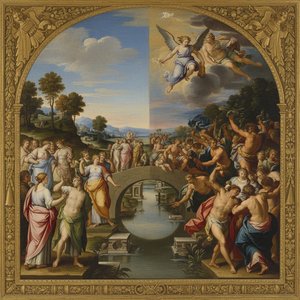
Vault, epigraph. The Hall of Loves of Jupiter, whose name identifies the subject represented in the varoius painted scenes, the love presented in different type (OMNIA VINCET AMOR-LOVE CONQUERS EVERYTHING), was painted and painted in stuccoes, respectively, by Agostino Carracci (Bolonia 1557-Parma 1602) and Giovanni Bosco. Speaking of this last person, Giovanni, there are some circumstances that are not clear: was often substitued by Luca Rieti, artist of stuccoes who realized in Parma some statues for the Teatro Farnese. Speaking of Carracci

Artist Biography

Claudius Achillinus: The Baroque Poet of Bologna

Claudius Achillinus (latin claudius achillinus; 18 september 1574 – 1 october 1640) was an italian philosopher, theologian, mathematician, poet, and jurist. He is a major figure in the history of italian baroque poetry, celebrated for his masterful Latin verse that captured the spirit of its time—a period marked by dramatic artistic innovation and fervent religious fervor. Born in Bologna, Italy, Achillinus descended from a distinguished legal family, shaping his intellectual pursuits accordingly. His formative years instilled within him a profound appreciation for logic and argumentation, which would later permeate his poetic endeavors.
  • Early Life & Education: Achillinus’s upbringing fostered an environment of scholarly excellence. He studied law at Bologna University, gaining renown as a brilliant jurist—a profession that provided him with invaluable experience in interpreting legal texts and formulating persuasive arguments. This grounding in jurisprudence undoubtedly influenced his stylistic choices in poetry, prioritizing clarity and precision alongside emotional depth.
  • Philosophical Influences: Achillinus’s intellectual journey extended beyond law into the realm of philosophy. He embraced Cartesian rationalism, aligning himself with the dominant philosophical currents of his era. Descartes' emphasis on deductive reasoning—starting from fundamental axioms—provided Achillinus with a framework for exploring metaphysical questions and constructing intricate conceptual structures within his poems.
  • Literary Career: Achillinus’s poetic output consisted primarily of Latin verses, reflecting the prestige accorded to classical scholarship during the Baroque period. He skillfully employed elaborate metaphors and rhetorical devices—techniques favored by poets like Marino—to convey complex ideas with breathtaking artistry. His work exemplifies the baroque penchant for grandeur and theatricality, mirroring the opulent architectural styles and dramatic narratives characteristic of the era.
  • Notable Works: Achillinus’s magnum opus is arguably his epigraph for Agostino Carracci's monumental fresco cycle in Palazzo Farnese, Rome—a piece that embodies the Baroque ideal of harmonious composition and symbolic representation. The stucco relief, adorned with gold accents and inspired by classical motifs, showcases Achillinus’s artistic legacy as a champion of humanist values and aesthetic excellence.
  • Legacy & Significance: Achillinus's influence on Italian baroque poetry is undeniable. He served as an inspiration for poets like Marino, fostering a stylistic tradition that prioritized intellectual rigor alongside emotional intensity. His poems continue to be studied today, offering insights into the philosophical debates and artistic innovations of the seventeenth century—a testament to his enduring contribution to literary history.

The Poet Laureate & Patronage

Achillinus’s reputation as a scholar attracted considerable patronage from influential figures such as Cardinal Richelieu, Duke of Parma and Ferrara. This support enabled him to pursue his intellectual pursuits with unwavering dedication—a characteristic that resonated deeply within the humanist spirit of the Baroque age. The lavish reward bestowed upon him for his sonnet dedicated to Louis XIII underscores the esteem in which he was held by royal courts and intellectuals alike.

Stylistic Characteristics & Techniques

Achillinus’s poetic style is marked by several distinctive features—most notably, the use of elaborate metaphors and absurd thoughts—techniques that mirrored those employed by Marino and other prominent poets of his time. His verses are characterized by a deliberate complexity, reflecting Descartes' commitment to deductive reasoning and mirroring the Baroque fascination with intellectual puzzles. Achillinus’s masterful command of language—combined with his profound philosophical insights—solidified his position as one of the foremost voices of Italian baroque poetry.
claudius achillinus

claudius achillinus

1574 - 1640 , Italy

Quick Facts

  • Artistic Movement Or Style: Baroque Poetry
  • Artists Or Movements Influenced By This Artist: ['Giambattista Marino']
  • Artists Who Influenced This Artist:
    • Giovanni Filoteo Achillini
    • Alessandro Achillini
  • Date Of Birth: September 18, 1574
  • Date Of Death: October 1, 1640
  • Full Name: Claudius Achillinus
  • Nationality: Italian
  • Notable Artworks: ['Laudatory epigraph for Agostino Carracci']
  • Place Of Birth: Bologna, Italy
Explore artworks organized by themes, styles, and characteristics.