FREE ART CONSULTATION

x
Buy Painting Buy PaintingBuy Image Buy Image SendSend
DetailsDetails Add to favorites Add to favorites DownloadDownload SimilarsSimilars X-RayX-Ray DiaporamaDiaporama

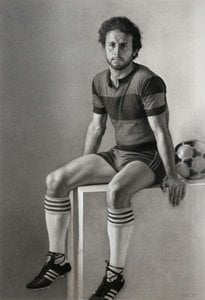
Untitled (907)

Explore Claudio Bravo’s "Untitled (907)", a hauntingly beautiful Renaissance-inspired portrait. Oil on canvas captures mortality & contemplation with striking realism & dramatic lighting.

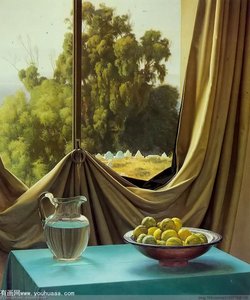
Chilean hyperrealist Claudio Bravo (1936-2011) blended Renaissance & Surrealist influences, creating stunning portraits & still lifes celebrated for their meticulous detail and evocative beauty.

Giclée / Art Print

Museum-quality giclée or canvas print with fast production and flexible finish options.

Standard
custom
CM
INCH

Pick from our preset sizes that match the artwork's original proportions.

width
height

You may enter your own dimensions to fit a specific frame or space. If your selected size does not match the original image's proportions, we will either crop the artwork or extend the image with a mirrored or solid-fill edge. A digital mockup will be sent for your approval before production begins.
Please note that the on-screen preview does not reflect the actual cropping or extension. Only the mockup will accurately show the final composition.
While custom sizes are available, we recommend selecting a dimension from the predefined list to preserve the original proportions.

Worldwide Delivery () in 2 weeks instead of standard 4/5 weeks. (7 July)

why_choose_icon
Free Worldwide Express Shipping
why_choose_icon
High-Quality Linen Canvas
why_choose_icon
Full Shipping Insurance
why_choose_icon
Customs Tax Refund Guarantee
why_choose_icon
True Color Matching Guarantee
why_choose_icon
60-Day Return Policy (Defects Only)
why_choose_icon
100% Money-Back Guarantee
why_choose_icon
Bulk Discount Offer

Total Price

-

reproduction

Untitled (907)

Giclée / Art Print

Reproduction Size

-

Total Price

-


Artist Biography

A Chilean Visionary: The Life and Art of Claudio Bravo

Claudio Bravo, a name synonymous with hyperrealism, emerged from the vibrant cultural landscape of Valparaíso, Chile, in 1936. His journey was one of remarkable dedication to his craft, evolving from early portrait commissions undertaken to excel in school to becoming an internationally celebrated artist whose works bridge European traditions and Latin American sensibilities. Born into a family where artistic inclination wasn’t immediately encouraged – his father, a businessman, initially viewed art as impractical – Bravo nonetheless found support that nurtured his burgeoning talent. This came through the guidance of Miguel Venegas Cifuentes, who provided Bravo's sole formal training for nearly a decade, instilling in him a foundational realist style that would become the hallmark of his oeuvre. Even as a young man, Bravo’s skill was evident; he quickly gained recognition as a portraitist within Chile, but an insatiable desire to explore the wider art world beckoned him towards Europe.

From Madrid Society to the Allure of Packages

The late 1950s saw Bravo embark on a transformative period in Madrid, Spain. Establishing himself as a sought-after portraitist among high society, he honed his technical skills and developed an acute understanding of light and form – influences deeply rooted in the works of Renaissance and Baroque masters like Velázquez, Zurbarán, and Cotán. These artists weren’t merely admired; they were studied intensely, informing Bravo's meticulous approach to composition, lighting, and subject matter. He painted prominent figures—from Franco’s daughter to Ferdinand and Imelda Marcos—but a shift was brewing within his artistic vision. Around 1963, inspired by the simple beauty of wrapped packages brought home by his sisters and the abstract color fields of artists like Mark Rothko, Bravo began incorporating these everyday objects into his paintings. This marked the beginning of his iconic “package” period, an exploration of concealment, mystery, and the inherent aesthetic qualities found in the mundane. His first major exhibition at Galería Fortuny showcased this new direction, captivating audiences with its unexpected subject matter and breathtaking realism.

Tangier’s Embrace: A Synthesis of Influences

In 1972, Bravo sought a change of scenery, relocating to Tangier, Morocco, where he would reside for much of the remainder of his life. This move proved pivotal, allowing him to synthesize the diverse influences that had shaped his artistic journey. While continuing to accept portrait commissions and create meticulously detailed still lifes, he expanded his creative repertoire to include drawings, lithographs, engravings, and even figural bronze sculptures. Tangier’s unique light, vibrant culture, and proximity to both Europe and Africa infused his work with a new energy and spiritual depth. The influence of Surrealism became increasingly apparent in his compositions, characterized by dreamlike juxtapositions and ethereal backgrounds. Bravo wasn't simply replicating reality; he was interpreting it through a lens informed by Renaissance technique, Baroque drama, and the evocative power of the subconscious.

A Legacy of Hyperrealism and Enduring Impact

Claudio Bravo’s death in 2011 marked the end of an era, but his artistic legacy continues to resonate with collectors and art enthusiasts worldwide. He is rightfully recognized as a leading figure in hyperrealism, celebrated for his unparalleled technical mastery, meticulous attention to detail, and ability to imbue even the most ordinary subjects with profound emotional resonance. His paintings are held in prestigious collections such as The Metropolitan Museum of Art, the Museo Nacional de Bellas Artes in Santiago, and the Museum Ludwig in Cologne, a testament to his enduring significance within art history. Bravo’s work transcends mere imitation; it is an exploration of perception, symbolism, and the beauty inherent in both the tangible and the intangible. He demonstrated that hyperrealism wasn't simply about replicating reality but about revealing its hidden depths and evoking a powerful emotional response in the viewer.
  • His influence can be seen in contemporary artists who strive for similar levels of technical precision and evocative storytelling.
  • Bravo’s ability to elevate everyday objects into works of art challenges conventional notions of beauty and artistic merit.
  • He remains a source of inspiration for those seeking to master the fundamentals of painting while pushing the boundaries of realism.
Claudio Bravo's contribution to the art world is not merely technical brilliance, but a profound exploration of what it means to see and interpret the world around us.
Claudio Bravo

Claudio Bravo

1936 - 2011 , Chile

Quick Facts

  • Artistic Movement Or Style: Hyperrealism
  • Artists Or Movements Influenced By This Artist: Hyperrealism
  • Artists Who Influenced This Artist:
    • Velázquez
    • Zurbarán
    • Sánchez Cotán
    • Dalí
  • Date Of Birth: 1936
  • Date Of Death: 2011
  • Full Name: Claudio Bravo
  • Nationality: Chilean
  • Notable Artworks:
    • Untitled (509)
    • Untitled (401)
    • Untitled (426)
  • Place Of Birth: Valparaíso, Chile
Explore artworks organized by themes, styles, and characteristics.