
x


 Acrylic On CanvasWallArtNeoclassical
 1791
1791 72.0 x 84.0 cm
 National Portrait Gallery
Hand-painted oil on canvas in your size and frame, made to order by our artists. ( Buy Print Buy Image)





























Pick from our preset sizes that match the artwork's original proportions.

You may enter your own dimensions to fit a specific frame or space. If your selected size does not match the original image's proportions, we will either crop the artwork or extend the painting with additional hand-painted elements. A digital mockup will be sent for your approval before production begins.
Please note that the on-screen preview does not reflect the actual cropping or extension. Only the mockup will accurately show the final composition.
While custom sizes are available, we recommend selecting a dimension from the predefined list to preserve the original proportions.
Worldwide Delivery () in 3/4 weeks instead of standard 5 weeks. (29 August). No compromise on quality.


Charles Willson Peale Self-Portrait
Reproduction Size
Charles Willson Peale's 1791 self-portrait offers far more than a simple likeness; it’s a meticulously crafted window into the mind of a man profoundly shaped by the burgeoning ideals and scientific fervor of the late American Republic. Painted during a pivotal period of his life – just seven years before he established the Philadelphia Museum, a groundbreaking institution dedicated to both art and natural history – this work reveals Peale as a complex figure: an artist deeply invested in capturing beauty and form, yet equally driven by a desire to understand and document the world around him. The portrait isn’t merely about presenting himself; it's a carefully constructed statement of his identity as a painter, a scientist, and a patriot.
The composition itself is remarkably restrained, favoring a dignified stillness over overt theatricality. Peale sits in a simple, dark green chair, his gaze direct and unwavering – an invitation to the viewer to engage with his thoughts. His attire, a tailored suit and tie, speaks to his status as a respected member of Philadelphia society, yet there’s a subtle informality about him that hints at his intellectual pursuits. The lighting is soft and diffused, highlighting the planes of his face and emphasizing the thoughtful lines etched by time and experience. Notice how Peale subtly incorporates elements of scientific observation into the portrait; the careful rendering of his hands, for instance, suggests an appreciation for anatomical detail – a skill honed through years of studying human form.
Peale’s technique is characterized by a remarkable blend of realism and neoclassical influence. He was deeply affected by the artistic trends emerging from Europe, particularly the works of Benjamin West, with whom he studied in London. However, Peale skillfully adapted these influences to create a distinctly American style – one that prioritized clarity, precision, and an engagement with contemporary life. The brushwork is smooth and controlled, creating a sense of depth and solidity. He employs subtle gradations of tone to model the forms, lending them a remarkable three-dimensionality. The use of dark greens and browns in the background provides a rich contrast to Peale’s lighter complexion, drawing attention to his face and features.
Crucially, Peale wasn't simply replicating reality; he was actively shaping it. The portrait is imbued with a sense of intellectual curiosity – a desire to capture not just what *is*, but also what *could be*. This ambition is reflected in the meticulous detail with which he renders his clothing and accessories, as well as the subtle hints of scientific instrumentation visible in the background (though obscured by the dark tones). The painting’s overall effect is one of quiet confidence and intellectual engagement – a testament to Peale's multifaceted talents.
To fully appreciate this self-portrait, it’s essential to understand the historical context in which it was created. The late 18th century was a period of profound transformation in America – a time of revolution, nation-building, and burgeoning scientific inquiry. Peale's work embodies these changes perfectly. As a painter, he played a vital role in shaping American visual culture, capturing the likenesses of prominent figures and documenting key moments in the nation’s history. As a scientist, he was instrumental in establishing the Philadelphia Museum, which became one of the first museums in America – a pioneering institution dedicated to both art and natural history.
The portrait itself can be seen as a reflection of this era's emphasis on reason, progress, and civic virtue. Peale’s self-portrait is not simply an image of himself; it’s a declaration of his commitment to these ideals. He was deeply involved in the intellectual and cultural life of Philadelphia, serving as a patron of the arts and sciences, and actively promoting the development of American institutions.
Beyond its technical merits, Peale’s self-portrait is rich in symbolism. The direct gaze of the subject conveys a sense of dignity and self-assurance – qualities that were highly valued during this period. The dark background suggests introspection and contemplation, while the muted colors evoke a sense of seriousness and gravitas. Peale's posture, upright and composed, reflects his commitment to civic duty and intellectual pursuits.
Ultimately, Peale’s self-portrait is a powerful testament to the enduring legacy of an extraordinary man. It offers a glimpse into the mind of a revolutionary artist, scientist, and patriot – a figure who played a vital role in shaping American culture and laying the foundation for the nation's future. Reproductions of this work continue to resonate today, inviting viewers to contemplate the complexities of human identity and the enduring power of art to capture both the individual and the era.


1741 - 1827 , United Kingdom

Explore the life & art of Charles Willson Peale – Revolutionary portraitist, scientist, and founder of America’s first museum. Discover his iconic paintings of Washington & the Enlightenment ideals that shaped a nation.

Explore the life & legacy of Benjamin West, pioneering American artist and Royal Academy president. Discover his Neoclassical masterpieces, transatlantic influence, and lasting impact on art history. Learn more at WahooArt.

Explore the captivating world of Charles Marion Russell, 'the cowboy artist.' Discover his life, iconic paintings, advocacy for Native Americans, and investment potential. A guide for discerning art collectors.

Explore the captivating portraits of Charles Bird King, renowned for his depictions of Native American leaders. Discover the historical context, artistic techniques, and collecting value of these significant 19th-century artworks.
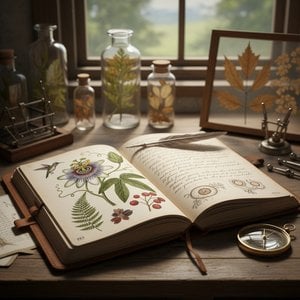
Explore the life & art of Titian Ramsay Peale II, a master of botanical precision and wildlife painting. Discover his legacy bridging art & natural history at WahooArt.


Stay updated with the latest art news, exclusive offers, and decoration ideas.
Tell us about your project and our art experts will provide you with 3 personalized art suggestions.
Let Us Curate 3 Options Just for You - Free!

 Preview
 Send
Send Share
Share
 Details

 Download
 Similars
 X-Ray
X-Ray Diaporama
 Read More







 Glass option is only available in size under 110 CM


