Preview AR preview Buy Hand Made Painting Switch to Digital Image Send
Details Guide Add to favorites Download Similars X-Ray Diaporama Stats

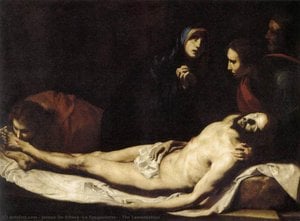
Pietà

Discover Charles Le Brun’s ‘Pietà,’ a breathtaking Baroque masterpiece at the Louvre. Explore its emotional intensity, oil-on-canvas detail & biblical significance – a must-see for art lovers.

Discover Charles Le Brun (1619-1690), the influential French Baroque painter & art theorist! Explore his royal commissions, artistic legacy & impact on Versailles.

Giclée / Art Print

Museum-quality giclée or canvas print with fast production and flexible finish options. ( Buy Hand Made Painting Switch to Digital Image)

Corner sample of the P118B picture frame: moulded polystyrene, 5 cm wide and 3 cm thick
P118B $10
Corner sample of the P118H picture frame: moulded polystyrene, 5 cm wide and 3 cm thick
P118H $10
Corner sample of the P118W picture frame: moulded polystyrene, 5 cm wide and 3 cm thick
P118W $10
Corner sample of the P438Z picture frame: moulded polystyrene, 5.5 cm wide and 3.5 cm thick
P438Z $10
Corner sample of the P508JH picture frame: moulded polystyrene, 7 cm wide and 3.5 cm thick
P508JH $12
Corner sample of the P508YH picture frame: moulded polystyrene, 7 cm wide and 3.5 cm thick
P508YH $12
Corner sample of the P805H picture frame: moulded polystyrene, 5 cm wide and 3.5 cm thick
P805H $10
Corner sample of the P805Z picture frame: moulded polystyrene, 5 cm wide and 3.5 cm thick
P805Z $10
Corner sample of the P919BZ picture frame: moulded polystyrene, 7 cm wide and 3.5 cm thick
P919BZ $10
Corner sample of the P919G picture frame: moulded polystyrene, 7 cm wide and 3.5 cm thick
P919G $10
Corner sample of the P919XJ picture frame: moulded polystyrene, 7 cm wide and 3.5 cm thick
P919XJ $10
Corner sample of the P959ZH picture frame: moulded polystyrene, 5 cm wide and 3 cm thick
P959ZH $10
Corner sample of the P968JZ picture frame: moulded polystyrene, 6 cm wide and 4 cm thick
P968JZ $12
Corner sample of the W106C picture frame: solid wood, 5 cm wide and 3 cm thick
W106C $8
Corner sample of the W218G picture frame: solid wood, 5 cm wide and 3 cm thick
W218G $10
Corner sample of the W218JH picture frame: solid wood, 5 cm wide and 3 cm thick
W218JH $8
Corner sample of the W218Y picture frame: solid wood, 5 cm wide and 3 cm thick
W218Y $10
Corner sample of the W307PJ picture frame: solid wood, 6 cm wide and 3 cm thick
W307PJ $10
Corner sample of the W316G picture frame: solid wood, 6 cm wide and 3 cm thick
W316G $10
Corner sample of the W316PJ picture frame: solid wood, 6 cm wide and 3 cm thick
W316PJ $8
Corner sample of the W316Y picture frame: solid wood, 6 cm wide and 3 cm thick
W316Y $10
Corner sample of the W398PJ picture frame: solid wood, 5 cm wide and 3 cm thick
W398PJ $8
Corner sample of the W4111J picture frame: solid wood, 6.5 cm wide and 3.5 cm thick
W4111J $10
Corner sample of the W500HY picture frame: solid wood, 7 cm wide and 5 cm thick
W500HY $15
Corner sample of the W500JH picture frame: solid wood, 7 cm wide and 5 cm thick
W500JH $15
Corner sample of the W692G picture frame: solid wood, 8 cm wide and 4 cm thick
W692G $12
Corner sample of the W849H picture frame: solid wood, 5 cm wide and 3 cm thick
W849H $8
Corner sample of the W940BG picture frame: solid wood, 7.5 cm wide and 4.5 cm thick
W940BG $15
Corner sample of the W953PJ picture frame: solid wood, 6 cm wide and 3.5 cm thick
W953PJ $8

Standard
custom
CM
INCH

Pick from our preset sizes that match the artwork's original proportions.

width
height

Type the width and the height you need, to fit your frame or your wall. A print can only be cut, never made bigger than the picture, so a size with a different shape loses a part of the image. We send you a digital mockup to approve before we print anything. The picture shown on this page does not show the real cut — only the mockup does.

Worldwide Delivery () in 2 weeks instead of standard 4/5 weeks. (26 October)

Free Worldwide Express Shipping
High-Quality Linen Canvas
Full Shipping Insurance
Customs Tax Refund Guarantee
True Color Matching Guarantee
100-Day Return Policy (Defects Only)
100% Money-Back Guarantee
Bulk Discount Offer

Total Price

$ 69

Pietà

Giclée / Art Print

Reproduction Size

-

Total Price

$ 69

Quick Facts

  • Year: 1643
  • Dimensions: 146 x 222 cm
  • Influences: Nicolas Poussin
  • Subject or theme: Biblical narrative; Suffering; Faith
  • Title: Pietà
  • Notable elements or techniques: Dramatic lighting; Detailed drapery

Art Quiz

There is only one correct answer for each question.

Question 1:
What is the primary subject matter of Charles Le Brun’s ‘Pietà’?
Question 2:
Where is Charles Le Brun’s ‘Pietà’ currently housed?
Question 3:
What artistic movement is Charles Le Brun associated with?
Question 4:
Which technique did Le Brun utilize in creating ‘Pietà’?
Question 5:
What is a notable characteristic of the lighting employed in ‘Pietà’?

A Moment Frozen in Time: The Emotional Resonance of Le Brun’s Pietà

In the hallowed stillness of the Musée du Louvre, there exists a canvas that does more than merely depict a biblical event; it captures the very essence of human grief. Charles Le Brun’s Pietà, painted in 1643, is a monumental achievement of the Baroque era, serving as a profound meditation on sorrow, faith, and the weight of mortality. Originally commissioned for the Sainte-Chapelle in Paris—a sanctuary dedicated to the relics of Christ—this oil on canvas was designed to evoke spiritual contemplation through its sheer emotional gravity. As viewers encounter the work, they are not just observing a scene from the Passion; they are invited into a sacred space where the boundaries between the divine and the human dissolve.

The painting centers on the poignant aftermath of the crucifixion, presenting the Virgin Mary cradling the lifeless form of her son. Le Brun masterfully employs a pyramidal composition, a technique that provides a sense of structural stability to an otherwise turbulent emotional scene. This geometric arrangement directs the eye upward, guiding the observer from the heavy, slumped weight of Christ’s body toward the serene yet heartbroken countenance of Mary. The interplay of light and shadow, known as chiaroscuro, is utilized with breathtaking precision. A singular, dramatic light source illuminates the central figures against a dark, indistinct background, stripping away all worldly distractions to focus the soul entirely on the tragedy unfolding within the frame.

Mastery of Technique and the Baroque Spirit

To understand the Pietà is to understand the hand of Charles Le Brun, a titan of French art who shaped the aesthetic standards of the age. His technique reflects the rigorous training he received under masters like Simon Vouet and his transformative years in Rome alongside Nicolas Poussin. In this work, Le Brun achieves a perfect balance between dramatic realism and idealized beauty. The texture of the painting is remarkably rich; one can almost feel the heavy, flowing drapery of Mary’s robes as they cascade around the figures, adding a sense of dynamic movement to the stillness of death. His brushwork captures the subtle nuances of skin, the limpness of muscle, and the intricate folds of fabric, all rendered with an exacting detail that speaks to his mastery of the medium.

Beyond its technical brilliance, the artwork serves as a profound symbolic vessel. The scene is steeped in Christian iconography, representing the ultimate sacrifice and the enduring devotion of the faithful. The presence of figures like Joseph of Arimathea and Mary Magdalene adds layers of communal mourning, yet the focus remains on the intimate bond between mother and son. For the collector or the lover of fine art, this piece offers more than just visual splendor; it provides a window into the 17th-century French soul. It is an ideal centerpiece for those seeking to infuse a space with historical depth, intellectual rigor, and a sense of timeless, quiet majesty.

Questions & Answers

How do the colors of "Pietà" relate to each other?

The colors of "Pietà" by Charles Le Brun show a softly mixed palette harmony. Harmony describes how the colors relate to each other.

What explains the copyright situation of "Pietà" by Charles Le Brun?

"Pietà" by Charles Le Brun is in the public domain - its copyright has expired. Copyright duration runs from the artist's death, which occurred in 1690.

Is "Pietà" a famous Baroque artwork?

"Pietà" by Charles Le Brun is classified as iconic and belongs to the Baroque movement.


Artist Biography

Early Life and Training

  • Born: Paris, France (1619)
  • Baptised: 24 February 1619
  • Died: 12 February 1690 Paris, Kingdom of France
  • Charles Le Brun displayed artistic talent from a young age. At the age of eleven, he entered the studio of Simon Vouet under the patronage of Chancellor Séguier.
  • He further studied with François Perrier and received early commissions from Cardinal Richelieu, demonstrating considerable skill even at fifteen.
  • A pivotal period in his development was a four-year stay in Rome (1642-1646), where he worked under the guidance of Nicolas Poussin. This experience profoundly shaped his artistic style and theoretical understanding of art.
  • During this time, Le Brun studied ancient Roman sculpture and copied works by Raphael, absorbing influences from both classical antiquity and contemporary Italian masters.

Artistic Development and Style

  • Upon returning to Paris in 1646, Le Brun quickly gained recognition and patronage. His early style reflected the influence of Vouet and Poussin, but he gradually developed a more personal approach.
  • Le Brun's artistic evolution involved moving away from strict adherence to classical models towards a more dynamic and expressive Baroque style.
  • He became known for his grand historical paintings, portraiture, and decorative work, often characterized by dramatic compositions, rich colors, and meticulous detail.
  • A significant series of works depicting the history of Alexander the Great showcased his ability to combine historical narrative with artistic grandeur.

Major Achievements and Royal Service

  • Le Brun's career reached its peak during the reign of Louis XIV, who appointed him First Painter to the King in 1664. This position granted him immense influence over French art.
  • He played a crucial role in decorating the Palace of Versailles, creating iconic works such as the Ambassadors’ Staircase, the Hall of Mirrors, and the Peace and War Rooms. These projects cemented his reputation as a master decorator and designer.
  • Le Brun was also responsible for designing many statues in the gardens of Versailles, demonstrating his versatility across various artistic disciplines.
  • He founded the Académie Royale de Peinture et de Sculpture (Royal Academy of Painting and Sculpture) in 1648, solidifying his position as a leader within the French art world. He served as its director for many years.

Legacy and Historical Significance

  • Charles Le Brun's influence on French art was profound. His work helped define the Baroque style in France and established him as one of the most important artists of his time.
  • As a theorist, he emphasized the importance of intellectual engagement over mere visual appeal, shaping artistic education for generations to come.
  • His decorative schemes at Versailles set a standard for royal palaces throughout Europe.
  • Le Brun's legacy extends beyond his individual works; he played a vital role in establishing and promoting French art on an international stage.
Charles Le Brun

Charles Le Brun

1619 - 1690 , France

Quick Facts

  • Full Name: Charles Le Brun
  • Nationality: French
  • Date Of Birth: 1619
  • Date Of Death: 1690
  • Place Of Birth: Paris, France
  • Notable Artworks:
    • Ambassadors’ Staircase
    • Hall of Mirrors
    • Peace and War Rooms
  • Artistic Movement Or Style: Baroque
  • Artists Who Influenced This Artist:
    • Nicolas Poussin
    • Simon Vouet
Explore artworks organized by themes, styles, and characteristics.