
x


 TemperaEarly Renaissance
 1476Renaissance
 61.0 x 40.0 cm
Hand-painted oil on canvas in your size and frame, made to order by our artists. ( Buy Print Buy Image)





























Pick from our preset sizes that match the artwork's original proportions.

You may enter your own dimensions to fit a specific frame or space. If your selected size does not match the original image's proportions, we will either crop the artwork or extend the painting with additional hand-painted elements. A digital mockup will be sent for your approval before production begins.
Please note that the on-screen preview does not reflect the actual cropping or extension. Only the mockup will accurately show the final composition.
While custom sizes are available, we recommend selecting a dimension from the predefined list to preserve the original proportions.
Worldwide Delivery () in 3/4 weeks instead of standard 5 weeks. (26 August). No compromise on quality.


Saint Thomas Aquinas
Reproduction Size
In the quiet, luminous realm of the Early Renaissance, few artists possessed the ability to marry the earthly with the divine as masterfully as Carlo Crivelli. His 1476 masterpiece, Saint Thomas Aquinas, serves as a profound window into a period of intense spiritual introspection and artistic innovation. At first glance, the viewer is met with the commanding presence of the Saint, depicted not merely as a historical figure, but as an eternal beacon of wisdom. Holding an open book—a symbol of his unparalleled theological intellect—Aquinas stands with a gravity that anchors the composition. The painting captures a moment where the weight of scholastic thought meets the grace of divine revelation, inviting anyone who gazes upon it to contemplate the intersection of human knowledge and spiritual truth.
The technical brilliance of Crivelli is on full display through his meticulous use of tempera and the strategic application of gold leaf. This technique creates a shimmering, ethereal atmosphere that seems to radiate from within the panel itself. The artist’s signature style—a blend of late Gothic decorative splendor and the emerging realism of the Renaissance—is evident in the hyper-detailed textures of the Saint's robes and the intricate patterns that adorn the scene. Every fold of fabric and every stroke of pigment is designed to create a sense of trompe l'oeil, tricking the eye into perceiving a three-dimensional depth. For the discerning collector or interior designer, this level of detail offers a rich, tactile quality that brings a sophisticated, historical soul to any curated space.
Beyond the technical mastery, the composition tells a complex story of community and sanctity. While Saint Thomas Aquinas remains the central focus, the presence of other figures near the small, rustic building adds a layer of narrative depth, suggesting the Saint's influence on the world around him. The interplay of light and shadow, combined with the vibrant yet controlled color palette, evokes an emotional response of reverence and peace. This painting is more than a religious icon; it is a testament to the enduring power of craftsmanship. Whether displayed in a grand gallery or as a focal point in a refined private study, a high-quality reproduction of this work serves as a timeless tribute to the intellectual and spiritual heights of the Quattrocento.

carlo crivelli, an italian renaissance painter, was born in venice around 1430-35. he came from a family of painters and received his artistic formation in venice and padua. crivelli's early training is believed to have been under jacobello del fiore, who was still active in 1436. he also studied at the school of vivarini in venice.
crivelli spent his early years in the veneto, absorbing influences from vivarini, squarcione, and mantegna. by 1458, he left the veneto and spent most of his career in the march of ancona, developing a distinctive personal style that contrasts with that of his venetian contemporary giovanni bellini. crivelli's work is characterized by a conservative late gothic decorative sensibility, marked by a linear quality, attention to detail, and the use of "trompe l'oeil" techniques.
* carlo crivelli's painting "madonna and child enthroned" (106 x 55 cm, museum of fine arts, budapest, hungary) is a prime example of his style. * he collaborated with his younger brother vittorio crivelli on several projects. * pietro alemanno, a painter who immigrated to the march of ancona from germany/austria, was his pupil and collaborator.
* the pinacoteca di brera in milan, italy, features several of crivelli's works, including "pietà" (128 x 241 cm). * the museum san giovanni in bragora in venice, italy, has a collection of artworks from various periods and styles, including some attributed to crivelli.
crivelli's legacy continues to inspire art enthusiasts and scholars alike, with his work remaining a testament to the enduring power of conservative late gothic decorative sensibility.

1435 - 1495 , Italy

Explore the profound iconography of Saint Jerome through art history's most iconic masterpieces. From Renaissance serenity to Baroque drama, discover how legendary painters captured divine devotion in breathtaking oil paintings and fine art reproductions.

Discover the profound beauty of Saint Artworks. Explore the history, symbolism, and luminous mastery of Renaissance religious masterpieces through an expert art-historical lens.

Embark on a sophisticated journey through art history with our exploration of Saint Peter's most powerful masterpieces. Discover the profound emotional depth and technical brilliance of Renaissance and Baroque icons, curated for the discerning classic art enthusiast.
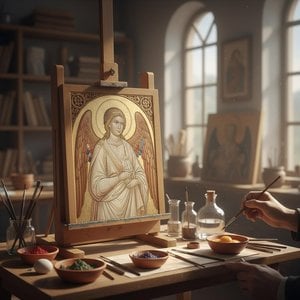
Unveil the sacred secrets of egg tempera on panel. Journey through the technical mastery and profound artistry of the Old Masters, from Giotto to Botticelli. An essential educational guide for Renaissance art enthusiasts seeking deep historical insight and expertise.

Embark on a profound journey through art history with our exploration of Saint Francis's most iconic works. Discover Giotto’s revolutionary frescoes and the spiritual depth of Proto-Renaissance masterpieces through an expert lens for the true classic art enthusiast.


Stay updated with the latest art news, exclusive offers, and decoration ideas.
Tell us about your project and our art experts will provide you with 3 personalized art suggestions.
Let Us Curate 3 Options Just for You - Free!

 Preview
 Send
Send Share
Share
 Details

 Download
 Similars
 X-Ray
X-Ray Diaporama
 Read More







 Glass option is only available in size under 110 CM


