Preview AR preview Buy Hand Made Painting Switch to Digital Image Send
Details Guide Add to favorites Download Similars X-Ray Diaporama Stats

Musicians

Experience Caravaggio's 'Musicians' – a Baroque masterpiece of youthful harmony & dramatic light! Explore the iconic painting’s history, technique & symbolic layers from The Metropolitan Museum.

Baroque master Caravaggio defined tenebrism with works like Cardsharps. Discover the dramatic power of his revolutionary realism today.

Giclée / Art Print

Museum-quality giclée or canvas print with fast production and flexible finish options. ( Buy Hand Made Painting Switch to Digital Image)

Corner sample of the P118B picture frame: moulded polystyrene, 5 cm wide and 3 cm thick
P118B $10
Corner sample of the P118H picture frame: moulded polystyrene, 5 cm wide and 3 cm thick
P118H $10
Corner sample of the P118W picture frame: moulded polystyrene, 5 cm wide and 3 cm thick
P118W $10
Corner sample of the P438Z picture frame: moulded polystyrene, 5.5 cm wide and 3.5 cm thick
P438Z $10
Corner sample of the P508JH picture frame: moulded polystyrene, 7 cm wide and 3.5 cm thick
P508JH $12
Corner sample of the P508YH picture frame: moulded polystyrene, 7 cm wide and 3.5 cm thick
P508YH $12
Corner sample of the P805H picture frame: moulded polystyrene, 5 cm wide and 3.5 cm thick
P805H $10
Corner sample of the P805Z picture frame: moulded polystyrene, 5 cm wide and 3.5 cm thick
P805Z $10
Corner sample of the P919BZ picture frame: moulded polystyrene, 7 cm wide and 3.5 cm thick
P919BZ $10
Corner sample of the P919G picture frame: moulded polystyrene, 7 cm wide and 3.5 cm thick
P919G $10
Corner sample of the P919XJ picture frame: moulded polystyrene, 7 cm wide and 3.5 cm thick
P919XJ $10
Corner sample of the P959ZH picture frame: moulded polystyrene, 5 cm wide and 3 cm thick
P959ZH $10
Corner sample of the P968JZ picture frame: moulded polystyrene, 6 cm wide and 4 cm thick
P968JZ $12
Corner sample of the W106C picture frame: solid wood, 5 cm wide and 3 cm thick
W106C $8
Corner sample of the W218G picture frame: solid wood, 5 cm wide and 3 cm thick
W218G $10
Corner sample of the W218JH picture frame: solid wood, 5 cm wide and 3 cm thick
W218JH $8
Corner sample of the W218Y picture frame: solid wood, 5 cm wide and 3 cm thick
W218Y $10
Corner sample of the W307PJ picture frame: solid wood, 6 cm wide and 3 cm thick
W307PJ $10
Corner sample of the W316G picture frame: solid wood, 6 cm wide and 3 cm thick
W316G $10
Corner sample of the W316PJ picture frame: solid wood, 6 cm wide and 3 cm thick
W316PJ $8
Corner sample of the W316Y picture frame: solid wood, 6 cm wide and 3 cm thick
W316Y $10
Corner sample of the W398PJ picture frame: solid wood, 5 cm wide and 3 cm thick
W398PJ $8
Corner sample of the W4111J picture frame: solid wood, 6.5 cm wide and 3.5 cm thick
W4111J $10
Corner sample of the W500HY picture frame: solid wood, 7 cm wide and 5 cm thick
W500HY $15
Corner sample of the W500JH picture frame: solid wood, 7 cm wide and 5 cm thick
W500JH $15
Corner sample of the W692G picture frame: solid wood, 8 cm wide and 4 cm thick
W692G $12
Corner sample of the W849H picture frame: solid wood, 5 cm wide and 3 cm thick
W849H $8
Corner sample of the W940BG picture frame: solid wood, 7.5 cm wide and 4.5 cm thick
W940BG $15
Corner sample of the W953PJ picture frame: solid wood, 6 cm wide and 3.5 cm thick
W953PJ $8

Standard
custom
CM
INCH

Pick from our preset sizes that match the artwork's original proportions.

width
height

Type the width and the height you need, to fit your frame or your wall. A print can only be cut, never made bigger than the picture, so a size with a different shape loses a part of the image. We send you a digital mockup to approve before we print anything. The picture shown on this page does not show the real cut — only the mockup does.

Worldwide Delivery () in 2 weeks instead of standard 4/5 weeks. (25 October)

Free Worldwide Express Shipping
High-Quality Linen Canvas
Full Shipping Insurance
Customs Tax Refund Guarantee
True Color Matching Guarantee
100-Day Return Policy (Defects Only)
100% Money-Back Guarantee
Bulk Discount Offer

Total Price

$ 69

Musicians

Giclée / Art Print

Reproduction Size

-

Total Price

$ 69

Quick Facts

  • Artist: Caravaggio
  • Artistic style: Baroque
  • Location: Metropolitan Museum
  • Influences:
    • Michelangelo
    • Caravaggio
  • Title: The Musicians

Art Quiz

There is only one correct answer for each question.

Question 1:
What is the primary technique employed by Caravaggio in ‘Musicians’ that contributes significantly to its dramatic effect?
Question 2:
In which museum is Caravaggio’s ‘Musicians’ currently housed?
Question 3:
Which musical instrument is prominently featured by the first musician on the left in the painting?
Question 4:
What historical period does Caravaggio’s ‘Musicians’ primarily exemplify?
Question 5:
What symbolic element is suggested by the placement of a book near the bottom of the painting?

A Moment Frozen in Shadow: Caravaggio’s “Musicians”

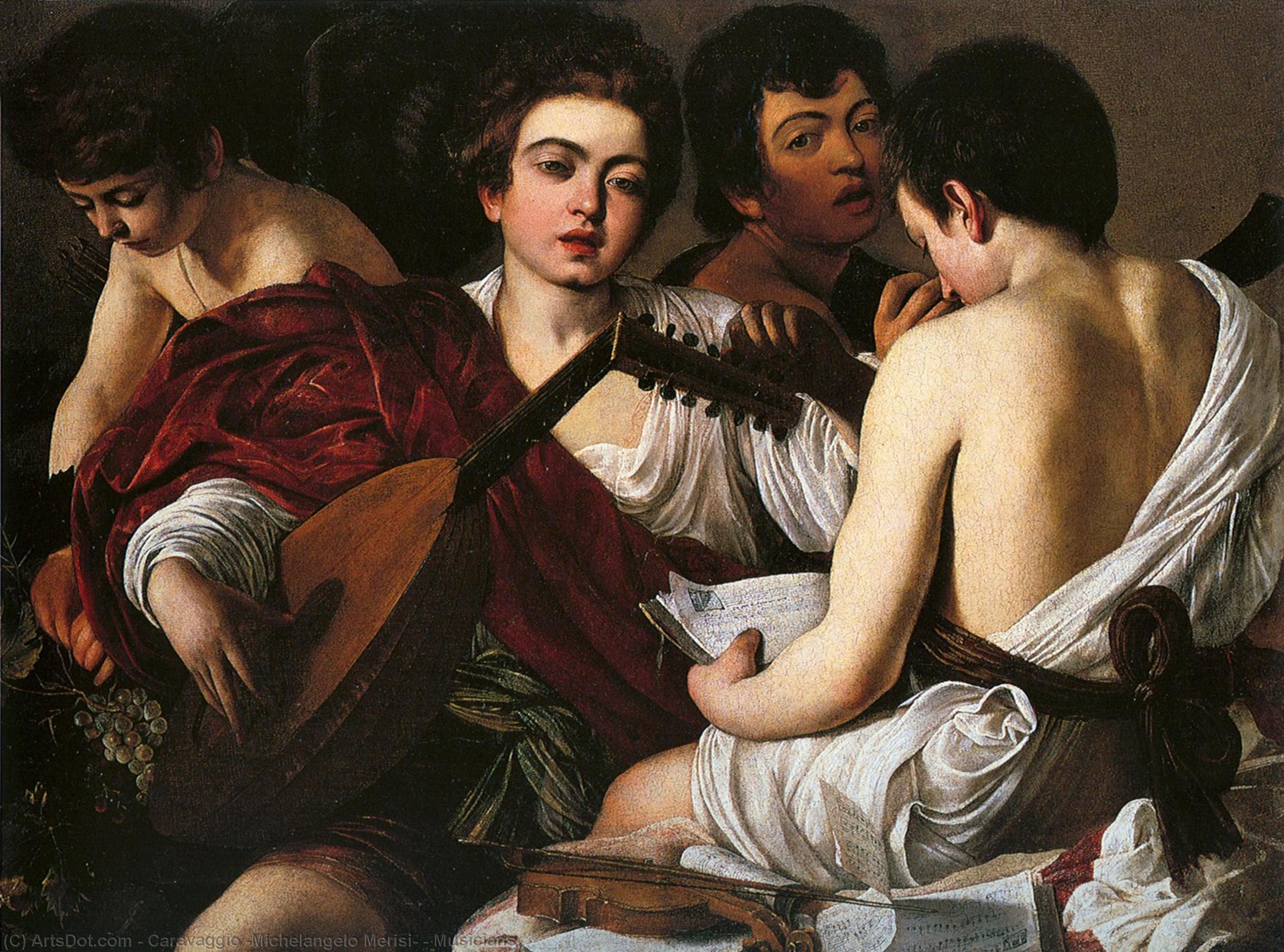
Michelangelo Merisi da Caravaggio's "The Musicians," painted around 1595, isn’t merely a depiction of four men playing instruments; it’s a carefully constructed tableau brimming with Baroque drama and an intimate sense of camaraderie. This oil on canvas masterpiece, currently residing in the Metropolitan Museum of Art, immediately captivates with its masterful use of *chiaroscuro* – the dramatic interplay of light and dark – a technique that would irrevocably alter the course of Western art. Caravaggio, born in Milan but working primarily in Rome, was already pushing boundaries when he began this work, rejecting the idealized forms favored by his predecessors in favor of a startlingly realistic portrayal of ordinary men engaged in a shared passion. The painting’s power lies not just in its technical brilliance, but also in the palpable feeling of connection between the musicians, a rare and compelling element within the often-isolated figures of his earlier works.

The Dance of Light and Shadow: Technique and Style

Caravaggio's signature style is instantly recognizable in “The Musicians.” He employs *tenebrism*, an even more extreme form of *chiaroscuro*, plunging the scene into deep shadow while highlighting specific figures with pools of intense light. This isn’t simply a stylistic choice; it serves to draw the viewer’s eye, creating a sense of immediacy and focusing attention on the musicians themselves. Notice how the lute player is bathed in a golden glow, contrasting sharply with the darker recesses of the room. The use of loose brushstrokes and a muted color palette further enhances the painting's dramatic effect, lending it an almost palpable texture. Crucially, Caravaggio eschewed preparatory sketches, preferring to work directly onto the canvas – a revolutionary approach at the time that allowed him to capture fleeting moments and imbue his figures with a remarkable sense of life. The composition itself is carefully balanced, guiding the eye through the scene with subtle gestures and spatial relationships.

More Than Music: Symbolism and Context

While ostensibly depicting a musical gathering, “The Musicians” carries deeper symbolic weight. The instruments – a lute, two violins, and a cello – are not merely decorative elements; they represent the diverse facets of artistic expression and communal harmony. The inclusion of a book suggests a rehearsal or performance, hinting at the dedication and discipline required to master any art form. Interestingly, the presence of Cupid, often associated with love and beauty, subtly reinforces the theme of shared passion and the joy derived from creative pursuits. The figures themselves are rendered with remarkable naturalism, capturing their individual personalities and gestures – a departure from the idealized representations common in earlier Renaissance painting. Some scholars believe that Caravaggio may have included a self-portrait within the group, adding another layer of complexity to the scene.

A Legacy Etched in Darkness: Historical Significance

“The Musicians” was painted during a pivotal period in Caravaggio’s career – a time when he was experimenting with new techniques and challenging established artistic conventions. His work began to attract both admiration and controversy, as his realistic depictions of everyday life clashed with the prevailing ideals of beauty and grace. The painting's placement within the Contarelli Chapel at Santa Maria del Popolo in Rome underscored its significance, juxtaposing it with the more traditional works of Annibale Carracci and his followers. Caravaggio’s influence on subsequent generations of artists is undeniable; his dramatic use of light and shadow, coupled with his unflinching realism, paved the way for the development of Baroque art and profoundly impacted the course of Western painting. Today, “The Musicians” stands as a testament to Caravaggio's genius – a captivating masterpiece that continues to resonate with viewers centuries after its creation.

At WahooArt.com, we are proud to offer meticulously crafted oil painting reproductions of this iconic work. Our skilled artists painstakingly recreate every detail, capturing the drama and intimacy of Caravaggio’s original vision using traditional techniques and materials. Bring the power and beauty of “The Musicians” into your home or studio – a timeless treasure for art lovers and collectors alike.

Painting by 'Caravaggio (Michelangelo Merisi)' | Caravaggio (Michelangelo Merisi): Musicians

Painting by 'Caravaggio (Michelangelo Merisi)' | Caravaggio (Michelangelo Merisi): The Musicians

The Musicians (Caravaggio) - Wikipedia

Questions & Answers

What space is suggested for "Musicians" by Caravaggio?

"Musicians" by Caravaggio is recommended for a living room. This suggestion is based on the work's subject, colors and mood.

What is "Musicians" about?

"Musicians" by Caravaggio depicts: musicians, caravaggio, baroque, chiaroscuro, light, shadow, harmony, italy.

How do I preview a reproduction of "Musicians" by Caravaggio?

To preview a reproduction of "Musicians" by Caravaggio, open the artwork's Preview page.


Artist Biography

A Life Forged in Shadow and Light

Milan, 1571. The air is heavy with the scent of plague. Young Michelangelo Merisi watches as death claims his father and grandfather in a single day. He grows up in the grip of poverty, a reality that later finds its way onto his canvases through the faces of ordinary people. By 1584, he begins an apprenticeship under Simone Peterzano, a former pupil of Titian. This training provides the technical foundation, but the spirit of the boy from Milan is already restless.

Rome, around 1592. The city is a crucible of religious fervor and intense competition. Caravaggio arrives without fixed address or provision, a penniless migrant in a landscape of grand ambitions. He finds footing through the patronage of Cardinal Francesco Maria del Monte. In the shadows of the Palazzo Madama, the artist begins to strip away the artificial elegance of Mannerism. He replaces elongated, idealized forms with something far more visceral.

The Architecture of Darkness

He rejects the polished surfaces of his contemporaries. Instead, he embraces tenebrism, a style where darkness is a physical presence rather than a mere absence of light. In works like The Cardsharps, light does not simply illuminate; it strikes. It carves figures out of an impenetrable black void. This technique, often called chiaroscuro, creates a stage-like intensity that forces the viewer to confront the raw textures of silk, skin, and bone.

His method is direct. He works alla prima, applying paint directly to the canvas without the safety net of preparatory drawings. This immediacy allows for a startling realism. He uses the people of the Roman streets—the drunks, the laborers, the outcasts—as models for the sacred. When he paints the Holy Family, they possess the dirt and weariness of the living. The divine becomes profoundly human.

  • Tenebrism: The use of violent contrasts between light and dark to command attention.
  • Realism: A commitment to depicting the physical and emotional truth of the human condition.
  • Direct Observation: Working from live models to capture unadorned, naturalistic detail.

Flight and Finality

The brilliance of his art is matched by the volatility of his temperament. A brawl in 1606 leads to a murder charge and a death sentence. The artist becomes an outlaw. He flees Rome, moving through Naples, Malta, and Sicily. Even in exile, the work continues. In Malta, he joins the Order of St. John, but his turbulent nature leads to imprisonment after a quarrel with a superior.

The end comes in 1610. While traveling from Naples back toward Rome in search of a papal pardon, he dies in Porto Ercole. The cause remains a subject of debate—fever, wounds, or perhaps lead poisoning. He leaves behind a legacy that fundamentally altered the course of Western art. His followers, the Caravaggisti, carry his shadows across Europe, ensuring that the darkness he mastered would never truly fade.

Caravaggio

Caravaggio

1571 - 1610 , Spain

Quick Facts

  • Artistic Movement Or Style: Baroque, Tenebrism
  • Artists Or Movements Influenced By This Artist:
    • Caravaggisti
    • Rubens
    • Jusepe de Ribera
    • Gerrit van Honthorst
  • Artists Who Influenced This Artist: ['Titian']
  • Full Name: Michelangelo Merisi da Caravaggio
  • Notable Artworks:
    • The Taking of Christ
    • Saint Francis of Assisi in Ecstasy
    • The Fortune Teller
    • Supper at Emmaus
    • David with the Head of Goliath
  • Place Of Birth: Milan, Spain
  • Date Of Birth: 1571
  • Date Of Death: 1610
Explore artworks organized by themes, styles, and characteristics.