Artist Biography
A Life Illuminated by Perception: The World of Bridget Riley
Bridget Louise Riley, born in Norwood, London, in 1931, stands as a pivotal figure in the history of modern art, renowned for her pioneering contributions to Op Art. Her journey began amidst the shifting landscapes of pre-war Britain, with a childhood marked by relocation from London to Lincolnshire and then Cornwall during the Second World War. These early experiences, spent observing the interplay of light and shadow on the Cornish coast, instilled in her a profound visual sensitivity that would become the cornerstone of her artistic practice. Her father’s profession as a printer subtly foreshadowed Riley's later fascination with pattern and precision, while an unconventional education—supplemented by talks from visiting teachers during wartime—fostered an independent spirit crucial to her innovative approach. She attended Cheltenham Ladies’ College before pursuing formal art training at Goldsmiths College (1949-52) and the Royal College of Art (1952-55), where she encountered fellow artists like Peter Blake and Frank Auerbach, forming connections that would shape the artistic milieu of her generation.
From Figurative Beginnings to Optical Revolution
Riley’s early work reflected a more traditional figurative style, imbued with semi-impressionistic tendencies. However, a period of personal hardship – nursing her father through a serious car accident and subsequently experiencing a breakdown – proved transformative. Following this challenging time, she found employment at J. Walter Thompson advertising agency, an experience that unexpectedly exposed her to the power of visual communication and the impact of carefully constructed imagery. The watershed moment arrived in 1958 with an exhibition of Jackson Pollock’s work at the Whitechapel Gallery. This encounter ignited a new direction, prompting Riley to explore abstraction and the possibilities of non-representational form. Her initial experiments involved adopting pointillist techniques, influenced by artists like Georges Seurat, but it was around 1960 that her signature style began to emerge—a mesmerizing exploration of geometric patterns in black and white designed to challenge and activate the viewer’s perception. A pivotal journey to Italy with mentor Maurice de Sausmarez further solidified this path, exposing her to the dynamism of Futurist art at the Venice Biennale. Riley wasn't merely creating images; she was conducting visual experiments, meticulously crafting compositions that exploited the inherent instability of human vision.
The Dynamism of Sight: Op Art and Beyond
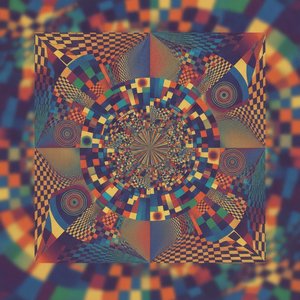
By the early 1960s, Riley had fully embraced her distinctive aesthetic, producing paintings characterized by precise geometric forms—lines, squares, circles—that seemed to vibrate and pulsate before the viewer’s eyes. These weren't illusions in the traditional sense; they were explorations of how the eye perceives form, color, and movement. Her work deliberately disrupted conventional notions of pictorial space, creating a dynamic interplay between the canvas and the observer. The sensation induced by these paintings ranged from subtle visual tremors to more pronounced effects—some viewers reported feelings akin to seasickness or even hallucinations. This deliberate provocation was central to Riley’s artistic intent; she sought not simply to represent reality but to reveal the mechanisms of perception itself. Her mature style, developed during this period, drew inspiration from diverse sources, including scientific studies of optics and the principles of Gestalt psychology. The introduction of color in 1966 expanded her palette and further enriched the perceptual complexities of her work.
Legacy and Influence: A Continuing Exploration
Bridget Riley’s impact on the art world extends far beyond the confines of Op Art. Her rigorous investigation of visual perception has influenced generations of artists, designers, and scientists. She co-founded SPACE (Space Provision Artistic Cultural Educational) in 1968, a pioneering organization dedicated to providing affordable studio space for artists, demonstrating her commitment to fostering a supportive creative community. Throughout her career, Riley has consistently pushed the boundaries of abstraction, exploring new materials and techniques while remaining true to her core principles. Her meticulous process involves detailed preparatory drawings and collage work, which are then executed by assistants—a practice that allows her to maintain precise control over the final outcome. The Courtauld Gallery’s 2015-16 exhibition, “Bridget Riley: Learning from Seurat,” underscored the enduring influence of the French Post-Impressionist on her artistic development, revealing how Seurat's pointillism served as a crucial foundation for her own explorations of color and perception. Today, at over ninety years old, Bridget Riley continues to work and exhibit internationally, solidifying her position as one of the most important and influential artists of our time—a testament to the power of sustained inquiry and the enduring fascination with the mysteries of human vision. Her art remains a compelling invitation to look closer, to question what we see, and to experience the world in new and unexpected ways.



 Preview
 Switch to Print
 Send
Send Share
Share
 Details
 Guide
Guide

 Download
 Similars
 X-Ray
X-Ray Diaporama
 Q&A
Q&A Stats
Stats


 Read More






































 Glass option is only available in size under 110 CM







![Untitled [Study For 'Paean']](/media/artworks/images-thumb/f9/70/f970e5c8ebef52bd6e07fb16115384eb.jpg)


![Untitled [Sequence Study Towards 'Elysium']](/media/artworks/images-thumb/81/96/819682d0dd0b0ad73191c900f714dc92.jpg)

