Preview AR preview Buy Hand Made Painting Switch to Digital Image Send
Details Guide Add to favorites Download Similars X-Ray Diaporama Stats

Conversation

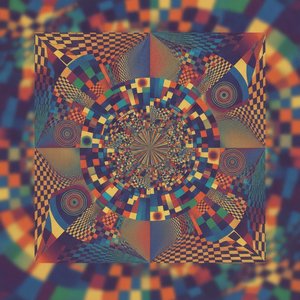
Experience the mesmerizing optical illusions of Bridget Riley's Conversation, a vibrant masterpiece of Op Art featuring intricate colorful patterns that invite you to explore the depths of visual perception.

Explore the captivating optical illusions of Bridget Riley (b. 1931), a leading figure in Op Art. Discover her dynamic black & white geometric paintings, explorations of perception, and lasting impact on modern art.

The artwork displayed on this page is protected by copyright law, which means we cannot legally create or sell an identical reproduction. This protection is enforced under international agreements such as the Berne Convention and by national laws, including those outlined by the U.S. Copyright Law - Title 17.

This method fully complies with copyright regulations because it does not involve copying or duplicating the protected artwork. Instead, it is a creative reinterpretation - a new painting that is influenced by the original but not identical to it.

Giclée / Art Print

Museum-quality giclée or canvas print with fast production and flexible finish options. ( Buy Hand Made Painting Switch to Digital Image)

Corner sample of the P118B picture frame: moulded polystyrene, 5 cm wide and 3 cm thick
P118B $10
Corner sample of the P118H picture frame: moulded polystyrene, 5 cm wide and 3 cm thick
P118H $10
Corner sample of the P118W picture frame: moulded polystyrene, 5 cm wide and 3 cm thick
P118W $10
Corner sample of the P438Z picture frame: moulded polystyrene, 5.5 cm wide and 3.5 cm thick
P438Z $10
Corner sample of the P508JH picture frame: moulded polystyrene, 7 cm wide and 3.5 cm thick
P508JH $12
Corner sample of the P508YH picture frame: moulded polystyrene, 7 cm wide and 3.5 cm thick
P508YH $12
Corner sample of the P805H picture frame: moulded polystyrene, 5 cm wide and 3.5 cm thick
P805H $10
Corner sample of the P805Z picture frame: moulded polystyrene, 5 cm wide and 3.5 cm thick
P805Z $10
Corner sample of the P919BZ picture frame: moulded polystyrene, 7 cm wide and 3.5 cm thick
P919BZ $10
Corner sample of the P919G picture frame: moulded polystyrene, 7 cm wide and 3.5 cm thick
P919G $10
Corner sample of the P919XJ picture frame: moulded polystyrene, 7 cm wide and 3.5 cm thick
P919XJ $10
Corner sample of the P959ZH picture frame: moulded polystyrene, 5 cm wide and 3 cm thick
P959ZH $10
Corner sample of the P968JZ picture frame: moulded polystyrene, 6 cm wide and 4 cm thick
P968JZ $12
Corner sample of the W106C picture frame: solid wood, 5 cm wide and 3 cm thick
W106C $8
Corner sample of the W218G picture frame: solid wood, 5 cm wide and 3 cm thick
W218G $10
Corner sample of the W218JH picture frame: solid wood, 5 cm wide and 3 cm thick
W218JH $8
Corner sample of the W218Y picture frame: solid wood, 5 cm wide and 3 cm thick
W218Y $10
Corner sample of the W307PJ picture frame: solid wood, 6 cm wide and 3 cm thick
W307PJ $10
Corner sample of the W316G picture frame: solid wood, 6 cm wide and 3 cm thick
W316G $10
Corner sample of the W316PJ picture frame: solid wood, 6 cm wide and 3 cm thick
W316PJ $8
Corner sample of the W316Y picture frame: solid wood, 6 cm wide and 3 cm thick
W316Y $10
Corner sample of the W398PJ picture frame: solid wood, 5 cm wide and 3 cm thick
W398PJ $8
Corner sample of the W4111J picture frame: solid wood, 6.5 cm wide and 3.5 cm thick
W4111J $10
Corner sample of the W500HY picture frame: solid wood, 7 cm wide and 5 cm thick
W500HY $15
Corner sample of the W500JH picture frame: solid wood, 7 cm wide and 5 cm thick
W500JH $15
Corner sample of the W692G picture frame: solid wood, 8 cm wide and 4 cm thick
W692G $12
Corner sample of the W849H picture frame: solid wood, 5 cm wide and 3 cm thick
W849H $8
Corner sample of the W940BG picture frame: solid wood, 7.5 cm wide and 4.5 cm thick
W940BG $15
Corner sample of the W953PJ picture frame: solid wood, 6 cm wide and 3.5 cm thick
W953PJ $8

Standard
custom
CM
INCH

Pick from our preset sizes that match the artwork's original proportions.

width
height

You may enter your own dimensions to fit a specific frame or space. If your selected size does not match the original image's proportions, we will either crop the artwork or extend the image with a mirrored or solid-fill edge. A digital mockup will be sent for your approval before production begins.
Please note that the on-screen preview does not reflect the actual cropping or extension. Only the mockup will accurately show the final composition.
While custom sizes are available, we recommend selecting a dimension from the predefined list to preserve the original proportions.

Worldwide Delivery () in 2 weeks instead of standard 4/5 weeks. (13 October)

Free Worldwide Express Shipping
High-Quality Linen Canvas
Full Shipping Insurance
Customs Tax Refund Guarantee
True Color Matching Guarantee
100-Day Return Policy (Defects Only)
100% Money-Back Guarantee
Bulk Discount Offer

Total Price

$ 69

Conversation

Giclée / Art Print

Reproduction Size

-

Total Price

$ 69

Quick Facts

  • Artistic style: Op Art
  • Title: Conversation
  • Subject or theme: Geometric patterns and optical illusions
  • Notable elements or techniques: Colorful striped and checkered patterns

A Symphony of Sight: The Vibrating World of Bridget Riley

To stand before Bridget Riley’s Conversation is to enter a realm where the boundaries between sight and sensation begin to dissolve. This mesmerizing masterpiece, created in 1992, serves as a profound testament to the artist's evolution from the stark, rhythmic black-and-white Op Art of her early career into a much more lush, chromatic exploration of perception. The painting is not merely a static arrangement of color; it is a living, breathing entity that seems to pulse with its own internal rhythm. As the eye wanders across the canvas, the intricate interplay of stripes and checkered patterns creates a kinetic energy, inviting the viewer into a silent dialogue between the retina and the mind.

The technique employed in Conversation is nothing short of architectural. Riley utilizes bands of complex, saturated colors—ranging from deep blues and vibrant yellows to earthy oranges and greens—arranged vertically to create a sense of depth and movement. However, it is the introduction of diagonal elements that truly transforms the work. These intersecting planes cut through the verticality, creating an illusion of overlapping layers that extend far beyond the physical surface of the linen. This layering effect mimics the way sound waves might overlap in a musical composition, much like the different sections of an orchestra playing in harmony, effectively turning a visual experience into a multisensory one.

The Resonance of Color and Memory

Beyond its technical brilliance, Conversation is deeply rooted in the artist's personal history and global wanderings. This particular body of work was profoundly influenced by Riley’s travels through Egypt and India during the 1980s. The palette reflects a deep connection to the natural pigments and sun-drenched landscapes she encountered, moving away from the clinical precision of her earlier works toward something more organic and emotionally resonant. The colors do not just sit upon the canvas; they vibrate against one another, evoking the warmth of distant horizons and the complex textures of ancient terrains.

For the discerning collector or interior designer, this piece offers a unique opportunity to introduce a focal point of unparalleled sophistication. Conversation possesses a rare ability to command a room, acting as both a window into an abstract dimension and a source of meditative calm. Its rhythmic complexity provides a stimulating intellectual challenge, while its vibrant palette can breathe life and energy into a contemporary space. Whether placed in a minimalist gallery setting or a richly textured living area, a high-quality reproduction of this work brings with it the prestige of modern art history and the enduring magic of Bridget Riley’s visionary perception.

Questions & Answers

What is the luminance of "Conversation" by Bridget Riley?

The colors of "Conversation" show a luminous luminance.

Which print setup is suggested for "Conversation" by Bridget Riley?

A print of "Conversation" by Bridget Riley is recommended at a large size in landscape orientation.

What feeling does "Conversation" by Bridget Riley convey?

In "Conversation", a bold mood accompanies an energetic emotion.

What is the emotional tone of "Conversation" by Bridget Riley?

The emotional tone recorded for "Conversation" by Bridget Riley is energetic. It summarizes the feeling the work expresses.

How does the style of "Conversation" relate to its creator's era?

"Conversation" belongs to the Op Art movement, and its creator worked in the Modern era.

Where can I find artworks similar to "Conversation" by Bridget Riley?

The Similars page of "Conversation" by Bridget Riley presents related artworks.

Can I see an X-ray view of "Conversation" by Bridget Riley?

The X-Ray view of "Conversation" by Bridget Riley is on the artwork's X-Ray page: an interactive examination of the image through eleven optical layers.

Which color stands out most in "Conversation"?

The color that stands out most in "Conversation" is steel blue (#31add3). The dominant color is useful when matching an artwork to an interior.


Artist Biography

A Life Illuminated by Perception: The World of Bridget Riley

Bridget Louise Riley, born in Norwood, London, in 1931, stands as a pivotal figure in the history of modern art, renowned for her pioneering contributions to Op Art. Her journey began amidst the shifting landscapes of pre-war Britain, with a childhood marked by relocation from London to Lincolnshire and then Cornwall during the Second World War. These early experiences, spent observing the interplay of light and shadow on the Cornish coast, instilled in her a profound visual sensitivity that would become the cornerstone of her artistic practice. Her father’s profession as a printer subtly foreshadowed Riley's later fascination with pattern and precision, while an unconventional education—supplemented by talks from visiting teachers during wartime—fostered an independent spirit crucial to her innovative approach. She attended Cheltenham Ladies’ College before pursuing formal art training at Goldsmiths College (1949-52) and the Royal College of Art (1952-55), where she encountered fellow artists like Peter Blake and Frank Auerbach, forming connections that would shape the artistic milieu of her generation.

From Figurative Beginnings to Optical Revolution

Riley’s early work reflected a more traditional figurative style, imbued with semi-impressionistic tendencies. However, a period of personal hardship – nursing her father through a serious car accident and subsequently experiencing a breakdown – proved transformative. Following this challenging time, she found employment at J. Walter Thompson advertising agency, an experience that unexpectedly exposed her to the power of visual communication and the impact of carefully constructed imagery. The watershed moment arrived in 1958 with an exhibition of Jackson Pollock’s work at the Whitechapel Gallery. This encounter ignited a new direction, prompting Riley to explore abstraction and the possibilities of non-representational form. Her initial experiments involved adopting pointillist techniques, influenced by artists like Georges Seurat, but it was around 1960 that her signature style began to emerge—a mesmerizing exploration of geometric patterns in black and white designed to challenge and activate the viewer’s perception. A pivotal journey to Italy with mentor Maurice de Sausmarez further solidified this path, exposing her to the dynamism of Futurist art at the Venice Biennale. Riley wasn't merely creating images; she was conducting visual experiments, meticulously crafting compositions that exploited the inherent instability of human vision.

The Dynamism of Sight: Op Art and Beyond

By the early 1960s, Riley had fully embraced her distinctive aesthetic, producing paintings characterized by precise geometric forms—lines, squares, circles—that seemed to vibrate and pulsate before the viewer’s eyes. These weren't illusions in the traditional sense; they were explorations of how the eye perceives form, color, and movement. Her work deliberately disrupted conventional notions of pictorial space, creating a dynamic interplay between the canvas and the observer. The sensation induced by these paintings ranged from subtle visual tremors to more pronounced effects—some viewers reported feelings akin to seasickness or even hallucinations. This deliberate provocation was central to Riley’s artistic intent; she sought not simply to represent reality but to reveal the mechanisms of perception itself. Her mature style, developed during this period, drew inspiration from diverse sources, including scientific studies of optics and the principles of Gestalt psychology. The introduction of color in 1966 expanded her palette and further enriched the perceptual complexities of her work.

Legacy and Influence: A Continuing Exploration

Bridget Riley’s impact on the art world extends far beyond the confines of Op Art. Her rigorous investigation of visual perception has influenced generations of artists, designers, and scientists. She co-founded SPACE (Space Provision Artistic Cultural Educational) in 1968, a pioneering organization dedicated to providing affordable studio space for artists, demonstrating her commitment to fostering a supportive creative community. Throughout her career, Riley has consistently pushed the boundaries of abstraction, exploring new materials and techniques while remaining true to her core principles. Her meticulous process involves detailed preparatory drawings and collage work, which are then executed by assistants—a practice that allows her to maintain precise control over the final outcome. The Courtauld Gallery’s 2015-16 exhibition, “Bridget Riley: Learning from Seurat,” underscored the enduring influence of the French Post-Impressionist on her artistic development, revealing how Seurat's pointillism served as a crucial foundation for her own explorations of color and perception. Today, at over ninety years old, Bridget Riley continues to work and exhibit internationally, solidifying her position as one of the most important and influential artists of our time—a testament to the power of sustained inquiry and the enduring fascination with the mysteries of human vision. Her art remains a compelling invitation to look closer, to question what we see, and to experience the world in new and unexpected ways.
Bridget Riley

Bridget Riley

1931 - , United Kingdom

Quick Facts

  • Full Name: Bridget Louise Riley
  • Nationality: English
  • Date Of Birth: 1931
  • Place Of Birth: Norwood, United Kingdom
  • Notable Artworks:
    • Nataraja
    • Fall
  • Artistic Movement Or Style: Op Art
  • Artists Who Influenced This Artist: ['Georges Seurat']
  • Artists Or Movements Influenced By This Artist: ['Modern art']
Explore artworks organized by themes, styles, and characteristics.