Bernardo Daddi: Bridging Gothic and Renaissance in Florence
Bernardo Daddi, born in Florence around 1290 and passing away in 1348, stands as a pivotal figure in the transition from the late Gothic to the burgeoning Italian Renaissance. He wasn’t a revolutionary iconoclast shattering established conventions overnight, but rather a master craftsman who subtly yet profoundly shifted the artistic landscape of his time, particularly within the vibrant city of Florence. Often described as the “leading painter” of Florence during his generation, Daddi's legacy lies not in radical departures, but in a measured evolution—a careful refinement of existing techniques and a dedication to realism that marked a crucial step toward the humanist ideals of the Renaissance.
Early Life and Artistic Roots
Daddi’s precise birthdate remains shrouded in some mystery, though records indicate he was first mentioned in 1312. It's widely believed that his artistic journey began under the tutelage of Giotto di Bondone, one of the most influential artists of the era. Giotto’s emphasis on naturalism and emotional expression undoubtedly shaped Daddi’s early style. His initial works demonstrate a clear connection to Giotto’s followers – masters like the “Master of Santa Cecilia” and other Florentine painters of the first quarter of the 14th century—reflecting a direct lineage of artistic influence. These early pieces showcase a stylistic fidelity, utilizing techniques common in the Gothic tradition while hinting at the burgeoning realism that would define his later career. The meticulous detail and vibrant colors characteristic of this period suggest a strong grounding in established practices, yet with an emerging sensitivity to depicting human form and emotion.
A Style Defined by Realism and Portable Altarpieces
Daddi’s artistic style represents a significant departure from the stylized, often highly symbolic, imagery prevalent in Gothic art. He sought to achieve a more accurate and believable representation of reality—a core tenet of the Renaissance. This shift is particularly evident in his smaller-scale works, where he skillfully rendered textures, drapery, and facial expressions with remarkable detail. Crucially, Daddi played a key role in popularizing the portable altarpiece format. These multi-panel compositions, designed to be displayed in churches and chapels, allowed for greater narrative complexity and visual richness than traditional wall paintings. Daddi’s later style, influenced by Maso di Banco, demonstrates an increased refinement—a subtle elegance that belies a certain academic precision. This blend of lyrical beauty and technical skill is what distinguishes his work and cemented his position as a leading Florentine painter.
Notable Works and Museum Collections
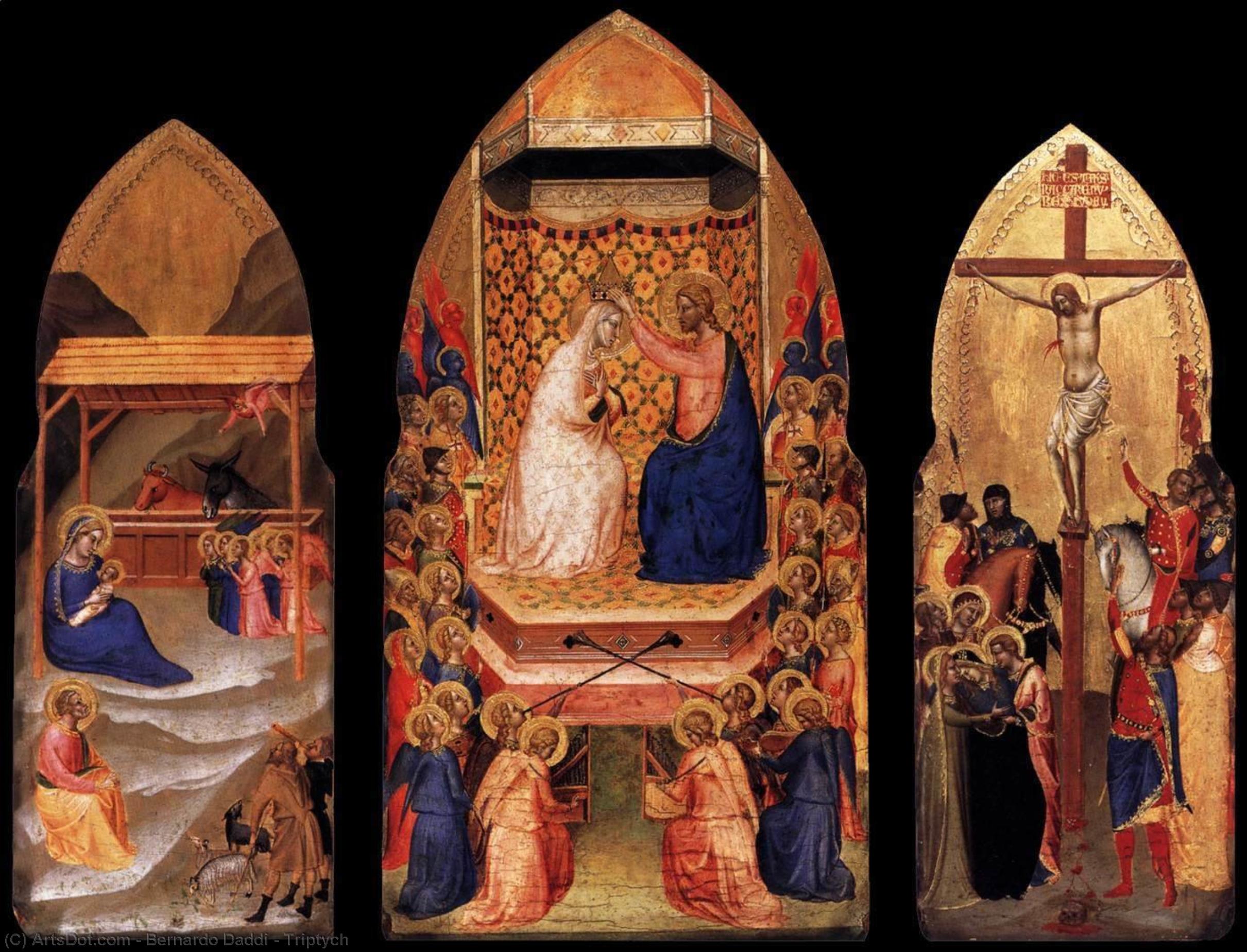
Bernardo Daddi’s artistic output has left an indelible mark on the collections of some of the world's most prestigious museums. The Uffizi Gallery in Florence houses a significant triptych from 1328, offering a compelling glimpse into his compositional skills and narrative storytelling. Equally remarkable is the “Martyrdom of Saint Stephen” housed within the Pinacoteca Vaticana—a predella comprised of eight panels painted around 1345. Beyond these iconic pieces, Daddi’s influence can be seen in numerous works scattered across institutions like the National Gallery of Art and the Walters Art Museum. His “Processional Cross,” for example, exemplifies his ability to capture movement and detail within a relatively small format. The Courtauld Institute of Art holds several panels from the "Coronation of the Virgin," showcasing his mastery of depicting religious figures and their surroundings.
Influences and Lasting Legacy
Daddi’s artistic development wasn't solely rooted in Giotto’s teachings; he was also influenced by the Sienese art of Lorenzetti, whose emphasis on civic virtue and naturalistic representation resonated with Daddi’s own aesthetic sensibilities. His last known work dates back to 1347, and sadly, he passed away shortly thereafter. Despite a certain “academic and mechanical hardness” noted by some critics—a characteristic perhaps stemming from his workshop's prolific output—Daddi’s lyrical elegance and technical skill ensured his enduring legacy. He bridged the gap between the Gothic past and the nascent Renaissance, shaping the visual language of Florence and leaving behind a body of work that continues to captivate viewers today. His contributions to the development of portable altarpieces and his commitment to realistic depiction laid the groundwork for future generations of Italian artists.
Useful Resources



 Preview
 Buy Hand Made Painting
 Send
Send Share
Share
 Details

 Download
 Similars
 X-Ray
X-Ray Diaporama


 Read More






































 Glass option is only available in size under 110 CM