FREE ART CONSULTATION

x
Buy Painting Buy PaintingBuy Image Buy Image SendSend
DetailsDetails Add to favorites Add to favorites DownloadDownload SimilarsSimilars X-RayX-Ray DiaporamaDiaporama

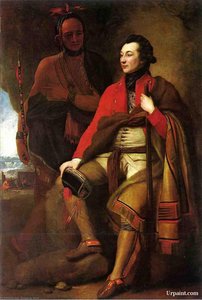
Feast Scene with an Angel (sketch)

Discover Benjamin West (1738-1820), a pioneering American artist & Royal Academy president! Explore his historical paintings, Neoclassical style & lasting legacy.

Giclée / Art Print

Museum-quality giclée or canvas print with fast production and flexible finish options.

Standard
custom
CM
INCH

Pick from our preset sizes that match the artwork's original proportions.

width
height

You may enter your own dimensions to fit a specific frame or space. If your selected size does not match the original image's proportions, we will either crop the artwork or extend the image with a mirrored or solid-fill edge. A digital mockup will be sent for your approval before production begins.
Please note that the on-screen preview does not reflect the actual cropping or extension. Only the mockup will accurately show the final composition.
While custom sizes are available, we recommend selecting a dimension from the predefined list to preserve the original proportions.

Worldwide Delivery () in 2 weeks instead of standard 4/5 weeks. (1 July)

why_choose_icon
Free Worldwide Express Shipping
why_choose_icon
High-Quality Linen Canvas
why_choose_icon
Full Shipping Insurance
why_choose_icon
Customs Tax Refund Guarantee
why_choose_icon
True Color Matching Guarantee
why_choose_icon
60-Day Return Policy (Defects Only)
why_choose_icon
100% Money-Back Guarantee
why_choose_icon
Bulk Discount Offer

Total Price

-

reproduction

Feast Scene with an Angel (sketch)

Giclée / Art Print

Reproduction Size

-

Total Price

-


Artist Biography

A Pioneer Bridging Worlds: The Life and Legacy of Benjamin West

Born in 1738 amidst the burgeoning landscape of colonial Pennsylvania, Benjamin West emerged as a pivotal figure in the transatlantic art world, a painter who skillfully navigated the currents of Neoclassicism and Romanticism while forging a uniquely American artistic identity. His story is one of remarkable self-education, unwavering ambition, and an extraordinary ability to connect with both aristocratic patrons and revolutionary ideals. From humble beginnings—his father an innkeeper in Springfield—West’s innate talent was nurtured by early exposure to the arts, reportedly learning rudimentary techniques from Native Americans before receiving any formal training. This unconventional start instilled within him a spirit of innovation that would characterize his entire career. He quickly established himself as a sought-after portraitist in Philadelphia and New York, but a thirst for deeper artistic knowledge propelled him towards Europe in 1760, embarking on a journey that would irrevocably alter the course of American art.

From Italy to London: Forging a Path to Recognition

West’s arrival in Italy marked a turning point. Immersing himself in the artistic heartland of Europe, he studied the masters—Titian, Raphael—and engaged with contemporary Neoclassical thinkers like Anton Rafael Mengs and Angelica Kauffman. This period was crucial in shaping his aesthetic sensibilities, instilling within him an appreciation for classical form and historical narrative. However, it was London that ultimately became his adopted home and artistic center. Arriving in 1763, West swiftly ascended the ranks of the British art scene, captivating audiences with his ambitious canvases and securing the patronage of King George III. This royal endorsement not only provided financial stability but also cemented his position as a leading figure within the establishment. A defining moment came with his election to the Royal Academy in 1769, an institution he would later preside over as President from 1792 until his death. His influence extended beyond his own artistic production; West became a champion for American artists seeking training abroad, offering guidance and support to generations of aspiring painters like Allston, Copley, and Morse.

Revolutionizing Historical Painting: Technique and Controversy

West’s impact on the art world wasn't merely about achieving technical mastery; it was about challenging conventions. He dared to reimagine historical painting, moving away from rigid adherence to classical precedent and embracing a more contemporary sensibility. The Death of General Wolfe (1770), arguably his most famous work, exemplifies this revolutionary approach. By depicting the fallen general surrounded by figures in *contemporary* military attire rather than traditional Roman garb, West sparked considerable debate. Critics questioned the historical accuracy, but audiences were captivated by the immediacy and emotional resonance of the scene. This bold move signaled a shift towards greater realism and narrative power in history painting, influencing countless artists who followed. His style evolved over time, incorporating elements of Romanticism into his later works, yet always retaining a commitment to ambitious composition and detailed execution. Other notable pieces like Thetis Bringing the Armor to Achilles, The Three Sisters, The Fright of Astyanax, and The Cave of Despair demonstrate his versatility and mastery across a range of mythological and historical themes.

A Lasting Legacy: Shaping Artistic Identity

Benjamin West’s legacy extends far beyond the canvases he created. He fundamentally altered the landscape of American art, establishing history painting as a viable genre for American artists and fostering a sense of national artistic identity. His presidency of the Royal Academy solidified his influence on British art, promoting innovation and supporting emerging talent.
  • He championed a more accessible and emotionally engaging style of historical representation.
  • His studio became a haven for American artists seeking training in Europe.
  • He bridged the gap between Neoclassical ideals and the burgeoning Romantic movement.
West’s innovative spirit, coupled with his diplomatic skills and unwavering dedication to his craft, earned him lasting recognition as “the American Raphael.” He died in London in 1820, leaving behind a body of work that continues to inspire awe and admiration. His story serves as a testament to the power of artistic vision, the importance of cultural exchange, and the enduring legacy of an artist who dared to challenge conventions and forge his own path.
Benjamin West

Benjamin West

1738 - 1820 , United States of America

Quick Facts

  • Artistic Movement Or Style: Neoclassical, Romanticism
  • Artists Or Movements Influenced By This Artist:
    • Allston
    • Copley
    • Morse
  • Artists Who Influenced This Artist:
    • Titian
    • Raphael
    • Mengs
    • Hamilton
    • Kauffman
  • Date Of Birth: 1738-10-10
  • Date Of Death: 1820-03-11
  • Full Name: Benjamin West
  • Nationality: American
  • Notable Artworks:
    • The Death of General Wolfe
    • Thetis Bringing Armor
    • The Three Sisters
    • Fright of Astyanax
  • Place Of Birth: Springfield, USA
Explore artworks organized by themes, styles, and characteristics.