
x


 PaintingContemporary Realism
 2019Contemporary
 110.0 x 145.0 cm
 Alte Pinakothek
Hand-painted oil on canvas in your size and frame, made to order by our artists. ( Buy Print Buy Image)





























Pick from our preset sizes that match the artwork's original proportions.

You may enter your own dimensions to fit a specific frame or space. If your selected size does not match the original image's proportions, we will either crop the artwork or extend the painting with additional hand-painted elements. A digital mockup will be sent for your approval before production begins.
Please note that the on-screen preview does not reflect the actual cropping or extension. Only the mockup will accurately show the final composition.
While custom sizes are available, we recommend selecting a dimension from the predefined list to preserve the original proportions.
Worldwide Delivery () in 3/4 weeks instead of standard 5 weeks. (29 August). No compromise on quality.


untitled
Reproduction Size
Bastian Maria Meindl’s untitled piece captures a moment suspended in charged tension, transforming a simple stage setting into a crucible of human drama. At the heart of the composition stands a man, seemingly immersed in the soulful act of playing his guitar. His posture suggests both performance and vulnerability, drawing the viewer immediately into the rhythm—or perhaps the silence—of the music. Flanking this central figure, another presence looms, holding what appears to be a knife. This juxtaposition of artistic expression against palpable threat creates an immediate narrative tension that is utterly captivating. The stage itself, marked by two empty chairs, feels less like a place for rest and more like a silent witness to the unfolding confrontation.
The emotional weight of this painting derives from the dynamic interplay between its figures. On one side, we have the resonance of art—the guitar, the performance—representing creativity, emotion, or perhaps even distraction. Counterbalancing this is the stark, almost brutal potential embodied by the knife and the figure holding it. Meindl masterfully balances these opposing forces: the lyrical versus the lethal. It compels us to ask what narrative connects these elements. Is the music a defense? Is the threat a consequence of the performance? The overall atmosphere is thick with unspoken dialogue, inviting contemplation on the precarious balance between public display and private danger.
While the artist's biography suggests an affinity for vibrant abstraction in other works, this piece grounds itself in figurative drama. The execution, rendered on a substantial canvas of 110 x 145 cm, possesses a palpable energy that speaks to skilled craftsmanship. One can almost feel the texture beneath the paint, observing how Meindl has built up layers to give depth to the figures and the stage environment. The composition guides the eye across the scene—from the central musician outward to the more ominous figure on the right—ensuring that no element is left unexamined. It is a technically proficient piece that uses dramatic lighting and positioning to heighten its emotional stakes.
Collectively, the elements suggest profound symbolism. The stage has always been a metaphor for life itself—a place where we present our best selves while simultaneously facing judgment. The guitar can symbolize the voice or the art that defines us, while the knife often speaks to conflict, necessary severance, or raw confrontation. This artwork may be interpreted as an exploration of the cost of visibility; the intense spotlight of performance sometimes brings with it sharp edges and unresolved conflicts. It resonates deeply with anyone who has ever felt their deepest self scrutinized under public gaze.
For collectors and designers seeking a piece that does not merely decorate but actively engages the room, this painting offers profound depth. Its dramatic scale ensures it commands attention, making it an ideal focal point for a sophisticated living area or gallery space. Reproducing this work allows one to bring home not just paint on canvas, but a complex emotional tableau—a conversation starter steeped in mystery and artistic tension. It is a piece that demands to be viewed closely, rewarding the observer with layers of interpretation.

George Orwell, a name synonymous with dystopian fiction and unwavering social critique, wasn’t simply a writer; he was a chronicler of his time, a revolutionary observer, and a profoundly influential voice against totalitarianism. Born Eric Arthur Blair on June 25, 1903, in Motihari, British India – a landscape that would indelibly shape his worldview – Orwell's life unfolded as a relentless pursuit of truth amidst the shadows of poverty, war, and political manipulation. His journey from colonial policeman to literary icon is a testament to the power of experience and the enduring relevance of his warnings.
Orwell’s early years were marked by instability and displacement. His Burmese father, an Indian civil servant, died when Eric was young, forcing his family to relocate to England. This nomadic existence instilled in him a deep sense of rootlessness and a critical perspective on social hierarchies. He attended Eton College, but found the privileged environment stifling, leading him to pursue unconventional paths – working as a printer’s devil, sailor, and BBC broadcaster – experiences that would later inform his writing with gritty realism and a keen understanding of the lives of ordinary people.
The Spanish Civil War proved a pivotal moment in Orwell's life. He joined the POUM (Workers’ Party of Marxist Unification), a left-wing group fighting against Franco’s fascist forces, but quickly became disillusioned with the internal divisions and bureaucratic inefficiencies within the Republican movement. This experience profoundly shaped his political thinking, leading him to develop a staunch opposition to Stalinism and its brutal suppression of dissent. It was during this period that he began working on *Homage to Catalonia*, a brutally honest account of his experiences in Spain – a work often overlooked but crucial for understanding the complexities of Orwell’s political convictions.
Returning to Britain after the Spanish Civil War, Orwell struggled with poverty and ill health. It was during this period of hardship that he penned *Nineteen Eighty-Four*, a novel published in June 1949, which remains one of the most enduring works of dystopian literature ever written. The book wasn’t conceived as a simple critique of Stalinism, although its parallels with Soviet reality were undeniable. Instead, Orwell sought to expose the inherent dangers of unchecked power, surveillance, and manipulation – themes that resonate powerfully even today.
*Nineteen Eighty-Four* is set in Oceania, a totalitarian state ruled by the Party and dominated by the omnipresent figure of Big Brother. The novel explores concepts such as “doublethink” (the ability to hold two contradictory beliefs simultaneously), “Newspeak” (a deliberately impoverished language designed to limit thought), and “thoughtcrime” (any act of independent thinking deemed subversive). The chilling atmosphere, stark prose, and unforgettable characters – Winston Smith, the protagonist yearning for truth and freedom – created a literary landmark that continues to be studied and debated.
Alongside *Nineteen Eighty-Four*, Orwell’s other major works—*Animal Farm* (a satirical allegory of the Russian Revolution) and *Down and Out in London and Paris* (a stark portrayal of poverty)—demonstrate his commitment to exposing social injustice and advocating for the marginalized. His writing style, characterized by its directness, clarity, and unflinching honesty, quickly established him as a voice of conscience.
Orwell's influence extends far beyond the realm of literature. The terms “Orwellian” and “Big Brother” have become ingrained in our cultural lexicon, serving as shorthand for surveillance, propaganda, and totalitarian control. His warnings about the dangers of unchecked power remain strikingly relevant in an age of digital technology and mass data collection.
However, to reduce Orwell solely to a prophet of dystopia would be a disservice to his complex and multifaceted legacy. He was also a passionate advocate for social justice, a committed journalist, and a humanist who believed in the importance of individual liberty and critical thinking. His work continues to inspire activists, journalists, and anyone concerned with safeguarding freedom and truth in an increasingly challenging world.
Orwell died on January 21, 1950, at the age of 46, from tuberculosis – a tragic end for a man who dedicated his life to exposing injustice and illuminating the darkness. His writings remain a potent reminder of the fragility of freedom and the enduring need to resist oppression in all its forms.
The themes explored within *Nineteen Eighty-Four* have inspired countless artistic interpretations, from film adaptations to graphic novels. WahooArt.com offers meticulously hand-painted reproductions of iconic images associated with the novel, capturing the bleak atmosphere and unsettling imagery that define Orwell's vision. These reproductions serve not only as beautiful works of art but also as a visual reminder of the enduring relevance of Orwell’s warnings.
By commissioning these hand-painted reproductions, collectors not only acquire beautiful works of art but also contribute to a deeper appreciation of Orwell’s legacy and his enduring message about the importance of truth, liberty, and resistance against tyranny.

1984 - , Germany
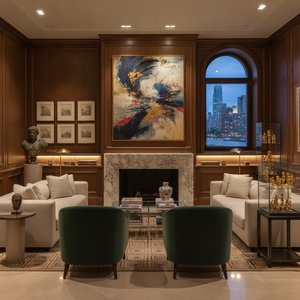
Elevate your home staging with premium, hand-painted art reproductions from WahooArt. Achieve luxury transformations in under 3 weeks with our express delivery service. Perfect for freelance decorators seeking museum-quality, ready-to-hang masterpieces that drive property value.


Stay updated with the latest art news, exclusive offers, and decoration ideas.
Tell us about your project and our art experts will provide you with 3 personalized art suggestions.
Let Us Curate 3 Options Just for You - Free!

 Preview
 Send
Send Share
Share
 Details

 Download
 Similars
 X-Ray
X-Ray Diaporama
 Read More







 Glass option is only available in size under 110 CM


