

 Acrylic On CanvasWallArtBaroque
 105.0 x 77.0 cm
 Hermitage Museum
Purchase a high-resolution, enhanced digital image, far superior to the online preview.
Each file is meticulously prepared by our in-house specialists using advanced tools and expert manual retouching. We ensure every image has exceptional clarity, precise color accuracy, and fine detail.
The final file is delivered via email within 72 hours, optimized for immediate use in professional, editorial, and print environments. This is the same quality trusted by top-tier design studios, publishers, and galleries.
Download a high-resolution file for personal display, printing, and creative projects. ( Switch to Print Buy Hand Made Painting)
When you choose WahooArt.com, you're not just getting an image - you're receiving a professionally enhanced digital artwork, crafted with precision and backed by a satisfaction guarantee. Here's everything that comes with your order, automatically:

Your high-resolution digital image file will be emailed to you within 72 hours of ordering - ready for immediate use.

Your artwork is professionally optimized using advanced AI tools and manual editing, ensuring maximum detail, clarity, and color accuracy.

Accidentally deleted or lost your file? No worries - we'll resend it to you anytime, free of charge.

Enjoy your artwork instantly with zero customs, duties, or delivery fees - digital downloads are always tax-free.

We ensure your digital image reflects the original colors as closely as possible using professional tools and color management.

If you're not satisfied with your digital image, we'll revise it or refund 100% within 100 days - no questions asked.

Not satisfied? Get a full refund within 100 days of receiving your digital file - no questions asked.

Buy 3 images, save 10% - Buy 5, save 15% - Buy 10+, save 20%. Great for creative projects, galleries, and agencies.
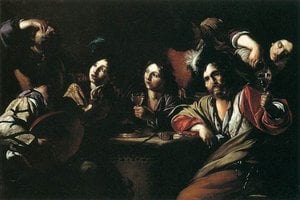
Bartolomeo Manfredi's "Lute Playing Young Man," painted circa 1603-1622, is not merely a portrait; it’s a carefully constructed tableau of contemplative beauty and subtle drama. Attributed to the artist during his formative years under the immense influence of Michelangelo Merisi da Caravaggio, this work embodies the Baroque fascination with light, shadow, and psychological depth – elements that would become hallmarks of Manfredi's distinctive style. The painting captures a young man, likely a gentleman of means, lost in the quiet intensity of playing a lute, an instrument associated with courtly entertainment and intellectual pursuits during the Renaissance.
The composition is remarkably restrained, yet profoundly effective. Manfredi masterfully employs chiaroscuro – Caravaggio’s signature technique – to sculpt the figure from darkness. The young man's face, partially obscured by shadow, draws immediate attention, his brow furrowed in concentration, suggesting a deep engagement with the music he produces. The stark contrast between light and dark isn’t merely an aesthetic choice; it serves to heighten the sense of mystery surrounding him, inviting the viewer to speculate on his thoughts and emotions. The muted palette – primarily browns, ochres, and subtle blues – further contributes to the painting's somber yet alluring atmosphere.
Manfredi’s connection to Caravaggio is a subject of ongoing scholarly debate, though compelling evidence strongly suggests a significant mentorship. Caravaggio’s revolutionary approach to depicting human emotion and his dramatic use of light profoundly impacted Manfredi's artistic development. While Manfredi never signed his works, the stylistic similarities—particularly in the rendering of flesh tones, the expressive faces, and the masterful manipulation of shadow – are undeniable. This painting exemplifies this influence; observe how Manfredi captures a similar sense of psychological realism and dramatic tension as seen in Caravaggio’s portraits, albeit with a slightly more refined and controlled execution.
The choice of subject matter itself reflects the artistic currents of the time. The lute, a symbol of refinement and intellectualism, was frequently depicted in Renaissance art, often associated with noblemen and scholars. However, Manfredi elevates this commonplace scene by imbuing it with an air of profound introspection. It’s not simply a depiction of musical performance; it's a portrait of a soul lost in thought, a moment suspended in time.
“Lute Playing Young Man” is executed in oil on canvas, a medium that allowed Manfredi to achieve the rich textures and subtle gradations of tone characteristic of Baroque painting. The artist’s meticulous attention to detail is evident in the rendering of the lute's intricate construction – the delicate curves of the body, the strings, and the wood grain are all rendered with remarkable precision. The fabric of the young man’s doublet is also meticulously depicted, showcasing Manfredi’s skill in capturing the textures and folds of clothing.
Interestingly, historical records indicate that the painting underwent a partial restoration in the 19th century, where the lower portion was trimmed away. This alteration has subtly altered the composition, but it doesn't detract from the overall impact of the work. The Hermitage Museum in St. Petersburg currently houses this captivating piece, offering visitors a rare opportunity to witness Manfredi’s masterful artistry firsthand.
Beyond its technical brilliance, “Lute Playing Young Man” resonates with profound symbolic meaning. The young man's solitary contemplation speaks to the complexities of human experience – the yearning for beauty, the pursuit of knowledge, and the quiet moments of introspection that define our lives. The lute itself can be interpreted as a metaphor for the soul, its music representing the inner world of emotions and thoughts.
The painting’s subdued lighting and melancholic atmosphere evoke a sense of wistful beauty, inviting viewers to contemplate the mysteries of human existence. It's a work that transcends mere representation, offering a glimpse into the heart and mind of its subject – a shadowed reverie captured with exquisite skill and profound insight by one of Italy’s most enigmatic Baroque masters.

1582 - 1622 , Italy

 Preview
 Send
Send Share
Share
 Details

 Download
 Similars
 X-Ray
X-Ray Diaporama
 Stats
Stats Read More


