FREE ART CONSULTATION

x
Buy print Buy printBuy Image Buy Image SendSend
DetailsDetails Add to favorites Add to favorites DownloadDownload SimilarsSimilars X-RayX-Ray DiaporamaDiaporama

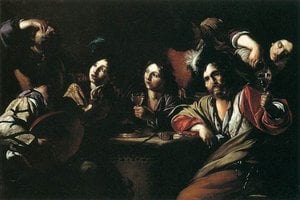
Gypsy Fortune Teller

Experience the vibrant drama of this 17th-century Gypsy Fortune Teller portrait by Bartolomeo Manfredi; discover Baroque storytelling art for your collection.

Bartolomeo Manfredi (1582-1622) was a key Italian Caravaggisti painter known for dramatic chiaroscuro, naturalism & low-life genre scenes. Influential in spreading Caravaggio's legacy to France & the Netherlands.

Hand Made Oil Reproduction

Hand-painted oil on canvas in your size and frame, made to order by our artists.

P118B $10
P118H $10
P118W $10
P438Z $10
P508JH $12
P508YH $12
P805H $10
P805Z $10
P919BZ $10
P919G $10
P919XJ $10
P959ZH $10
P968JZ $12
W106C $8
W218G $10
W218JH $8
W218Y $10
W307PJ $10
W316G $10
W316PJ $8
W316Y $10
W398PJ $8
W4111J $10
W500HY $15
W500JH $15
W692G $12
W849H $8
W940BG $15
W953PJ $8

Standard
custom
CM
INCH

Pick from our preset sizes that match the artwork's original proportions.

width
height

You may enter your own dimensions to fit a specific frame or space. If your selected size does not match the original image's proportions, we will either crop the artwork or extend the painting with additional hand-painted elements. A digital mockup will be sent for your approval before production begins.
Please note that the on-screen preview does not reflect the actual cropping or extension. Only the mockup will accurately show the final composition.
While custom sizes are available, we recommend selecting a dimension from the predefined list to preserve the original proportions.

Examples of what can be changed: Replace face with customer photo; Add pet (e.g., replace cat with dog); Include hidden message in background; Change background landscape or elements.
After order, WahooArt.com team will email client for instructions and provide a mockup preview

Worldwide Delivery () in 3/4 weeks instead of standard 5 weeks. (1 July). No compromise on quality.

why_choose_icon
Free Worldwide Express Shipping
why_choose_icon
High-Quality Linen Canvas
why_choose_icon
Full Shipping Insurance
why_choose_icon
Customs Tax Refund Guarantee
why_choose_icon
True Color Matching Guarantee
why_choose_icon
60-Day Return Policy (Defects Only)
why_choose_icon
100% Money-Back Guarantee
why_choose_icon
Bulk Discount Offer

Total Price

-

reproduction

Gypsy Fortune Teller

Reproduction Medium

Reproduction Size

-

Total Price

-

Quick Facts

  • Dimensions: 121 x 153 cm
  • Year: 1616
  • Title: Gypsy Fortune Teller
  • Subject or theme: Portrait of gypsies
  • Artistic style: Baroque

Art Quiz

There is only one correct answer for each question.

Question 1:
What is the title of the artwork?
Question 2:
Who is the artist associated with this painting?
Question 3:
Approximately what year was the 'Gypsy Fortune Teller' painted?
Question 4:
The description suggests the figures are dressed in costumes resembling what group?
Question 5:
Bartolomeo Manfredi is noted for being a significant disciple of which famous artist?

Artwork Description

The Allure of the Bohemian Spirit

Gazing upon this captivating scene, one is immediately drawn into the vibrant, enigmatic world depicted by Bartolomeo Manfredi. Titled "Gypsy Fortune Teller," the painting transports us to an intimate gathering, a moment suspended in time among four figures whose very presence whispers tales of wanderlust and mystery. The composition centers on two men and two women, all adorned in costumes that evoke the romanticized splendor of gypsy life. It is a tableau rich with human connection, suggesting a shared confidence or perhaps the hushed exchange of secrets under the cloak of twilight.

Mastery in Baroque Realism

Manfredi’s technique here showcases his profound debt to the dramatic naturalism of Caravaggio, yet it blossoms into its own compelling narrative voice. The handling of light and shadow—the hallmark of the Baroque period—is breathtaking. Light does not merely illuminate; it sculpts, catching the sheen on richly colored fabrics and highlighting the subtle contours of expressive faces. Notice the meticulous detail in the costuming, from the feathers adorning the hats to the textures suggested in their garments. This level of verisimilitude grounds the fantastical subject matter in a palpable reality, inviting the viewer to lean closer and discern every painted whisper.

Symbolism and Human Connection

The inclusion of the feather accents on both the man on the left and the woman on the right adds an immediate layer of symbolic grace. These small details elevate the portrait beyond mere genre scene; they suggest ritual, ceremony, or perhaps a connection to the ethereal arts associated with fortune-telling. The grouping itself speaks volumes about community and storytelling. Each face holds a distinct expression—a knowing glance, a thoughtful repose—creating a complex emotional tapestry that resonates deeply with the viewer's own sense of human drama.

A Touch of 17th Century Drama for Modern Spaces

Dating to 1616, this work captures the dramatic energy characteristic of early Baroque Italian painting. For the discerning collector or designer seeking an anchor piece that exudes historical depth and vibrant character, "Gypsy Fortune Teller" offers unparalleled drama. Reproducing this masterpiece allows one to infuse a room with the passionate spirit of the seventeenth century—a sophisticated blend of exoticism, intimacy, and masterful technique. It is not just a painting; it is an invitation into a richly colored moment of human storytelling.

Related Artworks


Artist Biography

Bartolomeo Manfredi: The Shadow of Caravaggio

Bartolomeo Manfredi (1582-1622) stands as a pivotal figure in the burgeoning Baroque landscape of Italy, inextricably linked to the legacy of Michelangelo Merisi da Caravaggio. While Manfredi himself remained largely silent on the canvas – devoid of signed works and with only a handful attributed definitively – his impact on artistic circles was profound, cementing him as Caravaggio’s most influential disciple and shaping the trajectory of Italian painting for decades to come. Born in Ostiano, near Cremona, Manfredi's early life remains shrouded in obscurity, though biographical accounts suggest he possessed an aristocratic upbringing and benefited from considerable patronage.
  • Early Influences & Caravaggio Connection: The precise details surrounding Manfredi’s formative years are scarce. However, compelling evidence points to Caravaggio as a significant mentor, possibly even instructing him in Rome around 1603. Caravaggio's own trial testimony alluded to Manfredi’s service under his employ, bolstering the theory of direct artistic apprenticeship. This connection immediately established Manfredi within the orbit of Caravaggio’s revolutionary style – characterized by dramatic chiaroscuro, intense realism, and a masterful manipulation of emotion through gesture and expression.
  • Caravaggisti Style & Artistic Innovation: Manfredi wholeheartedly embraced Caravaggio's innovations, prioritizing visceral storytelling over idealized beauty. Unlike many of his contemporaries who sought to emulate Caravaggio’s grandeur, Manfredi focused on depicting gritty scenes from everyday life – taverns, marketplaces, and confrontations between figures—often infused with psychological depth. His canvases pulsated with palpable energy, capturing fleeting moments of drama and conveying profound emotional resonance.

Major Works & Artistic Development

Despite the lack of documented signed pieces, Manfredi produced a substantial body of work during his relatively brief career (approximately 1600-1610). Scholars estimate around forty paintings now attributed to him, though their authenticity has been debated extensively. The attribution process itself has proven challenging due to Caravaggio’s penchant for disguising his own works and Manfredi's tendency to collaborate with assistants. Nevertheless, Manfredi’s oeuvre demonstrates a remarkable consistency in stylistic approach—a hallmark of Caravaggisti painting—and showcases an exceptional command of technique. Notable paintings include “The Denial of St Peter,” depicting Saint Peter’s agonizing remorse after denying Christ; “Tavern Scene with a Lute Player,” capturing the bustling atmosphere of a Venetian tavern and conveying nuanced character interactions; and “Cain kills Abel,” portraying a brutal depiction of fratricide brimming with dramatic tension. These works exemplify Manfredi's ability to distill Caravaggio’s principles into powerfully expressive compositions.
  • Influence Beyond Rome: Manfredi’s artistic vision transcended the confines of Rome, exerting considerable influence on painters across Europe—particularly in France and the Netherlands. Artists like Dirck van Baburen absorbed Manfredi's stylistic innovations, adapting them to their own national traditions while retaining Caravaggio’s core aesthetic tenets. This transmission of Caravaggio’s legacy solidified Manfredi’s position as a cornerstone of Baroque art.
  • Legacy & Historical Significance: Manfredi is credited with popularizing low-life genre painting among the second generation of Caravaggisti, establishing him as arguably the most important conduit for Caravaggio's artistic ideas. His unwavering devotion to realism and dramatic expression contributed significantly to shaping the visual culture of his time—a testament to the enduring power of Caravaggio’s influence.

Recognition & Artistic Reputation

Contemporary accounts portray Manfredi as a man of considerable talent and refinement, described by biographer Giulio Mancini as “a man of distinguished appearance and fine behaviour.” Although he eschewed public commissions—preferring to cater to private clients—Manfredi’s paintings garnered widespread acclaim during his lifetime. His works were exhibited in prominent galleries and collected by influential patrons, securing him a respected place within the artistic community. Despite the absence of definitive proof regarding Manfredi's signature, art historians recognize his undeniable contribution to Caravaggio’s artistic legacy and acknowledge his enduring influence on subsequent generations of painters.

Further Exploration

For deeper insights into Bartolomeo Manfredi’s life and work, consider visiting San Bartolomeo in Pantano, Pistoia – a 12th-century Romanesque church housing masterpieces by Gruamonte & Guido da Como. Explore reproductions of Manfredi's paintings online at WahooArt.com and discover the captivating drama and emotional intensity that characterize his distinctive artistic style.
Bartolomeo Manfredi

Bartolomeo Manfredi

1582 - 1622 , Italy

Quick Facts

  • Artistic Movement Or Style: Caravaggisti
  • Artists Or Movements Influenced By This Artist: ['Dirck van Baburen']
  • Artists Who Influenced This Artist: ['Michelangelo Merisi da Caravaggio']
  • Date Of Birth: 1582
  • Date Of Death: 1622
  • Full Name: Bartolomeo Manfredi
  • Nationality: Italian
  • Notable Artworks:
    • The Denial of St Peter
    • Tavern Scene with a lute player
    • Cain kills Abel
  • Place Of Birth: Ostiano, Italy
Explore artworks organized by themes, styles, and characteristics.