

Hand-painted oil on canvas in your size and frame, made to order by our artists. ( Switch to Print Switch to Digital Image)





























Pick from our preset sizes that match the artwork's original proportions.

Type the width and the height you need, to fit your frame or your wall. This is hand-painted, so for a size with a different shape the artist can paint a bit more around the picture, or cut a bit — you choose. We send you a digital mockup to approve before the painting starts. The picture shown on this page does not show the real result — only the mockup does.
Worldwide Delivery () in 3/4 weeks instead of standard 5 weeks. (25 October). No compromise on quality.
the immaculate conception
Reproduction Size
Bartolomé Esteban Murillo's "The Immaculate Conception" isn’t merely a painting; it’s an immersion into the heart of 17th-century Spanish faith and artistic innovation. Completed around 1680, this oil on canvas masterpiece, currently residing in the Museo de Arte de Ponce in Puerto Rico, transcends its religious subject matter to become a profound meditation on grace, purity, and divine presence. Murillo, born in Seville amidst personal tragedy – the early loss of both parents – channeled his experiences into a style characterized by luminous color palettes, soft lighting, and an extraordinary ability to capture the delicate nuances of human emotion. This work stands as a testament to his skill and a captivating window into the fervent religious atmosphere of his time.
The painting immediately draws the eye with its overwhelming sense of serenity and light. A radiant glow emanates from behind Mary, bathing her in an ethereal luminescence that seems to defy earthly constraints. This dramatic chiaroscuro – the skillful contrast between light and shadow – isn’t simply a stylistic choice; it serves to elevate the Virgin to a realm beyond the mundane, suggesting her connection to the divine. The composition is carefully orchestrated, guiding the viewer's gaze towards Mary at its center, surrounded by an array of angels and symbolic elements that reinforce her sanctity.
Murillo’s genius lies not just in his technical prowess but also in his masterful use of symbolism. The painting is rich with carefully chosen objects each carrying a potent religious significance. A book, open and resting at Mary's feet, represents her intellectual devotion and connection to scripture. A bowl, often interpreted as symbolizing humility and selflessness, further emphasizes her role as the vessel through which Christ was born. But perhaps the most striking symbol is the crescent moon, subtly placed in the upper left corner – a direct reference to the biblical vision of Saint John the Evangelist (Revelation 12:1), depicting “a woman clothed with the sun, with the moon under her feet.” This imagery powerfully conveys Mary’s purity and connection to both the earthly and celestial realms.
The swirling clouds in the background aren't merely decorative; they create a sense of depth and movement, drawing the viewer into the divine realm. The diagonal lines formed by Mary’s flowing robes and the positioning of the angels contribute to this dynamic effect, guiding the eye through the composition with effortless grace. Notice also the careful attention to detail in the rendering of the cherubs – their youthful faces brimming with innocence and adoration, mirroring the purity of the scene they surround.
Murillo’s technique is a remarkable blend of realism and idealism. He meticulously renders the textures of Mary's robes, the delicate folds of her garments, and the subtle details of the angels’ wings. Yet, he simultaneously imbues the scene with an ethereal quality, achieved through his masterful use of light and color. The smooth blending of colors, the visible brushstrokes that add depth and texture, and the overall sense of polished refinement are hallmarks of Murillo's distinctive style. His work reflects influences from earlier masters like Francisco de Zurbarán and Jusepe de Ribera, but he ultimately developed a unique voice—one characterized by warmth, tenderness, and an unparalleled ability to capture the emotional essence of religious subjects.
The painting’s flattened perspective, typical of Baroque art, prioritizes emotional impact over strict realism. Depth is created through layering and atmospheric perspective in the background clouds, further enhancing the sense of spatial depth without sacrificing the overall feeling of serenity and devotion. “The Immaculate Conception” isn't simply a depiction of a religious event; it’s an invitation to contemplate the profound mysteries of faith, grace, and divine love – a timeless masterpiece brought to life through Murillo’s extraordinary talent.
The Stats page of "the immaculate conception" by Bartolomé Esteban Murillo presents public visit statistics: monthly visits of this artwork, a comparison with the artist's most viewed works, and where its visitors come from.
Bartolomé Esteban Murillo appears under the alternate names Murillo, Bartolome Esteban Murillo.
The suggested use for "the immaculate conception" by Bartolomé Esteban Murillo is statement. It can serve other purposes as well.


1618 - 1682 , Spain

Explore the profound beauty of Marian iconography through an art historian's lens. Discover iconic masterpieces by Raphael and Renaissance masters, celebrating the divine grace and timeless elegance of the Virgin Mary in classical fine art.
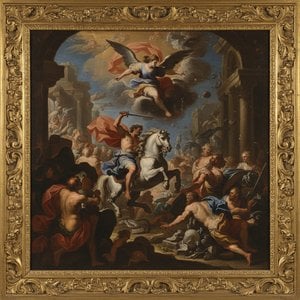
Explore the breathtaking power of Baroque art. Delve into the dramatic interplay of light, shadow, and motion through the works of masters like Caravaggio. Discover how the era's intense emotional realism continues to inspire collectors and connoisseurs of classical grandeur.

Explore the breathtaking drama of the Baroque era. From the mastery of chiaroscuro to epic mythological narratives, discover a definitive guide to art's most powerful period of light, shadow, and emotion for the true classical art enthusiast.

Embark on a profound journey through art history with our exploration of the most iconic depictions of the Virgin Mary. Discover the divine grace, symbolism, and masterful techniques found in Renaissance masterpieces and sacred iconography.

 Preview
 Send
Send Share
Share
 Details
 Guide
Guide

 Download
 Similars
 X-Ray
X-Ray Diaporama
 Stats
Stats

 Read More









 Glass option is only available in size under 110 CM


