

 Oil On CanvasWallArtPost-Impressionism
 1909Modern
 41.0 x 33.0 cm
 Fitzwilliam College
The artwork displayed on this page is protected by copyright law, which means we cannot legally create or sell an identical reproduction. This protection is enforced under international agreements such as the Berne Convention and by national laws, including those outlined by the U.S. Copyright Law - Title 17.
This method fully complies with copyright regulations because it does not involve copying or duplicating the protected artwork. Instead, it is a creative reinterpretation - a new painting that is influenced by the original but not identical to it.
Museum-quality giclée or canvas print with fast production and flexible finish options. ( Buy Hand Made Painting Switch to Digital Image)





























Pick from our preset sizes that match the artwork's original proportions.

Type the width and the height you need, to fit your frame or your wall. A print can only be cut, never made bigger than the picture, so a size with a different shape loses a part of the image. We send you a digital mockup to approve before we print anything. The picture shown on this page does not show the real cut — only the mockup does.
Worldwide Delivery () in 2 weeks instead of standard 4/5 weeks. (21 October)
Caspar
Reproduction Size
In the tenderly rendered portrait Caspar, created in 1909 by the celebrated Welsh artist Augustus Edwin John, we are invited into a moment of profound quietude. This intimate work captures the essence of a young boy, whose face serves as the emotional anchor of the composition. Through a masterful use of realistic brushstrokes and a soft, diffused light, John breathes life into the subject, presenting a study of youthful innocence that feels both timeless and deeply personal. The close-up framing pulls the viewer into the boy's immediate orbit, creating a sense of gentle observation that borders on the voyeuristic, yet remains entirely respectful of the subject's quiet contemplation.
The painting is a triumph of texture and light, where the organic forms of the boy’s features are balanced against a rich, layered background. The artist employs a technique reminiscent of Post-Impressionism, where visible brushwork does not merely define shape but adds a rhythmic, tactile quality to the canvas. This textured approach allows the background to pulse with a life of its own, providing a sense of depth and atmosphere without ever distracting from the central figure. The interplay of light and shadow across the boy's face emphasizes the soft contours of his skin and the structural elements of his clothing, lending a sculptural weight to an otherwise ethereal moment.
Beyond its surface beauty, Caspar carries subtle symbolic weight. The inclusion of the boy's hat serves as more than just a compositional element; it hints at identity and perhaps a burgeoning sense of social standing or persona. Within the broader context of Augustus Edwin John’s career, this piece reflects his ability to blend exceptional draughtsmanship—honed during his years at the Slade School of Fine Art—with a bohemian, expressive spirit. The painting captures a pivotal era in British art, where the boundaries between realism and impressionistic emotion were being beautifully redrawn.
For the discerning collector or interior designer, this reproduction offers more than just a decorative element; it provides a focal point of emotional depth. The muted palette and soft textures make it an ideal addition to spaces that require a sense of calm, sophistication, and historical resonance. Whether placed in a sunlit study or a contemporary living space, Caspar acts as a window into the early 20th century, evoking a nostalgic longing for simplicity and the quiet beauty found in the most fleeting of human expressions.
The format of "Caspar" is portrait, and the original measures 41 x 33 cm. Both are useful when planning a reproduction.
"Caspar" is available as a hand-painted oil reproduction on linen canvas. The order can be placed on its Hand-Painted Reproduction page, with a choice of sizes.
The original "Caspar" is at the Fitzwilliam College, and the work is still protected by copyright.

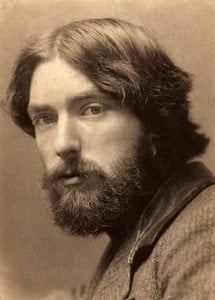
1878 - 1961 , United States of America

Explore the vibrant evolution of Post-Impressionism. From Seurat's revolutionary Pointillism to the emotional depth of masters, discover how this movement redefined modern art history through color, structure, and unparalleled creative expression.

Master the nuances of Impressionism vs. Post-Impressionism with our expert guide. Explore the revolutionary shift from Monet’s fleeting light to Van Gogh’s emotional depth. Discover how these iconic movements continue to inspire fine art collectors and modern interiors today.

Explore the transformative era of Post-Impressionism. Discover how masters like Cézanne and Matisse revolutionized color and form, moving beyond Impressionism to shape modern art history through structural innovation and expressive emotion.
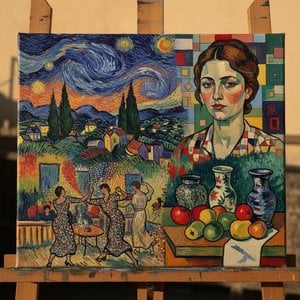
Unveil the profound revolution of Post-Impressionism. Explore how masters like Van Gogh and Cézanne utilized bold colors and emotional depth to transcend mere representation, laying the foundation for modern art. A sophisticated journey through history's most emotive brushstrokes.

 Preview
 Send
Send Share
Share
 Details
 Guide
Guide

 Download
 Similars
 X-Ray
X-Ray Diaporama
 Stats
Stats Read More









 Glass option is only available in size under 110 CM


