John Orlebar: A Portrait of Quiet Dignity in Georgian Elegance
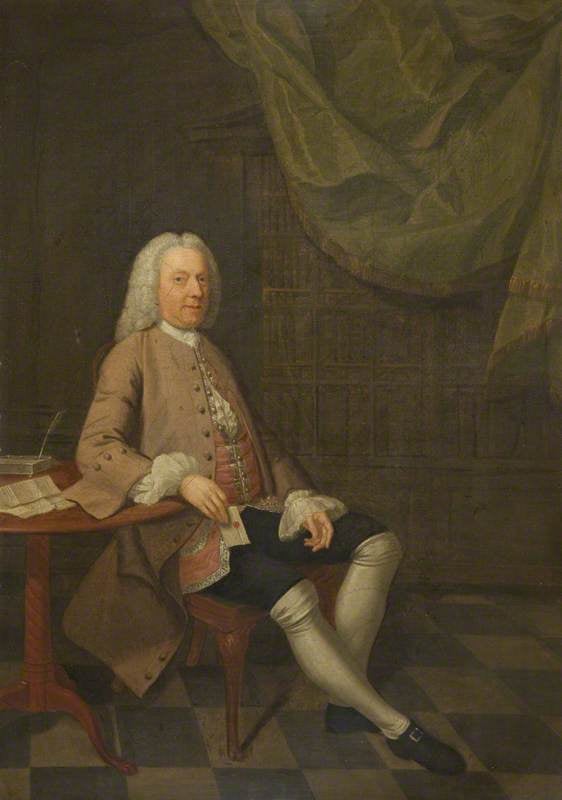
The Harris Museum – Art Gallery in Preston, United Kingdom, holds within its walls a treasure trove of artistic achievement, and among its most notable holdings is Arthur William Devis’s 1740 portrait of John Orlebar. Measuring 51 x 36 cm, this oil on canvas masterpiece exemplifies the burgeoning genre of the ‘conversation piece,’ capturing not merely likeness but also an atmosphere of refined contemplation – a hallmark of Georgian society.
About Arthur William Devis
Arthur William Devis (1762–1822) emerged from a distinguished artistic lineage, inheriting the legacy of his father, Anthony Devis, who himself was a respected painter. Following in his brother’s footsteps, Devis pursued formal training at Burlington House, London, honing his skills under the tutelage of influential figures and establishing himself as a prominent artist specializing in portraiture and historical scenes.
Subject Matter & Composition
Devis skillfully portrays John Orlebar – likely in his late twenties or early thirties – seated at a desk adorned with books. The pose exudes composure and suggests intellectual engagement, reflecting the values of the era. A curtain serves as a subtle backdrop, deepening the sense of intimacy and framing the subject within a carefully constructed space. Devis’s meticulous attention to detail is evident in the rendering of Orlebar's clothing – a richly embroidered waistcoat and jacket—and the subtle nuances of facial expression.
Technique & Style
Executed with masterful technique, the painting utilizes layered oil paints to build up form and texture. Brushstrokes mimic fabric folds and skin surfaces, conveying realism while maintaining an idealized aesthetic typical of Devis’s style. The artist employs a shallow perspective, directing the viewer's gaze towards Orlebar and subtly receding into the background adorned with patterned wallpaper and draped fabrics—elements that contribute to the opulent ambiance characteristic of Georgian interiors.
Historical Context & Symbolism
Created during the Georgian period (1714–1830), this portrait reflects the societal emphasis on education, social status, and refined taste. The inclusion of books symbolizes Orlebar’s intellectual pursuits and underscores the importance of erudition within the upper echelons of Georgian society. Devis's work speaks to a broader cultural fascination with portraying individuals as embodiments of virtue and accomplishment—a tradition that continues to resonate with art lovers today.
Further Exploration
To delve deeper into Arthur William Devis’s artistic vision, consider examining his other celebrated works, including “Mr Peter du Cane” and “The Reverend William Farington,” available on WahooArt. These pieces offer invaluable insight into Devis's stylistic range and demonstrate his ability to capture the essence of both human character and historical significance.



 Preview
 Buy Hand Made Painting
 Send
Send Share
Share
 Details

 Download
 Similars
 X-Ray
X-Ray Diaporama


 Read More






































 Glass option is only available in size under 110 CM





