Preview AR preview Switch to Print Switch to Digital Image Send
Details Guide Add to favorites Download Similars X-Ray Diaporama Stats

Spring

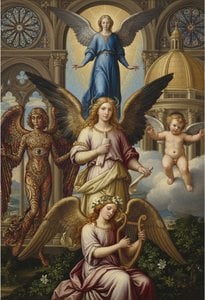
Discover Antonio Zucchi's 'Spring' (1769), a serene painting of cherubs and a woman, part of the Adam Library ceiling at Kenwood House. Explore art history & decorative arts.

Antonio Zucchi (1726-1795) was an Italian Neoclassical painter renowned for his decorative frescoes, mythological scenes, & 'veduta' landscapes. He collaborated with Robert Adam on English estates and married Angelica Kauffmann. Explore his captivati

Hand Made Oil Reproduction

Hand-painted oil on canvas in your size and frame, made to order by our artists. ( Switch to Print Switch to Digital Image)

Corner sample of the P118B picture frame: moulded polystyrene, 5 cm wide and 3 cm thick
P118B $10
Corner sample of the P118H picture frame: moulded polystyrene, 5 cm wide and 3 cm thick
P118H $10
Corner sample of the P118W picture frame: moulded polystyrene, 5 cm wide and 3 cm thick
P118W $10
Corner sample of the P438Z picture frame: moulded polystyrene, 5.5 cm wide and 3.5 cm thick
P438Z $10
Corner sample of the P508JH picture frame: moulded polystyrene, 7 cm wide and 3.5 cm thick
P508JH $12
Corner sample of the P508YH picture frame: moulded polystyrene, 7 cm wide and 3.5 cm thick
P508YH $12
Corner sample of the P805H picture frame: moulded polystyrene, 5 cm wide and 3.5 cm thick
P805H $10
Corner sample of the P805Z picture frame: moulded polystyrene, 5 cm wide and 3.5 cm thick
P805Z $10
Corner sample of the P919BZ picture frame: moulded polystyrene, 7 cm wide and 3.5 cm thick
P919BZ $10
Corner sample of the P919G picture frame: moulded polystyrene, 7 cm wide and 3.5 cm thick
P919G $10
Corner sample of the P919XJ picture frame: moulded polystyrene, 7 cm wide and 3.5 cm thick
P919XJ $10
Corner sample of the P959ZH picture frame: moulded polystyrene, 5 cm wide and 3 cm thick
P959ZH $10
Corner sample of the P968JZ picture frame: moulded polystyrene, 6 cm wide and 4 cm thick
P968JZ $12
Corner sample of the W106C picture frame: solid wood, 5 cm wide and 3 cm thick
W106C $8
Corner sample of the W218G picture frame: solid wood, 5 cm wide and 3 cm thick
W218G $10
Corner sample of the W218JH picture frame: solid wood, 5 cm wide and 3 cm thick
W218JH $8
Corner sample of the W218Y picture frame: solid wood, 5 cm wide and 3 cm thick
W218Y $10
Corner sample of the W307PJ picture frame: solid wood, 6 cm wide and 3 cm thick
W307PJ $10
Corner sample of the W316G picture frame: solid wood, 6 cm wide and 3 cm thick
W316G $10
Corner sample of the W316PJ picture frame: solid wood, 6 cm wide and 3 cm thick
W316PJ $8
Corner sample of the W316Y picture frame: solid wood, 6 cm wide and 3 cm thick
W316Y $10
Corner sample of the W398PJ picture frame: solid wood, 5 cm wide and 3 cm thick
W398PJ $8
Corner sample of the W4111J picture frame: solid wood, 6.5 cm wide and 3.5 cm thick
W4111J $10
Corner sample of the W500HY picture frame: solid wood, 7 cm wide and 5 cm thick
W500HY $15
Corner sample of the W500JH picture frame: solid wood, 7 cm wide and 5 cm thick
W500JH $15
Corner sample of the W692G picture frame: solid wood, 8 cm wide and 4 cm thick
W692G $12
Corner sample of the W849H picture frame: solid wood, 5 cm wide and 3 cm thick
W849H $8
Corner sample of the W940BG picture frame: solid wood, 7.5 cm wide and 4.5 cm thick
W940BG $15
Corner sample of the W953PJ picture frame: solid wood, 6 cm wide and 3.5 cm thick
W953PJ $8

Standard
custom
CM
INCH

Pick from our preset sizes that match the artwork's original proportions.

width
height

Type the width and the height you need, to fit your frame or your wall. This is hand-painted, so for a size with a different shape the artist can paint a bit more around the picture, or cut a bit — you choose. We send you a digital mockup to approve before the painting starts. The picture shown on this page does not show the real result — only the mockup does.

Examples of what can be changed: Replace face with customer photo; Add pet (e.g., replace cat with dog); Include hidden message in background; Change background landscape or elements.
After order, WahooArt.com team will email client for instructions and provide a mockup preview

Worldwide Delivery () in 3/4 weeks instead of standard 5 weeks. (24 October). No compromise on quality.

Free Worldwide Express Shipping
High-Quality Linen Canvas
Full Shipping Insurance
Customs Tax Refund Guarantee
True Color Matching Guarantee
100-Day Return Policy (Defects Only)
100% Money-Back Guarantee
Bulk Discount Offer

Total Price

$ 272

Spring

Reproduction Medium

Reproduction Size

-

Total Price

$ 272

Quick Facts

  • Dimensions: 59 x 57 cm
  • Notable elements: Cherubs, vases, bird
  • Movement: Neoclassic
  • Artist: Antonio Zucchi
  • Medium: Oil on paper
  • Artistic style: Decorative fresco

Art Quiz

There is only one correct answer for each question.

Question 1:
What is the primary subject depicted in Antonio Zucchi’s ‘Spring’ (1769)?
Question 2:
The painting ‘Spring’ is part of what larger architectural project?
Question 3:
Which artist is primarily known for his innovative use of pastel and capturing fleeting moments of character, as described in the provided text?
Question 4:
According to the text, what was a key characteristic of Antonio Zucchi’s portraiture style?
Question 5:
The painting ‘Spring’ is located in which museum?

Antonio Zucchi’s “Spring,” A Venetian Masterpiece of Light and Grace

Within the opulent Adam Library at Kenwood House in London resides a breathtaking ceiling fresco, a testament to the artistic vision of Antonio Zucchi – a Venetian painter who flourished during the mid-18th century. “Spring,” painted in 1769, isn’t merely a decorative element; it's a carefully orchestrated tableau of serenity and gentle beauty, capturing a fleeting moment of idyllic repose amidst a winter landscape. The panel, measuring approximately 59 x 57 cm, is executed with Zucchi’s signature mastery of pastel and oil, blending delicate hues to create an atmosphere of luminous warmth against the cool backdrop of snow-laden trees.

Zucchi's style during this period leaned heavily towards a refined elegance, influenced by the Venetian tradition of *vedute* – landscape views – but imbued with a distinctly personal sensibility. He moved beyond simple representation, striving to evoke mood and emotion through subtle shifts in color and light. Notice how he doesn’t depict a harsh winter scene, but rather one softened by an unseen warmth; the snow is rendered as a gentle, almost ethereal white, while the figures are bathed in a golden glow emanating from a central fire. This deliberate choice immediately establishes a sense of comfort and domesticity, inviting the viewer into the intimate space depicted.

A Scene of Quiet Contemplation

The composition centers around three figures: a woman and child, nestled within a richly appointed interior, and a third individual carrying firewood. The woman’s head rests gently on the shoulder of a cherubic figure – an angel or cupid – suggesting a moment of shared solace and affection. The details are remarkably refined; observe the intricate folds of the clothing, the delicate rendering of the child's face, and the subtle expressions conveying contentment and peace. There is no overt drama or narrative; instead, Zucchi presents a simple, yet profoundly moving, scene of domestic harmony.

The inclusion of two vases – one positioned near the top right corner and another towards the bottom left – adds an element of classical grace to the composition. These aren’t merely decorative additions; they subtly reference the artistic conventions of the era, echoing the themes of abundance and fertility often associated with springtime. The placement is deliberate, drawing the eye across the panel and reinforcing the sense of balance and equilibrium.

Technique and Venetian Influence

Zucchi’s technique is characterized by a remarkable ability to capture light and texture. He employs layers of translucent paint – a hallmark of Venetian painting – to create an illusion of depth and luminosity. The colors are rich and vibrant, yet tempered with a delicate pastel quality that lends the scene an air of ethereal beauty. The brushwork is remarkably smooth and refined, reflecting Zucchi’s meticulous attention to detail.

His training under Francesco Fontebasso and Jacopo Amigoni in Venice undoubtedly shaped his artistic sensibilities. These masters were renowned for their mastery of color and composition, and Zucchi clearly absorbed much of their expertise. The influence of Venetian painting is evident in the panel’s overall atmosphere – a sense of warmth, light, and refined elegance that distinguishes it from the more austere styles prevalent in other European courts.

Symbolism and Emotional Resonance

“Spring” transcends mere representation; it speaks to universal themes of family, comfort, and the promise of renewal. The scene evokes a feeling of quiet contentment and domestic bliss – a welcome respite from the harsh realities of winter. The cherub’s gesture suggests protection and nurturing, while the woman's repose conveys a sense of peace and security.

More than just a decorative panel, “Spring” is a poignant meditation on the beauty of simple pleasures and the enduring power of human connection. It remains a captivating work of art, offering viewers a glimpse into the refined aesthetic sensibilities of 18th-century Venice and a reminder of the timeless appeal of light, grace, and tranquility.

Questions & Answers

What does "Spring" by Antonio Zucchi bring to an interior?

The calm atmosphere of "Spring" by Antonio Zucchi matches its recommended space: a living room.

In which year and which movement was "Spring" made?

"Spring" was created in 1769 as a work of the Neoclassical movement. Date and movement anchor the artwork in art history.

How is the color composition of "Spring" by Antonio Zucchi built?

The color composition of "Spring" by Antonio Zucchi combines a statement contrast with a balanced harmony harmony.


Artist Biography

Francis Cotes: A Pioneer of English Pastel

Francis Cotes (1726–1770) stands as a pivotal figure in the burgeoning world of English portraiture, particularly recognized for his innovative use of pastel and his ability to capture fleeting moments of character. Born in London, he was apprenticed to William Faithorne, a painter known for his theatrical group portraits, an experience that undoubtedly shaped his early artistic sensibilities. However, Cotes quickly surpassed his master, developing a distinctly individual style characterized by a remarkable sensitivity to light, texture, and the psychological nuances of his subjects. Unlike the often stiff formality of earlier English portraiture, Cotes’s works possess a vibrant immediacy, reflecting a deep engagement with the sitter's personality and an acute awareness of the visual world around him. His early career was marked by commissions from prominent families, including the Astleys, for whom he created the celebrated “Aged Seven, and her Brother Edward, Aged Five and a Half,” a tender depiction of childhood innocence that remains one of his most beloved works. This painting exemplifies Cotes’s ability to imbue even seemingly simple subjects with profound emotional resonance. He skillfully employed pastel—a medium then considered relatively new in England—to achieve remarkable effects of color and tone, capturing the delicate blush of skin, the shimmer of fabric, and the subtle gradations of light and shadow. Cotes wasn't simply replicating appearances; he was translating observed reality onto canvas with a painterly grace that set him apart from his contemporaries. His use of loose, expressive strokes created a sense of movement and vitality, contributing to the captivating quality of his portraits.

Technique and Influences

Cotes’s technical mastery stemmed not only from his innate talent but also from his meticulous study of nature and the works of other artists. He was deeply influenced by the Dutch Masters, particularly Rembrandt, whose use of light and shadow to create dramatic effects is evident in Cotes's portraits. He also admired the work of Anthony van Dyck, whose elegant compositions and psychological insights he sought to emulate. However, unlike Van Dyck’s polished style, Cotes embraced a more informal approach, often depicting his sitters in relaxed poses and capturing them in natural settings. His pastel technique was further refined through experimentation with layering colors and applying them with varying degrees of pressure, allowing him to achieve an astonishing range of tonal values and textures. The resulting portraits are not merely likenesses; they are intimate studies of character, imbued with a palpable sense of life.

Notable Works and Commissions

Beyond the iconic “Aged Seven,” Cotes produced a significant body of work that includes numerous portraits of members of the aristocracy and gentry. He painted for prominent figures such as Sir Robert Peel, Lord Charles Townshend, and Lady Mary Wortley Montagu. His commissions were often driven by a desire to capture the sitter’s unique personality and social standing, reflecting the changing tastes of 18th-century England. His work also extended beyond portraiture; he produced landscape paintings and genre scenes, demonstrating his versatility as an artist. The Royal Academy, founded in 1769, recognized Cotes's contributions by electing him as one of its founding members, solidifying his place among the leading artists of his time.

Legacy and Historical Significance

Francis Cotes’s legacy lies primarily in his pioneering role in the development of English pastel painting. He demonstrated the medium’s potential for capturing subtle nuances of color and tone, paving the way for future generations of pastel artists. His portraits are admired today not only for their technical brilliance but also for their psychological depth and emotional resonance. Cotes's work represents a shift away from the formal conventions of earlier portraiture, embracing a more intimate and expressive approach that reflected the spirit of the Enlightenment. He is remembered as a key figure in establishing English painting as a distinct and vibrant tradition, leaving an indelible mark on the history of art. His influence can be seen in the works of later artists who followed in his footsteps, solidifying his position as a true innovator and a master of his craft.
Antonio Zucchi

Antonio Zucchi

1726 - 1795

Quick Facts

  • Full Name: Francoise Duparc
  • Nationality: Spanish
  • Date Of Birth: 1726
  • Date Of Death: 1795
  • Place Of Birth: Murcia, Spain
  • Notable Artworks:
    • La tricoteuse
    • Man with a sack of nuts
  • Artistic Movement Or Style: Likely influenced by Van Loo
  • Artists Who Influenced This Artist: ['Jean Baptiste van Loo']
  • Artists Or Movements Influenced By This Artist:
    • Chardin
    • Greuze
Explore artworks organized by themes, styles, and characteristics.