x
PreviewPreview AR previewAR preview Buy Print Buy PrintBuy Image Buy Image SendSend
DetailsDetails Add to favorites Add to favorites DownloadDownload SimilarsSimilars X-RayX-Ray DiaporamaDiaporama

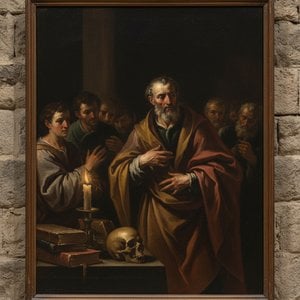
Stiil-life with a Pendulum

Experience dramatic Spanish Baroque tenebrism with Pereda's still life featuring a pendulum; own this masterpiece of light and shadow today.

Antonio de Pereda (1611-1678): Spanish Baroque master of still lifes & religious art. Explore 'Relief of Genoa' & his dramatic tenebrism.

Hand Made Oil Reproduction

Hand-painted oil on canvas in your size and frame, made to order by our artists. (Buy Print Buy PrintBuy Image Buy Image)

P118B $10
P118H $10
P118W $10
P438Z $10
P508JH $12
P508YH $12
P805H $10
P805Z $10
P919BZ $10
P919G $10
P919XJ $10
P959ZH $10
P968JZ $12
W106C $8
W218G $10
W218JH $8
W218Y $10
W307PJ $10
W316G $10
W316PJ $8
W316Y $10
W398PJ $8
W4111J $10
W500HY $15
W500JH $15
W692G $12
W849H $8
W940BG $15
W953PJ $8

Standard
custom
CM
INCH

Pick from our preset sizes that match the artwork's original proportions.

width
height

You may enter your own dimensions to fit a specific frame or space. If your selected size does not match the original image's proportions, we will either crop the artwork or extend the painting with additional hand-painted elements. A digital mockup will be sent for your approval before production begins.
Please note that the on-screen preview does not reflect the actual cropping or extension. Only the mockup will accurately show the final composition.
While custom sizes are available, we recommend selecting a dimension from the predefined list to preserve the original proportions.

Examples of what can be changed: Replace face with customer photo; Add pet (e.g., replace cat with dog); Include hidden message in background; Change background landscape or elements.
After order, WahooArt.com team will email client for instructions and provide a mockup preview

Worldwide Delivery () in 3/4 weeks instead of standard 5 weeks. (29 August). No compromise on quality.

why_choose_icon
Free Worldwide Express Shipping
why_choose_icon
High-Quality Linen Canvas
why_choose_icon
Full Shipping Insurance
why_choose_icon
Customs Tax Refund Guarantee
why_choose_icon
True Color Matching Guarantee
why_choose_icon
60-Day Return Policy (Defects Only)
why_choose_icon
100% Money-Back Guarantee
why_choose_icon
Bulk Discount Offer

Total Price

$ 272

reproduction

Stiil-life with a Pendulum

Reproduction Medium

Reproduction Size

-

Total Price

$ 272

Quick Facts

  • Artist: Antonio de Pereda
  • Notable elements or techniques: Tenebrism
  • Medium: Oil on canvas
  • Artistic style: Realistic
  • Subject or theme: Still life
  • Dimensions: 78 x 91 cm
  • Influences: Pedro de las Cuevas

Art Quiz

There is only one correct answer for each question.

Question 1:
What artistic period is Antonio de Pereda most associated with?
Question 2:
Antonio de Pereda was celebrated primarily for painting what genre?
Question 3:
What dramatic technique, characterized by stark contrasts between light and dark, is central to Pereda's style?
Question 4:
According to the description, what object serves as a focal point in the still life titled 'Still-life with a Pendulum'?
Question 5:
Who was an influential patron who guided Pereda early in his career?

Antonio de Pereda: A Master of Spanish Baroque

Antonio de Pereda y Salgado (1611 – 1678) was a prominent Spanish Baroque-era painter, celebrated primarily for his exquisite still lifes. Born in Valladolid, Spain, he emerged as a significant figure within the Madrid school of painting. His artistic family fostered his early passion for art; his father, mother, and two brothers were all painters—a lineage that undoubtedly shaped his creative vision. He received his initial training in Madrid under Pedro de las Cuevas, a respected painter of the time, absorbing foundational principles from a master whose influence would resonate throughout Pereda’s oeuvre.

Early Patronage and Artistic Development

A pivotal moment arrived with Giovanni Battista Crescenzi's patronage—a transformative alliance that propelled Pereda into the orbit of the Spanish court. Crescenzi recognized Pereda’s talent and took him under his wing, providing invaluable guidance and opportunities for artistic exploration. However, following Crescenzi’s untimely death in 1635, Pereda faced expulsion from the court, marking a turning point that necessitated accepting commissions from religious institutions—a circumstance that nonetheless fueled his continued creativity.

The Dramatic Style of Tenebrism

Pereda's artistic style is characterized by a masterful use of *tenebrism*, a dramatic technique pioneered by Caravaggio and embraced by the Caravaggisti movement. This method employs stark contrasts between light and dark—illuminating figures or objects against enveloping shadows—to heighten emotional impact and create an atmosphere of profound solemnity. The resulting visual experience is one of intense drama, inviting contemplation and conveying a sense of spiritual depth.

Still Lifes: Symbolism and Realism

Pereda’s still lifes stand as monuments to his artistic prowess, representing some of the finest achievements in Baroque genre painting. Works such as “Still-Life with Fruit” and “Still-Life with an Ebony Chest” exemplify Pereda's meticulous attention to detail—capturing textures, colors, and forms with breathtaking accuracy. Beyond mere representation, these compositions carry symbolic weight, reflecting prevailing philosophical ideas of the era concerning mortality, beauty, and divine providence. The careful arrangement of objects serves as a visual meditation on themes of faith and contemplation.

Historical Significance: “The Relief of Genoa”

Pereda’s contribution to the decorative program of the Buen Retiro Palace in Madrid—specifically his monumental painting "The Relief of Genoa"—solidifies his place within Spanish artistic history. Created alongside works by Velázquez, this ambitious historical tableau depicts a pivotal event from the 1620s—the siege of Genoa by Spanish forces—demonstrating Pereda’s versatility as a painter capable of tackling large-scale narrative projects. The painting embodies the grandeur and ambition characteristic of Baroque art during its zenith.

Legacy and Enduring Influence

Antonio de Pereda y Salgado remains an enduring figure in Spanish Baroque art, remembered for his unparalleled skill in capturing emotion and conveying spiritual contemplation through masterful technique—particularly tenebrism—and for producing iconic still lifes that continue to inspire admiration. His legacy extends beyond individual artworks; it embodies the spirit of a period defined by artistic innovation and profound philosophical inquiry.

Artist Biography

Antonio de Pereda: A Master of Spanish Baroque

Antonio de Pereda y Salgado (1611 – 1678) was a prominent Spanish Baroque-era painter, celebrated primarily for his exquisite still lifes. Born in Valladolid, Spain, he emerged as a significant figure within the Madrid school of painting.

Early Life and Artistic Family

Pereda came from a deeply artistic family; his father, mother, and two brothers were all painters. This familial environment undoubtedly fostered his early interest and development in art. He received his initial training in Madrid under Pedro de las Cuevas, a respected painter of the time.

Patronage and Early Career

A pivotal moment in Pereda’s career came with the patronage of Giovanni Battista Crescenzi, an influential figure at the Spanish court. Crescenzi took Pereda under his wing, providing him with opportunities and guidance. However, following Crescenzi's death in 1635, Pereda was expelled from the court and began to accept commissions from religious institutions.

Artistic Development and Style

Pereda’s artistic style is characterized by a masterful use of tenebrism, a dramatic contrast between light and dark. This technique, common in Baroque painting, adds depth and emotional intensity to his works. While best known for still lifes, Pereda also excelled in religious paintings and historical compositions.

Major Works and Achievements

  • Still Lifes: Pereda’s still lifes are renowned for their realism, meticulous detail, and symbolic meaning. Examples include “Still-Life with Fruit” and “Still-Life with an Ebony Chest.”
  • Historical Paintings: He contributed significantly to the decorative program of the Salón de Reinos at the Buen Retiro Palace in Madrid. His most notable historical painting is “The Relief of Genoa” (1635), created as part of a series alongside works by Velázquez, notably "The Surrender of Breda".
  • Religious Paintings: Pereda produced numerous religious paintings, often depicting scenes from the lives of saints and biblical narratives. “St Jerome” is a prime example of his skill in this genre.

Influences

Pereda’s work was influenced by several key artists and movements:

  • Pedro de las Cuevas: His early teacher, who provided foundational training.
  • Giovanni Battista Crescenzi: Provided patronage and guidance during his time at court.
  • Caravaggio & the Caravaggisti: The dramatic use of tenebrism reflects the influence of Caravaggio and his followers.

Historical Significance

Antonio de Pereda occupies an important place in Spanish Baroque art. His still lifes are considered among the finest examples of the genre, showcasing a remarkable ability to capture texture, light, and form. His historical paintings demonstrate his versatility and skill as a large-scale narrative painter. He contributed significantly to the artistic landscape of 17th-century Spain, leaving behind a legacy of masterful works that continue to be admired today.

Antonio de Pereda

Antonio de Pereda

1611 - 1678 , Spain

Quick Facts

  • Birth Date: 1611
  • Birth Place: Valladolid, Spain
  • Death Date: 1678
  • Influenced By: Pedro de las Cuevas, Giovanni Battista Crescenzi
  • Movement: Baroque
  • Name: Antonio de Pereda y Salgado
  • Nationality: Spanish
  • Notable Works:
    • Relief of Genoa
    • Still-Life with an Ebony Chest
    • St Jerome
    • The Knight's Dream
Explore artworks organized by themes, styles, and characteristics.