

Museum-quality giclée or canvas print with fast production and flexible finish options. ( Buy Hand Made Painting Switch to Digital Image)





























Pick from our preset sizes that match the artwork's original proportions.

You may enter your own dimensions to fit a specific frame or space. If your selected size does not match the original image's proportions, we will either crop the artwork or extend the image with a mirrored or solid-fill edge. A digital mockup will be sent for your approval before production begins.
Please note that the on-screen preview does not reflect the actual cropping or extension. Only the mockup will accurately show the final composition.
While custom sizes are available, we recommend selecting a dimension from the predefined list to preserve the original proportions.
Worldwide Delivery () in 2 weeks instead of standard 4/5 weeks. (23 September)


Wall-painting fragment
Reproduction Size
Antonio Bosio’s *Roma Sotterranea*, published posthumously in 1634, stands as a monumental achievement of early Baroque art and scholarship. More than just a chronicle of Roman catacombs—a realm previously shrouded in obscurity—it was a daring attempt to illuminate the spiritual landscape of Christendom during its formative centuries.
The meticulous engraving technique employed by Severano's team—characterized by dense hatching and cross-hatching—served not only to reproduce the artwork faithfully but also to imbue it with a palpable sense of texture and volume. As Severano noted, “the ancient Christians not only represented our Lord with various images, as we have seen, but his most holy name was expressed in different mysterious ways,” including the monogram (\n\n*cifra*) of the Chi-Rho (p. 629), symbolizing divine grace and resurrection.

Antonio Bosio, born in Valletta, Malta around 1575, was a figure whose life transcended the typical boundaries of artistic practice. While often remembered as a painter, his true legacy lies in his pioneering archaeological work—specifically, his meticulous and passionate exploration of the Roman catacombs. Bosio’s story is one of dedication, intellectual curiosity, and a profound desire to connect with the early Christian world. His family background remains somewhat shrouded in mystery; historical accounts suggest a complex lineage involving a father bound by religious vows and a mother who may have been a North African slave or servant. This personal ambiguity perhaps fueled his lifelong fascination with hidden histories and marginalized narratives.
Bosio’s journey to Rome as a child marked a turning point in his life. He quickly became integrated into the circles of the Knights of Malta, eventually serving as their agent within the city. However, it was not through diplomatic duties that he found his calling but through an insatiable thirst for knowledge about the ancient world beneath his feet. In 1593, he embarked on a systematic study of the catacombs—a network of subterranean burial places used by early Christians and Jews. This undertaking was revolutionary for its time; previous explorations had been sporadic and largely undocumented. Bosio approached the task with an almost scientific rigor, meticulously mapping tunnels, documenting frescoes, and collecting artifacts.
Bosio’s most enduring achievement is undoubtedly his *Roma Sotterranea*, a comprehensive account of his catacomb explorations. Published posthumously in 1634, the work represents a monumental effort to preserve and disseminate knowledge about early Christian art and history. The publication wasn't merely a descriptive catalog; it was an attempt to reconstruct the spiritual and cultural landscape of Rome’s earliest communities. The engravings within *Roma Sotterranea* are particularly noteworthy for their detail and accuracy, providing invaluable visual documentation of frescoes that have since deteriorated or been lost. Bosio’s line work captures not only the physical form of the paintings but also a sense of the atmosphere—the dim light, the damp stone, the weight of centuries.
The creation of *Roma Sotterranea* was a painstaking process. Bosio faced numerous challenges, including limited access to certain catacombs, the logistical difficulties of working in subterranean environments, and the lack of established archaeological techniques. He relied heavily on his own observations, supplemented by information gathered from local informants and existing historical sources. The publication’s impact was immediate and far-reaching; it became a standard reference work for scholars and artists alike, shaping perceptions of early Christian art for generations to come.
While primarily known as an archaeologist, Bosio was also a skilled painter. His artistic style reflects the influence of the Baroque movement—characterized by dramatic compositions, rich colors, and a heightened sense of emotion. He specialized in wall paintings, often depicting religious scenes with a focus on martyrdom and divine intervention. His work can be found in various churches and chapels around Valletta, showcasing his mastery of fresco technique and his ability to convey complex theological concepts through visual imagery.
Bosio’s artistic endeavors were deeply intertwined with his archaeological pursuits. His study of early Christian art informed his own painting style, leading him to incorporate elements of ancient iconography and symbolism into his compositions. He sought to create works that not only celebrated the faith but also evoked a sense of spiritual awe and reverence. The religious context of Bosio’s life—his association with the Knights of Malta and his dedication to uncovering the sacred past—played a crucial role in shaping his artistic vision.
Antonio Bosio's contribution extends beyond the realm of art history; he is considered a foundational figure in the development of modern archaeology. His systematic approach to excavation, documentation, and publication set a new standard for archaeological research. He was among the first to recognize the importance of preserving cultural heritage and making it accessible to a wider audience.
Though his life was cut short in 1629, Antonio Bosio left an indelible mark on the world. He remains a testament to the power of intellectual curiosity, unwavering dedication, and the enduring human desire to connect with the stories of those who came before us. His legacy continues to inspire archaeologists, art historians, and anyone fascinated by the mysteries of the past.
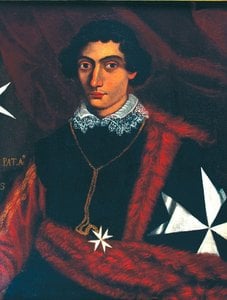
1575 - 1629 , Malta

Explore the profound mastery of engraving and intaglio printmaking. Delve into the rich history, technical precision of the burin, and the enduring legacy of fine art techniques that shaped the world's most iconic masterpieces.

 Preview
 Send
Send Share
Share
 Details
 Guide
Guide

 Download
 Similars
 X-Ray
X-Ray Diaporama
 Stats
Stats


 Read More







 Glass option is only available in size under 110 CM


