

The artwork displayed on this page is protected by copyright law, which means we cannot legally create or sell an identical reproduction. This protection is enforced under international agreements such as the Berne Convention and by national laws, including those outlined by the U.S. Copyright Law - Title 17.
This method fully complies with copyright regulations because it does not involve copying or duplicating the protected artwork. Instead, it is a creative reinterpretation - a new painting that is influenced by the original but not identical to it.
Museum-quality giclée or canvas print with fast production and flexible finish options. ( Buy Hand Made Painting Switch to Digital Image)
Pick from our preset sizes that match the artwork's original proportions.

Type the width and the height you need, to fit your frame or your wall. A print can only be cut, never made bigger than the picture, so a size with a different shape loses a part of the image. We send you a digital mockup to approve before we print anything. The picture shown on this page does not show the real cut — only the mockup does.
Worldwide Delivery () in 2 weeks instead of standard 4/5 weeks. (8 November)
Clothing fabrics
Reproduction Size
A collection of fabric swatches lies arranged in a horizontal row against a stark white background, presenting a quiet, documentary-style study of mid-1960s textile design. The composition moves steadily across the frame, leading the eye through a rhythmic progression of pale purples, deep reds, and verdant greens. Each sample captures a specific aesthetic moment, where bold geometric shapes begin to dance alongside traditional floral motifs. A subtle line of stitching traces the borders of each swatch, grounding the abstract patterns in the physical reality of craftsmanship. The interplay between organic, leafy greens and rigid, diamond-like blue structures creates a tension that anchors the viewer's gaze.
The palette shifts from soft, dreamy pastels to striking, high-contrast blacks and whites, mirroring the stylistic transitions occurring in global textile design during 1966. These samples act as fragments of a visual melody, structured yet alive. The arrangement invites a close look at the way color and shape interact within the confines of a small, tactile space. Each swatch exists as a discrete piece of a larger, rhythmic sequence, moving from the softest tones into deeper, more saturated hues. The precision of the layout emphasizes the individual character of each pattern, from the most delicate floral details to the sharpest geometric lines. This methodical presentation turns a simple collection of materials into a structured exploration of mid-century design, where every stitch and color choice contributes to a sense of curated history.
Beneath the meticulous arrangement of these swatches lies a profound meditation on the ephemeral nature of fashion and the weight of personal history. For the artist, textiles act as vessels for the intangible emotions of loss and nostalgia. Having survived the upheavals of Soviet exile and the hardships of Siberian resettlement, Borkowska uses these patterns to anchor the fragmented experiences of displacement. Each swatch functions as a window into a specific aesthetic pulse, capturing a moment when bold geometric shapes began to dance alongside traditional floral motifs. These samples represent a way of holding onto the tangible details of daily existence, preserving a sense of cultural identity through the very fibers of the cloth.
The technique captures the essence of materiality, turning cloth into a landscape of the subconscious. The interplay between organic, leafy greens and rigid, diamond-like blue structures creates a sophisticated tension that speaks to the strength found in the face of vulnerability. To look upon these samples is to engage with the intersection of memory and material culture, where every stitch and dye represents a way of reclaiming stability. The subtle inclusion of stitching along the borders of each sample adds a layer of tactile realism, grounding the abstract patterns in the physical reality of craftsmanship. These are the threads of a life rewoven into something enduring.
The guide to "Clothing fabrics" is the artwork's Guide page - a printable factsheet showing the artwork with its caption, credit line and identity table (artist, dates, medium, original size, collection).
The X-Ray page of "Clothing fabrics" by Anna Borkowska is an interactive viewer that lets you slide through eleven optical layers of the artwork's image, including an X-ray style view.
In the catalog, "Clothing fabrics" by Anna Borkowska is filed as textile. The category helps find similar works.

The life of Anna Borkowska (1916–2008) was a profound tapestry woven from the threads of displacement, survival, and an unyielding creative spirit. Born in Mykolaiv, her early years were defined by the seismic shifts of the twentieth century, as the shadows of World War II and the subsequent Soviet occupation of Poland reshaped her destiny. Forced into the harrowing reality of Siberian resettlement, Borkowska experienced firsthand the fragility of home and the weight of exile. It was within this crucible of hardship that her artistic identity began to coalesce, not merely as a means of aesthetic expression, and but as a vital vessel for preserving the memories that the tides of history sought to erase.
While many of her contemporaries sought refuge in the traditional realms of representational painting, Borkowska turned toward the tactile and intimate medium of textile art. For her, fabric was more than a surface; it was a repository for the intangible emotions of loss and nostalgia. Her work often bypassed literal imagery in favor of a sophisticated abstraction, utilizing color palettes that evoked the melancholic beauty of the Baltic Sea. These cool blues and shifting tones served as a visual metaphor for both the tranquility of memory and the turbulent currents of her own life’s journey. Through meticulous craftsmanship, she transformed cloth into a landscape of the subconscious, where every stitch and dye could represent the enduring strength found in the face of vulnerability.
Borkowska’s ability to convey deep human connection extended far beyond the loom and the watercolor brush. She possessed a rare, empathetic presence that allowed her to bridge the gap between visual art and dramatic performance. This unique sensitivity earned her international acclaim when she appeared in Jafar Panahi’s cinematic masterpiece, The White Balloon (1995). In portraying the benevolent elderly woman, she utilized her lived experience of resilience to breathe life into a character that resonated with audiences worldwide. This role served as a poignant intersection of her two worlds, where the same emotional depth found in her textile designs was mirrored in her ability to capture the essence of human connection on screen.
The significance of her oeuvre lies in its ability to turn personal trauma into universal themes of reclamation and healing. Her notable works, such as Clothing Fabric (1972), demonstrate a mastery of watercolor design that captures a sense of movement and fluidity. To study Borkowska’s art is to engage with the following elements of her legacy:
Ultimately, Anna Borkowska remains a vital figure in the history of twentieth-century art, representing a bridge between the personal struggles of the displaced and the universal language of abstraction. Her work stands as a testament to the idea that even when one's homeland is lost, the essence of identity can be rewoven, thread by thread, into something enduring and beautiful.

1916 - 2008 , Russia

Immerse yourself in the hypnotic world of Victor Vasarely. Explore 25 iconic Op Art masterpieces, from geometric abstractions to optical illusions. Find inspiration for your decor with museum-quality art reproductions. Discover all masterpieces on WahooArt.com.

Journey through the bold shapes and vibrant colors of geometric abstraction. Explore the stories behind 10 iconic masterpieces that redefined modern art. Find museum-quality reproductions and decor inspiration for your space. Discover all masterpieces on WahooArt.com.
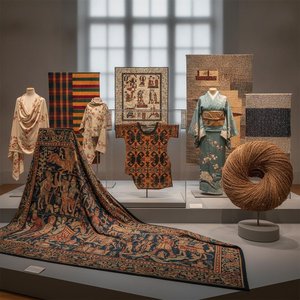
Journey through history with 10 legendary textile masterpieces that redefined art. Explore the stories, intricate techniques, and timeless beauty behind these iconic woven works. Find museum-quality reproductions and decor inspiration. Discover all masterpieces on WahooArt.com.
 Send
Send Share
Share
 Details
 Guide
Guide

 Download
 Similars
 Diaporama
 Q&A
Q&A
 Stats
Stats


 Read More






































 Glass option is only available in size under 110 CM


