

Museum-quality giclée or canvas print with fast production and flexible finish options. ( Buy Hand Made Painting Switch to Digital Image)
Pick from our preset sizes that match the artwork's original proportions.

You may enter your own dimensions to fit a specific frame or space. If your selected size does not match the original image's proportions, we will either crop the artwork or extend the image with a mirrored or solid-fill edge. A digital mockup will be sent for your approval before production begins.
Please note that the on-screen preview does not reflect the actual cropping or extension. Only the mockup will accurately show the final composition.
While custom sizes are available, we recommend selecting a dimension from the predefined list to preserve the original proportions.
Worldwide Delivery () in 2 weeks instead of standard 4/5 weeks. (10 September)


Clothing fabric
Reproduction Size
In the delicate interplay of color and form found within Clothing fabric, we encounter a profound moment of mid-century textile artistry. Created in 1962, this piece by Anna Borkova serves as a vibrant testament to the artist's ability to transform simple materials into a rhythmic dance of organic life. The composition is a mesmerizing repetition of stylized fruits and verdant leaves, where shades of sun-drenched yellow, earthy brown, and deep forest green emerge against a crisp, clean white background. It is not merely a pattern, but a visual melody that captures the essence of a summer orchard, inviting the viewer to find tranquility within its structured yet fluid design.
The technique employed here leans into an impressionistic abstraction, where the artist eschews rigid outlines in favor of suggestive brushwork and tonal depth. Each circular motif, reminiscent of ripening citrus, is rendered with a soft focus that allows the eye to wander through the texture of the weave. The elongated, dark brown leaf forms act as anchors within the composition, providing a necessary weight that balances the brightness of the yellow accents. This approach creates a tactile sensation even when viewed on a flat surface; one can almost feel the woven structure of the original textile, making it an ideal centerpiece for those looking to introduce organic warmth into a modern interior.
Beyond its decorative charm, the work carries the quiet resilience characteristic of Borkowska’s broader oeuvre. Having lived through the upheavals of Soviet exile and Siberian resettlement, her later works often sought refuge in the beauty of the natural world—a way to weave stability and memory into the very fabric of her art. The choice of a botanical theme is deeply symbolic, representing growth, continuity, and the enduring cycle of life that persists despite historical turbulence. For the discerning collector or interior designer, this reproduction offers more than just aesthetic appeal; it provides a soulful connection to an era where art was used to reclaim beauty from the shadows of history.
Integrating such a piece into a curated space allows for a sophisticated layering of textures and themes. Whether placed in a sunlit breakfast nook to evoke a Mediterranean freshness or used as a subtle accent in a minimalist study, Clothing fabric brings an unmistakable sense of heritage and organic elegance. It is a masterful example of how textile art can transcend its functional origins to become a profound expression of light, color, and the human spirit.

The life of Anna Borkowska (1916–2008) was a profound tapestry woven from the threads of displacement, survival, and an unyielding creative spirit. Born in Mykolaiv, her early years were defined by the seismic shifts of the twentieth century, as the shadows of World War II and the subsequent Soviet occupation of Poland reshaped her destiny. Forced into the harrowing reality of Siberian resettlement, Borkowska experienced firsthand the fragility of home and the weight of exile. It was within this crucible of hardship that her artistic identity began to coalesce, not merely as a means of aesthetic expression, and but as a vital vessel for preserving the memories that the tides of history sought to erase.
While many of her contemporaries sought refuge in the traditional realms of representational painting, Borkowska turned toward the tactile and intimate medium of textile art. For her, fabric was more than a surface; it was a repository for the intangible emotions of loss and nostalgia. Her work often bypassed literal imagery in favor of a sophisticated abstraction, utilizing color palettes that evoked the melancholic beauty of the Baltic Sea. These cool blues and shifting tones served as a visual metaphor for both the tranquility of memory and the turbulent currents of her own life’s journey. Through meticulous craftsmanship, she transformed cloth into a landscape of the subconscious, where every stitch and dye could represent the enduring strength found in the face of vulnerability.
Borkowska’s ability to convey deep human connection extended far beyond the loom and the watercolor brush. She possessed a rare, empathetic presence that allowed her to bridge the gap between visual art and dramatic performance. This unique sensitivity earned her international acclaim when she appeared in Jafar Panahi’s cinematic masterpiece, The White Balloon (1995). In portraying the benevolent elderly woman, she utilized her lived experience of resilience to breathe life into a character that resonated with audiences worldwide. This role served as a poignant intersection of her two worlds, where the same emotional depth found in her textile designs was mirrored in her ability to capture the essence of human connection on screen.
The significance of her oeuvre lies in its ability to turn personal trauma into universal themes of reclamation and healing. Her notable works, such as Clothing Fabric (1972), demonstrate a mastery of watercolor design that captures a sense of movement and fluidity. To study Borkowska’s art is to engage with the following elements of her legacy:
Ultimately, Anna Borkowska remains a vital figure in the history of twentieth-century art, representing a bridge between the personal struggles of the displaced and the universal language of abstraction. Her work stands as a testament to the idea that even when one's homeland is lost, the essence of identity can be rewoven, thread by thread, into something enduring and beautiful.

1916 - 2008 , Russia

Explore the profound beauty of fruit arrangement masterpieces. From Dutch Golden Age opulence to Baroque chiaroscuro, discover the art history, symbolism, and timeless elegance of classical still life paintings for the discerning collector.
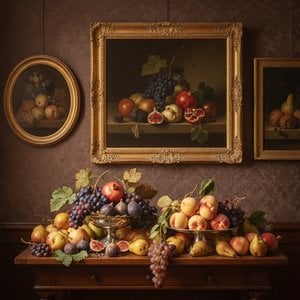
Discover the profound beauty of fruit still life paintings. Explore the rich symbolism, Baroque mastery, and timeless allure of nature's bounty through an art-historical lens, perfect for collectors and enthusiasts of classical fine art.

Embark on a visual journey through the golden hues of autumn fine art. Discover how masters like Van Gogh capture seasonal magic through vibrant oil landscapes and explore expert tips for collecting timeless autumnal masterpieces.

Embark on a visual journey through history's most opulent masterpieces. Explore the breathtaking beauty of Baroque banquets and fruit still lifes, celebrating themes of abundance and luxury through the lens of timeless classical art expertise.

 Send
Send Share
Share
 Details

 Download
 Similars
 Diaporama
 Stats
Stats


 Read More




































 Glass option is only available in size under 110 CM


