
x


Museum-quality giclée or canvas print with fast production and flexible finish options. ( Buy Hand Made Painting Buy Image)
Pick from our preset sizes that match the artwork's original proportions.

You may enter your own dimensions to fit a specific frame or space. If your selected size does not match the original image's proportions, we will either crop the artwork or extend the image with a mirrored or solid-fill edge. A digital mockup will be sent for your approval before production begins.
Please note that the on-screen preview does not reflect the actual cropping or extension. Only the mockup will accurately show the final composition.
While custom sizes are available, we recommend selecting a dimension from the predefined list to preserve the original proportions.
Worldwide Delivery () in 2 weeks instead of standard 4/5 weeks. (5 September)


Clothing fabric
Reproduction Size
In the evocative work Clothing fabric, created in 1970 by the resilient artist Anna Borkowska, we are invited into a sensory exploration of texture, color, and heritage. The piece presents a breathtakingly intricate textile design, where a vibrant symphony of brown, pink, blue, and white tones dances across the surface. At first glance, the viewer is captivated by the sheer density of the ornamentation; floral motifs, swirling paisley shapes, and precise geometric patterns intertwine to create a visual landscape that feels both ancient and timeless. The composition achieves a masterful sense of equilibrium, with a richly decorated central focal point that gradually yields to more delicate edges, guiding the eye through a rhythmic journey of symmetry and balance.
Borkowska’s technique transcends mere representation, as she utilizes the medium of textile art to evoke the tactile reality of fabric itself. The painting captures a fascinating interplay of light and shadow, suggesting various weaving techniques where certain areas appear smooth and lustrous while others possess a rugged, raised texture. This deliberate manipulation of visual weight gives the artwork a three-dimensional quality, making the patterns feel as though they could be felt beneath one's fingertips. For the discerning collector or interior designer, this piece offers a profound depth that transforms any space, acting not just as a decorative element but as a window into a meticulously crafted world of craftsmanship.
To understand the emotional resonance of Clothing fabric, one must look toward the life of Anna Borkowska. Born in Mykolaiv and shaped by the profound displacements of the mid-20th century, Borkowska’s artistry was deeply rooted in the concept of "threads of memory." Her work often serves as a metaphor for the resilience of the human spirit; just as individual threads are woven together to create a durable and beautiful cloth, her life experiences of exile and resettlement were woven into the very fabric of her creative expression. The intricate patterns seen here can be viewed as symbols of continuity and the preservation of culture amidst the chaos of history.
The symbolism embedded within these traditional motifs—the organic flow of the florals and the structured permanence of the geometric shapes—speaks to the duality of existence: the ephemeral beauty of nature and the enduring strength of human tradition. For those seeking to adorn a home with art that possesses both aesthetic splendor and narrative weight, this reproduction offers an unparalleled opportunity. It is a piece that invites contemplation, offering a sense of warmth, stability, and a connection to a storied past, making it a magnificent centerpiece for any sophisticated collection or thoughtfully curated interior.

The life of Anna Borkowska (1916–2008) was a profound tapestry woven from the threads of displacement, survival, and an unyielding creative spirit. Born in Mykolaiv, her early years were defined by the seismic shifts of the twentieth century, as the shadows of World War II and the subsequent Soviet occupation of Poland reshaped her destiny. Forced into the harrowing reality of Siberian resettlement, Borkowska experienced firsthand the fragility of home and the weight of exile. It was within this crucible of hardship that her artistic identity began to coalesce, not merely as a means of aesthetic expression, and but as a vital vessel for preserving the memories that the tides of history sought to erase.
While many of her contemporaries sought refuge in the traditional realms of representational painting, Borkowska turned toward the tactile and intimate medium of textile art. For her, fabric was more than a surface; it was a repository for the intangible emotions of loss and nostalgia. Her work often bypassed literal imagery in favor of a sophisticated abstraction, utilizing color palettes that evoked the melancholic beauty of the Baltic Sea. These cool blues and shifting tones served as a visual metaphor for both the tranquility of memory and the turbulent currents of her own life’s journey. Through meticulous craftsmanship, she transformed cloth into a landscape of the subconscious, where every stitch and dye could represent the enduring strength found in the face of vulnerability.
Borkowska’s ability to convey deep human connection extended far beyond the loom and the watercolor brush. She possessed a rare, empathetic presence that allowed her to bridge the gap between visual art and dramatic performance. This unique sensitivity earned her international acclaim when she appeared in Jafar Panahi’s cinematic masterpiece, The White Balloon (1995). In portraying the benevolent elderly woman, she utilized her lived experience of resilience to breathe life into a character that resonated with audiences worldwide. This role served as a poignant intersection of her two worlds, where the same emotional depth found in her textile designs was mirrored in her ability to capture the essence of human connection on screen.
The significance of her oeuvre lies in its ability to turn personal trauma into universal themes of reclamation and healing. Her notable works, such as Clothing Fabric (1972), demonstrate a mastery of watercolor design that captures a sense of movement and fluidity. To study Borkowska’s art is to engage with the following elements of her legacy:
Ultimately, Anna Borkowska remains a vital figure in the history of twentieth-century art, representing a bridge between the personal struggles of the displaced and the universal language of abstraction. Her work stands as a testament to the idea that even when one's homeland is lost, the essence of identity can be rewoven, thread by thread, into something enduring and beautiful.

1916 - 2008 , Russia

Embark on a sophisticated journey through the tactile realm of textile art. Unveil the historical evolution from utilitarian craft to museum-grade masterpieces, exploring the intricate textures and legendary artists that redefine the boundaries of fine art.

Embark on a sophisticated journey through the world of folk art. Our expert guide offers connoisseurs deep insights into discovering, identifying, and collecting meaningful cultural masterpieces that preserve the soul of global traditions.
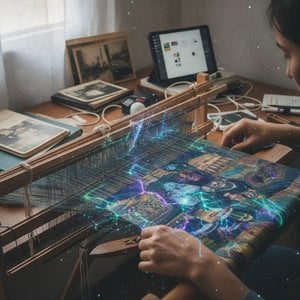
Elevate your home with WahooArt's bespoke AI-textured art. Transform cherished photos into hand-painted textile masterpieces through a seamless fusion of cutting-edge technology and classical craftsmanship. Discover timeless, luxury heirlooms designed to preserve your personal legacy.

Discover the breathtaking allure of Art Deco. Explore the era's iconic geometry, legendary designers like Erté, and timeless glamour. Perfect for discerning collectors seeking to infuse their spaces with sophisticated modernist elegance and historical prestige.


Stay updated with the latest art news, exclusive offers, and decoration ideas.
Tell us about your project and our art experts will provide you with 3 personalized art suggestions.
Let Us Curate 3 Options Just for You - Free!


 Send
Send Share
Share
 Details

 Download
 Similars
 Diaporama


 Read More




































 Glass option is only available in size under 110 CM


