x


Hand-painted oil on canvas in your size and frame, made to order by our artists. ( Buy Print Buy Image)
Pick from our preset sizes that match the artwork's original proportions.

You may enter your own dimensions to fit a specific frame or space. If your selected size does not match the original image's proportions, we will either crop the artwork or extend the painting with additional hand-painted elements. A digital mockup will be sent for your approval before production begins.
Please note that the on-screen preview does not reflect the actual cropping or extension. Only the mockup will accurately show the final composition.
While custom sizes are available, we recommend selecting a dimension from the predefined list to preserve the original proportions.
Worldwide Delivery () in 3/4 weeks instead of standard 5 weeks. (25 August). No compromise on quality.


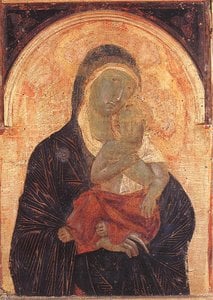
St. Laurus
Reproduction Size

Andrei Rublev (c. 1360 – c. 1430) remains one of the most enigmatic and profoundly influential figures in the history of Russian art. More than simply a painter, he embodies a confluence of spiritual devotion, artistic mastery, and the very essence of medieval Russia—a nation grappling with its identity amidst Byzantine influence and nascent national consciousness. While details of his life remain shrouded in mystery, his legacy as the foremost iconographer of his era is undeniable, shaping not only the visual language of Russian Orthodox art but also profoundly impacting subsequent generations of artists.
Little concrete information survives regarding Rublev’s early years. He is believed to have been born in Moscow, though some accounts suggest a possible origin in the Trinity-St. Sergius Lavra Monastery near the city – a location that would deeply inform his artistic development. His apprenticeship under Theophanes the Greek, a renowned Byzantine icon painter who had migrated to Russia, provided him with an invaluable foundation in the techniques and stylistic conventions of the era. However, Rublev quickly transcended mere imitation, imbuing these established forms with a uniquely Russian sensibility – a palpable sense of humility, spiritual depth, and emotional resonance that distinguished his work from its Byzantine predecessors.
Rublev’s artistic vision was not born in isolation; it was deeply rooted in both Byzantine traditions and emerging Russian sensibilities. Theophanes' influence is undeniable – the meticulous detail, the rich colors, and the formal structure of his compositions are all hallmarks of Byzantine icon painting. However, Rublev skillfully integrated these elements with a distinctly Russian aesthetic—a profound sense of humility, an emphasis on emotional expression, and a connection to the spiritual life of the monastic community.
Rublev's icons are not merely beautiful images; they are imbued with layers of symbolic meaning, reflecting a profound understanding of Christian theology and spiritual practice. His compositions often feature subtle gestures, facial expressions, and spatial arrangements that convey complex theological ideas.
Despite his relatively short life, Andrei Rublev left an indelible mark on Russian art and culture. His work profoundly influenced subsequent generations of icon painters, shaping the development of Russian iconography for centuries to come. The Stoglavi Sobor in 1551 officially proclaimed Rublev’s style as a model for church painting, cementing his status as a national artistic hero.

1360 - 1428 , Russia
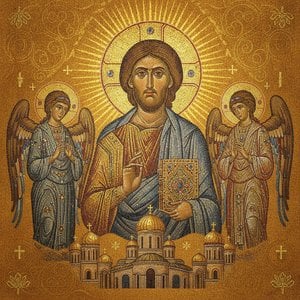
Immerse yourself in the golden splendor of Byzantine masterpieces. Explore luminous mosaics and sacred iconography through our premium, hand-painted oil reproductions. Discover museum-quality elegance and expert curation for your sophisticated interiors at WahooArt.com.

Explore the profound depth of Russian Realism through our museum-quality, hand-painted oil reproductions. From Ilya Repin to breathtaking landscapes, we bring timeless cultural grandeur to elite collections and luxury interiors with unparalleled craftsmanship.

Explore the profound depth of Russian Realism. From the social truths of the Peredvizhniki to epic folklore, discover the soulful power of masters like Perov and Yaroshenko through our expert art history insights and museum-quality reproductions.


Stay updated with the latest art news, exclusive offers, and decoration ideas.
Tell us about your project and our art experts will provide you with 3 personalized art suggestions.
Let Us Curate 3 Options Just for You - Free!

 Preview
 Send
Send Share
Share
 Details

 Download
 Similars
 X-Ray
X-Ray Diaporama


 Read More




































 Glass option is only available in size under 110 CM