Museum-quality giclée or canvas print with fast production and flexible finish options. ( Buy Hand Made Painting Switch to Digital Image)





























Pick from our preset sizes that match the artwork's original proportions.

Type the width and the height you need, to fit your frame or your wall. A print can only be cut, never made bigger than the picture, so a size with a different shape loses a part of the image. We send you a digital mockup to approve before we print anything. The picture shown on this page does not show the real cut — only the mockup does.
Worldwide Delivery () in 2 weeks instead of standard 4/5 weeks. (10 November)
Medee
Reproduction Size
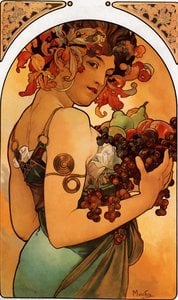
Alphonse Mucha’s *Médée*, painted in 1898, is more than just a depiction of a classical tragedy; it’s a potent distillation of Art Nouveau’s core tenets – flowing lines, organic forms, and an almost palpable sense of movement. This striking image captures the dramatic intensity of Sophocles' play, transforming a tale of vengeance and despair into a visually arresting spectacle. The painting’s immediate impact lies in its masterful use of color and composition, elements that were hallmarks of Mucha’s distinctive style and sought to evoke emotion through form.
The scene itself is powerfully rendered. Muchas Medee stands poised, her posture radiating both strength and vulnerability. Her costume, a cascade of rich fabrics and intricate detailing, embodies the opulent aesthetic favored by the artist – a deliberate departure from the rigid academic traditions he initially encountered at the Prague Academy. The inclusion of the sword immediately establishes a narrative of potential violence and retribution, while the fallen figure beneath her suggests a devastating consequence. The clock on the wall, a subtle yet significant detail, anchors the scene in time and space, hinting at the inexorable march of fate – a central theme within the play itself.
Created during Mucha's most prolific period, *Médée* exemplifies his signature Art Nouveau style. Notice the sinuous curves that define Medee’s form, echoing the natural world – a deliberate homage to the influence of artists like Pierre-Auguste Renoir and Gustave Moreau. Mucha employed a meticulous technique, utilizing layering of glazes and delicate brushwork to achieve a luminous effect, characteristic of his work. The use of gold leaf, subtly integrated into the costume’s embellishments, adds an element of luxury and reinforces the painting's decorative quality – a key feature of Art Nouveau design.
The composition itself is carefully constructed, drawing the viewer’s eye through a series of dynamic lines and shapes. Mucha was renowned for his ability to capture movement and emotion within static forms, and *Médée* is a prime example of this skill. The overall effect is one of heightened drama and emotional intensity, perfectly suited to the subject matter.
*Médée*, like the original Greek tragedy, is rich in symbolism. Medee herself represents female power, ambition, and ultimately, tragic downfall. Her act of revenge – symbolized by the sword – speaks to themes of justice, betrayal, and the destructive consequences of unchecked passion. The fallen figure beneath her can be interpreted as a representation of lost innocence or the ultimate price of vengeance. The painting’s setting, though somewhat ambiguous, suggests a public space—perhaps a palace or court—further emphasizing Medee's position of authority and influence.
This reproduction offers an exceptional opportunity to own a piece of Art Nouveau history, capturing Mucha’s genius in stunning detail. It is a powerful statement for any art lover, collector, or interior designer seeking to infuse their space with beauty, drama, and timeless elegance.
Use (statement) and space (hotel lobby) are the two recommendations recorded for "Medee" by Alphonse Mucha.
"Medee" shares with Alphonse Mucha's other works its Art Nouveau style and the recorded themes: alphonse maria mucha, brno, czech republic, 1860, 1898, 1939, 76 x 206 cm, medee.
The palette of "Medee" by Alphonse Mucha is described as neutrals. It is a compact description of the work's colors.

1860 - 1939 , Czech Republic

Discover the exquisite world of Art Nouveau. Explore the elegant fusion of nature and design through architectural masterpieces, organic forms, and the legendary masters of the Belle Époque. Immerse yourself in a journey of timeless sophistication and ornamental beauty.

Discover the enchanting world of Art Nouveau. Explore the flowing lines of Alphonse Mucha and learn how to integrate these timeless, organic masterpieces into your collection with expert guidance on fine art appreciation and preservation.

Discover WahooArt.com's premium art partnerships for museums and educational institutions. We offer bespoke oil reproductions, large-scale architectural murals, and expert curation to elevate institutional prestige with academic rigor and global logistics excellence.

Discover how to transform the modern classroom by integrating art as a powerful pedagogical tool. This expert guide explores visual literacy, multidisciplinary learning, and innovative strategies to unlock student creativity and critical thinking through artistic expression.
 Preview
 Send
Send Share
Share
 Details
 Guide
Guide

 Download
 Similars
 X-Ray
X-Ray Diaporama
 Q&A
Q&A
 Stats
Stats

 Read More









 Glass option is only available in size under 110 CM