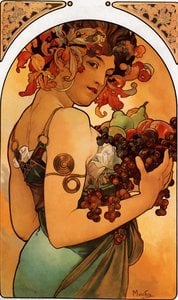
Hand-painted oil on canvas in your size and frame, made to order by our artists. ( Switch to Print Switch to Digital Image)
Pick from our preset sizes that match the artwork's original proportions.

You may enter your own dimensions to fit a specific frame or space. If your selected size does not match the original image's proportions, we will either crop the artwork or extend the painting with additional hand-painted elements. A digital mockup will be sent for your approval before production begins.
Please note that the on-screen preview does not reflect the actual cropping or extension. Only the mockup will accurately show the final composition.
While custom sizes are available, we recommend selecting a dimension from the predefined list to preserve the original proportions.
Worldwide Delivery () in 3/4 weeks instead of standard 5 weeks. (19 September). No compromise on quality.


biscuits lefeure-utile
Reproduction Size
Alphonse Mucha’s “Biscuits Lefevre-Utile,” painted in 1896, is more than just a charming advertisement; it's a potent distillation of the Art Nouveau movement at its peak. This captivating image transports us to a moment of opulent leisure, capturing a scene of quiet elegance within a meticulously crafted world. The painting’s enduring appeal lies not only in its beauty but also in its embodiment of Mucha’s signature style – a harmonious blend of natural forms, flowing lines, and a profound sense of movement that continues to resonate with viewers today.
Born in Brno, Czech Republic, in 1860, Alphonse Maria Mucha’s artistic journey began with a rejection of traditional academic training. He sought a path that embraced organic forms and decorative elements, ultimately leading him to Paris in 1887 – the epicenter of Art Nouveau. Influenced by artists like Pierre-Auguste Renoir and Gustave Moreau, Mucha developed his distinctive style, characterized by elongated figures, intricate floral motifs, and a deliberate avoidance of sharp angles. His work was commissioned primarily for posters and advertisements, reflecting the burgeoning consumer culture of the late 19th century. The “Biscuits Lefevre-Utile” exemplifies this approach – a beautifully designed piece intended to elevate a simple product into an object of desire.
The painting’s composition is remarkably detailed, inviting close observation. The woman, posed with graceful composure, occupies the central space, her flowing dress rendered with delicate lace patterns that add a touch of aristocratic refinement. Her hair, adorned with vibrant red poppies – a symbol of beauty and remembrance – cascades around her head in a wave of color. The backdrop is not merely a field; it’s an elaborate decorative panel, filled with stylized foliage and geometric shapes typical of the Art Nouveau aesthetic. The use of warm reds, oranges, and blues creates a rich, luminous effect, further enhancing the painting's luxurious feel. Notice the circular motif at the bottom – a clever graphical device that anchors the composition and subtly references the year of creation (1897), adding to the artwork’s timeless quality.
Beyond its decorative qualities, “Biscuits Lefevre-Utile” evokes a sense of serenity and indulgence. The woman's relaxed posture and gentle expression suggest a moment of quiet pleasure – a respite from the bustle of Parisian life. Mucha frequently depicted idealized women in flowing robes, imbuing his works with an air of romanticism and aspiration. The inclusion of the biscuits themselves subtly reinforces the theme of luxury and refinement. This painting is not simply a depiction of a product; it’s an invitation to savor beauty, appreciate craftsmanship, and embrace the pleasures of life – a timeless message that continues to captivate audiences over a century later.


1860 - 1939 , Czech Republic

Discover the enchanting world of Art Nouveau. Explore the flowing lines of Alphonse Mucha and learn how to integrate these timeless, organic masterpieces into your collection with expert guidance on fine art appreciation and preservation.
Explore the enchanting world of Victorian illustration. Discover the intricate details, romantic narratives, and historical significance of this golden age of art through our expert-led guide for fine art enthusiasts and collectors.

Discover the excellence of WahooArt.com premium poster prints. Designed for elite collectors, our museum-quality Giclée reproductions offer unmatched durability and archival precision to elevate your luxury interiors with high-impact, sophisticated art decor.

Discover the exquisite world of Art Nouveau. Explore the elegant fusion of nature and design through architectural masterpieces, organic forms, and the legendary masters of the Belle Époque. Immerse yourself in a journey of timeless sophistication and ornamental beauty.

Discover why elite collectors choose WahooArt.com. Learn the profound difference between mass-produced posters and our museum-quality, hand-painted oil reproductions and archival Giclées, crafted by master artists for unparalleled texture, depth, and lasting prestige.

 Preview
 Send
Send Share
Share
 Details

 Download
 Similars
 X-Ray
X-Ray Diaporama
 Stats
Stats

 Read More




































 Glass option is only available in size under 110 CM