Museum-quality giclée or canvas print with fast production and flexible finish options. ( Buy Hand Made Painting Switch to Digital Image)





























Pick from our preset sizes that match the artwork's original proportions.

Type the width and the height you need, to fit your frame or your wall. A print can only be cut, never made bigger than the picture, so a size with a different shape loses a part of the image. We send you a digital mockup to approve before we print anything. The picture shown on this page does not show the real cut — only the mockup does.
Worldwide Delivery () in 2 weeks instead of standard 4/5 weeks. (21 October)
(80)
Reproduction Size
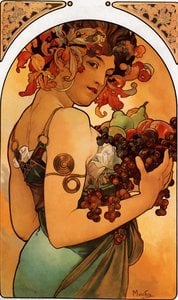
In the golden twilight of the nineteenth century, few names evoke the sinuous elegance of the Belle Époque quite like Alphonse Mucha. His masterpiece, “The Slavonic Uprising,” stands as a breathtaking testament to the Art Nouveau movement, a period defined by its rejection of rigid academic structures in favor of organic, flowing lines and opulent ornamentation. Within this composition, we encounter a profound engagement with mythology and symbolism, where the boundaries between the human spirit and the natural world begin to dissolve. Mucha does not merely present a portrait; he invites the viewer into a dreamscape where idealized femininity meets the deep, resonant echoes of Slavic folklore.
The central figure of the work serves as an anchor for this mythic narrative—a woman whose presence is both ethereal and commanding. Draped in silks that seem to catch an unseen breeze, she embodies a sense of graceful movement that is characteristic of Mucha’s celebrated style. As her hair cascades down her shoulders like a waterfall of shimmering gold, it reflects the artist's meticulous fascination with botanical textures and natural forms. This fluidity is further enhanced by the presence of birds that dance through the composition, adding layers of depth and a rhythmic pulse to the scene, as if the very air around her is alive with song and motion.
To behold this work is to witness a masterclass in technical precision. Mucha’s approach was far from accidental; it was a disciplined study of anatomy and botanical illustration blended with an almost magical use of color. Utilizing the delicate layering of thin washes—often employing tempera on canvas—he achieved a luminous surface that appears to glow from within. This technique creates a shimmering, pearlescent quality that makes the subject appear as though she is bathed in a soft, celestial light.
Every detail, from the intricate patterns on her garments to the delicate feathers of her avian companions, is rendered with an astonishing level of care. For the discerning collector or interior designer, this level of detail offers a profound visual richness. The way the colors interact—soft pastels meeting deeper, more resonant tones—creates a balanced palette that can anchor a room with both sophistication and warmth. It is a symphony of line and color that captures the eye and holds it, rewarding repeated observation with new discoveries in every curve and shadow.
Beyond its aesthetic splendor, “The Slavonic Uprising” is deeply rooted in a complex web of allegory. Mucha’s work often sought to elevate the human experience through visual storytelling, weaving together Christian iconography and Slavic legends to create something transcendent. The interplay between the woman and the birds suggests a harmony between civilization and nature, a central theme of the Art Nouveau ethos. This piece is not just an object of beauty; it is a narrative vessel that carries the weight of cultural identity and spiritual aspiration.
For those seeking to bring a sense of historical depth and emotional resonance into a curated space, this reproduction offers more than mere decoration. It provides a window into a lost era of romanticism and intellectual curiosity. Whether placed in a grand salon or a quiet study, the painting radiates an aura of timeless elegance, making it an incomparable choice for anyone looking to inspire awe and contemplation through the enduring power of fine art.
The colors of "(80)" form a neutrals palette. This classification describes the dominant color families.
"(80)" by Alphonse Mucha is recorded with a balanced soft saturation.
The overall mood of "(80)" by Alphonse Mucha is romantic. The mood describes the general atmosphere of the work.

1860 - 1939 , Czech Republic

Discover the breathtaking allure of Art Deco. Explore the era's iconic geometry, legendary designers like Erté, and timeless glamour. Perfect for discerning collectors seeking to infuse their spaces with sophisticated modernist elegance and historical prestige.

Discover the enchanting world of Art Nouveau. Explore the flowing lines of Alphonse Mucha and learn how to integrate these timeless, organic masterpieces into your collection with expert guidance on fine art appreciation and preservation.

Discover the allure of Art Deco through a curated guide to its most iconic masterpieces. Explore the elegance of Erté and the innovation of Jean Dunand, perfect for collectors seeking timeless glamour and sophisticated design inspiration.

Discover the exquisite world of Art Nouveau. Explore the elegant fusion of nature and design through architectural masterpieces, organic forms, and the legendary masters of the Belle Époque. Immerse yourself in a journey of timeless sophistication and ornamental beauty.

Discover the allure of Art Deco style with our expert guide to luxury interiors. Explore iconic influences from Erté to Jean Dunand and learn to curate a sophisticated space filled with timeless glamour and geometric elegance.

 Preview
 Send
Send Share
Share
 Details
 Guide
Guide

 Download
 Similars
 X-Ray
X-Ray Diaporama
 Stats
Stats

 Read More









 Glass option is only available in size under 110 CM